NaturePlants & Trees7 designsFree to print
print, color, learn
Free Tree Coloring Pages
Seven free printable tree coloring pages, from a palm on a little island and a tall pine for little hands to a weeping willow and a spreading oak full of acorns for older kids. Download the PNG or print straight from this page.
share:
pick a favourite
7 Tree designs to color
Tap any sheet for a closer look, then download or print it.
Tree Coloring Page - Tall Pine Tree
Tree Coloring Page - Bonsai In Pot
Tree Coloring Page - Apple Tree Full Of Apples
Tree Coloring Page - Blossom Tree In Bloom
Tree Coloring Page - Weeping Willow
Tree Coloring Page - Detailed Oak With Acorns
quick instructions
How to download and print
1. Pick your sheet
Preview any design below and choose the one you like best.
2. Print or download
Print straight from the page, or save the PNG to print later.
3. Color it in
Crayons, colored pencils or markers — plain paper works fine.
Every sheet is sized for landscape US Letter (11" x 8.5") at 200 DPI, so it fills the page without cropping. A4 works too — choose "fit to page" when printing.
while you color…
6 fun facts about the tree
You can tell the age of many trees by counting the rings inside the trunk, because they usually add one ring of new wood each year.
The tallest known tree is a coast redwood in California nicknamed Hyperion, which is more than 115 metres (380 feet) tall.
Some bristlecone pines growing in the mountains of California are more than 4,800 years old.
Willow bark contains a natural painkiller, and studying it helped scientists invent aspirin.
Squirrels and jays bury acorns to eat later, and the ones they forget can sprout into new oak trees.
Trees take in carbon dioxide from the air and give out the oxygen we breathe as they make their food from sunlight.
About the tree coloring page
Trees are the biggest plants on Earth, and they grow almost everywhere people live: along streets, in parks and school grounds, in orchards, on beaches and across whole mountainsides. Children draw them early, usually as a brown stick with a green cloud on top, and most have climbed one, collected its conkers or acorns, or sat in its shade. This page has seven very different trees — a palm, a pine, a bonsai, an apple tree, a tree in blossom, a weeping willow and an oak — so a child can color the kind that grows near home and meet a few that grow somewhere else.
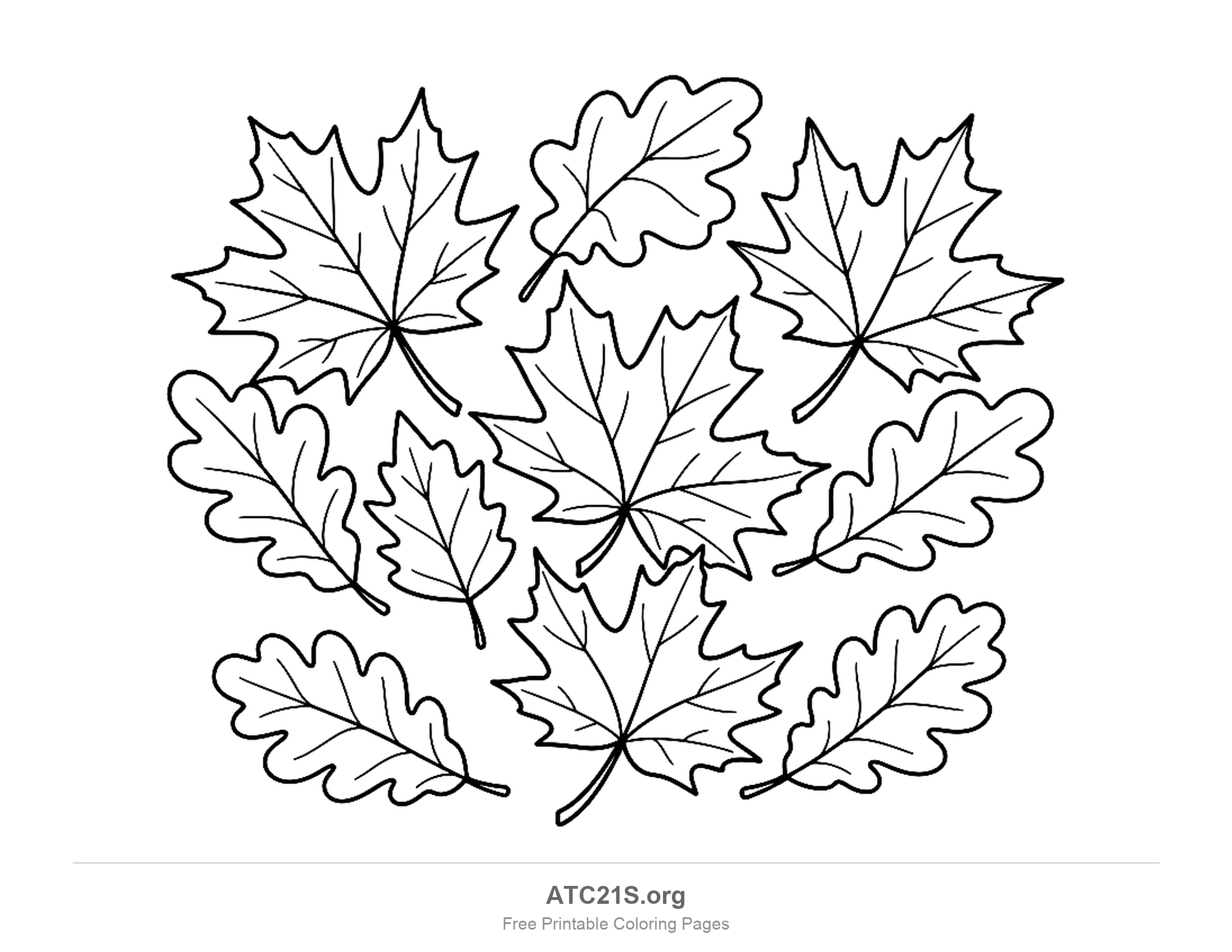
Real trees are mostly brown and green: a brown or grey trunk with rough bark, and leaves in every shade of green from pale lime to deep bottle green. In autumn many turn yellow, orange, red and gold, and in spring some are covered in white or pink blossom. That is a perfectly good way to color these sheets. It is also fine to ignore it. A purple oak, a rainbow willow or a pink pine is just as welcome, and coloring the same tree twice, once for summer and once for autumn, is a nice way to show the seasons. The shapes worth pointing out are the ones every tree shares — roots spreading at the bottom, one thick trunk, branches splitting into smaller and smaller twigs, and leaves at the ends — and then the leaf shapes that tell them apart: the needles of the pine, the long fronds of the palm and the wavy, rounded lobes of an oak leaf. Oak and maple leaves, drawn big enough to color one at a time, start off a whole page of leaves that goes on to ginkgo, ivy and a heap of autumn leaves.
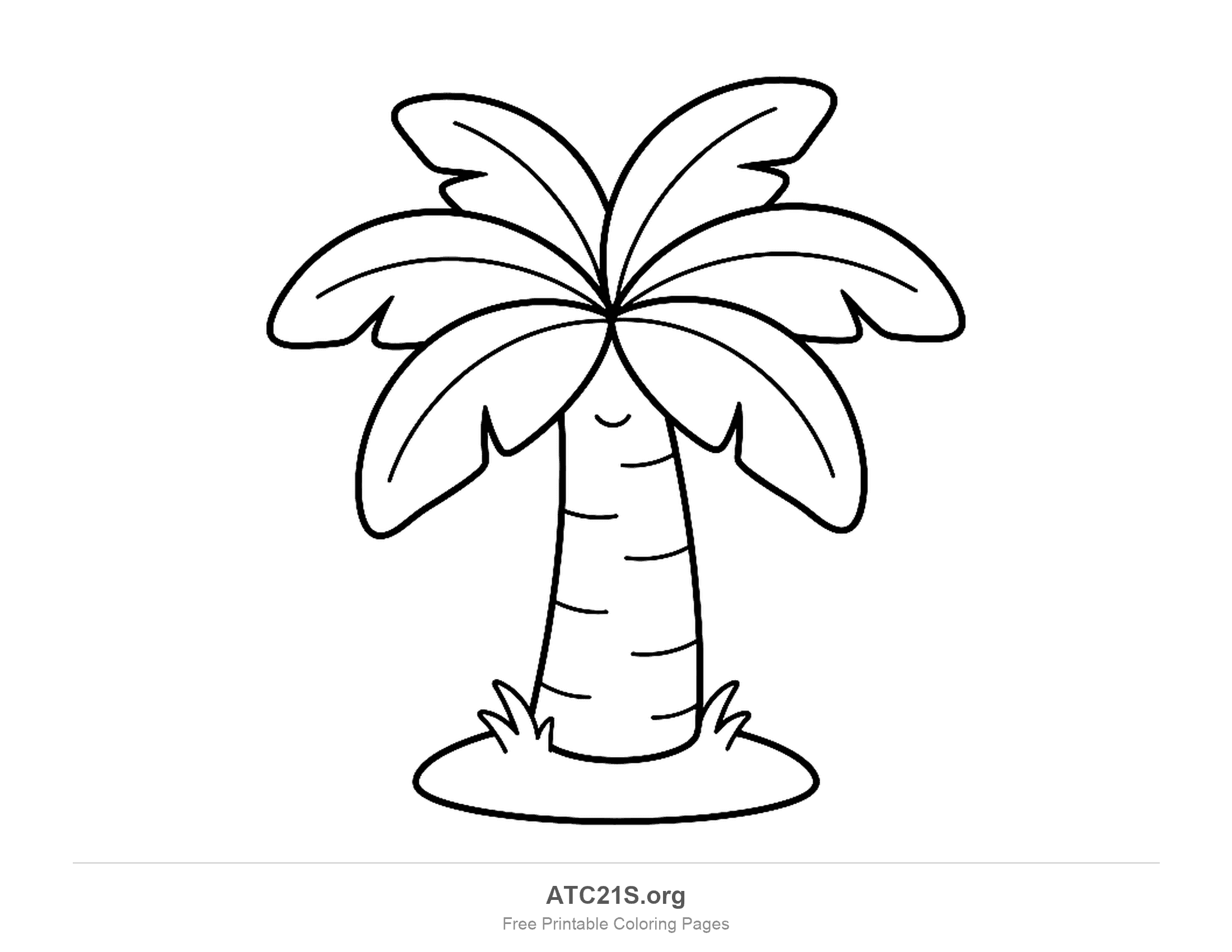
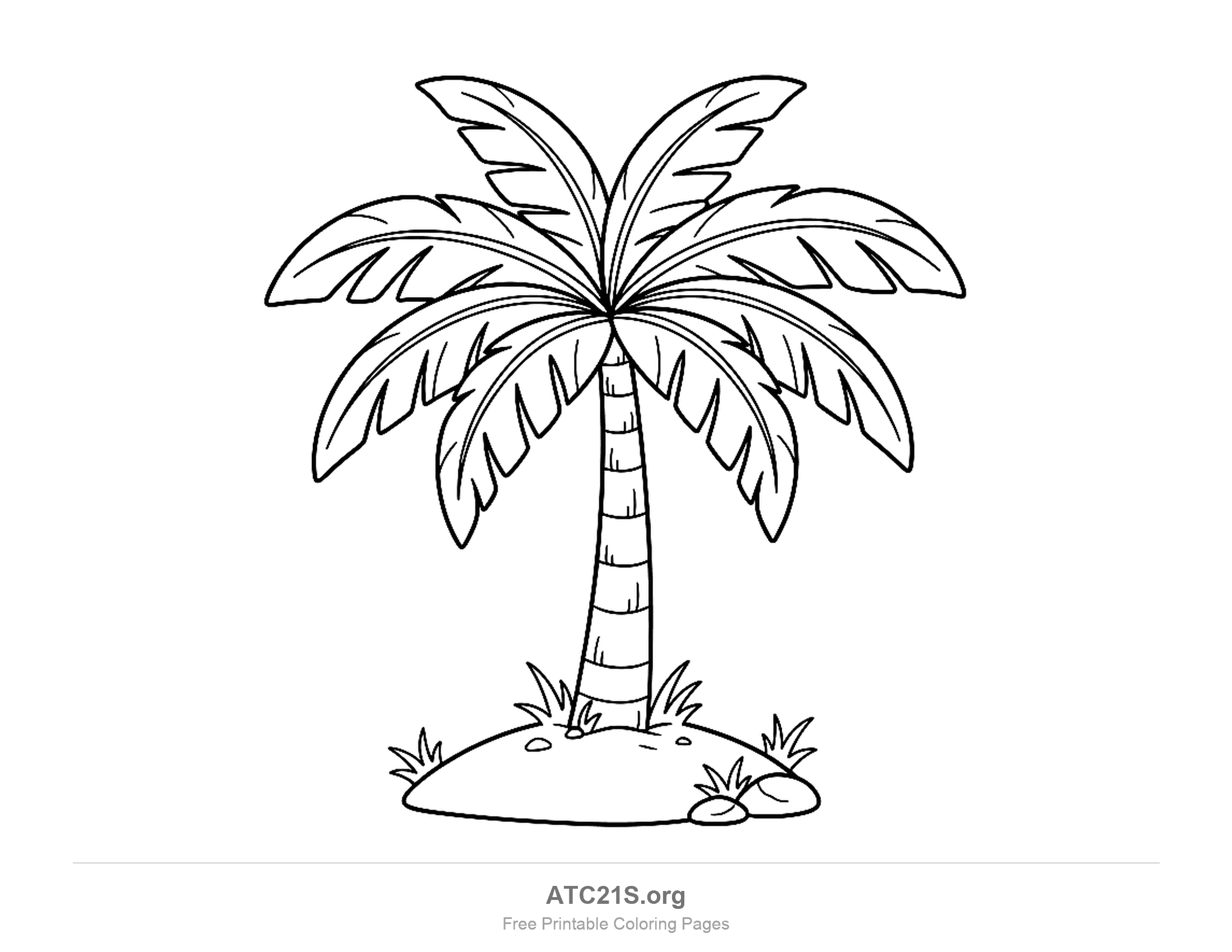
The seven designs get steadily harder. First is a palm tree with a ringed trunk and eight big feathery fronds, growing from a small mound of an island with grass tufts and pebbles, in bold outlines with wide open spaces that suit younger children still learning to stay inside the lines. Then a tall evergreen pine built from layers of drooping, scalloped branches stacked up a straight trunk. The third sheet is a bonsai: a little tree with a twisting trunk and round, cloud-shaped clumps of leaves, planted in a shallow rectangular pot with pebbles on the soil. After that the drawings add more to do: an apple tree with a round, bushy crown holding fifteen apples, each with its own stem and leaf; a tree in spring blossom whose crown is a cluster of puffy clumps filled with five-petalled flowers; a weeping willow whose branches arch up and then hang down in long curtains of narrow leaves, with grass and roots at its foot; and finally a wide, spreading oak with dozens of lobed leaves and acorns hanging all through its branches, for children who like a long, careful page.
The blossom tree and the apple tree are the pair worth pausing on. Every apple starts as a flower: in spring an apple tree is covered in five-petalled blossom much like the fifth sheet, bees carry pollen from flower to flower, and over the summer the middle of each pollinated flower swells into an apple with the seeds inside. Print the two side by side and let children put them in order, then compare them with the single blooms on the flower coloring pages. The pine and the oak make a second good pair: the pine is evergreen and keeps its needles all winter, while the oak drops its leaves every autumn and grows a new set in spring. Tough needles are also why pines and other conifers are usually the last trees you pass on the way up a mountain, before the forest gives way to bare rock and snow on the mountain coloring pages. A real tree trunk also hides a record of its age, one ring of new wood for each year, which older children can draw on the back of the oak sheet. Trees seldom grow alone, and whole scenes full of them show bare branches on a snowy hillside, leafy trees lining a forest path and pines crowding the banks of a mountain river. When enough trees grow close together they make a forest, and the forest pages step inside one, among white birches, tall pines, twisted oaks and the ferns and mushrooms on the floor below.
Every sheet prints on landscape US Letter paper at 200 DPI, so the tree fills the page without being cut off. Plain copier paper is fine for crayons and colored pencils. If you are using markers or paint, slightly thicker card stock stops the colour bleeding through — worth doing on the blossom, weeping willow and oak sheets, where the tiny flowers, the hanging strands of leaves and the acorns put the lines closest together.
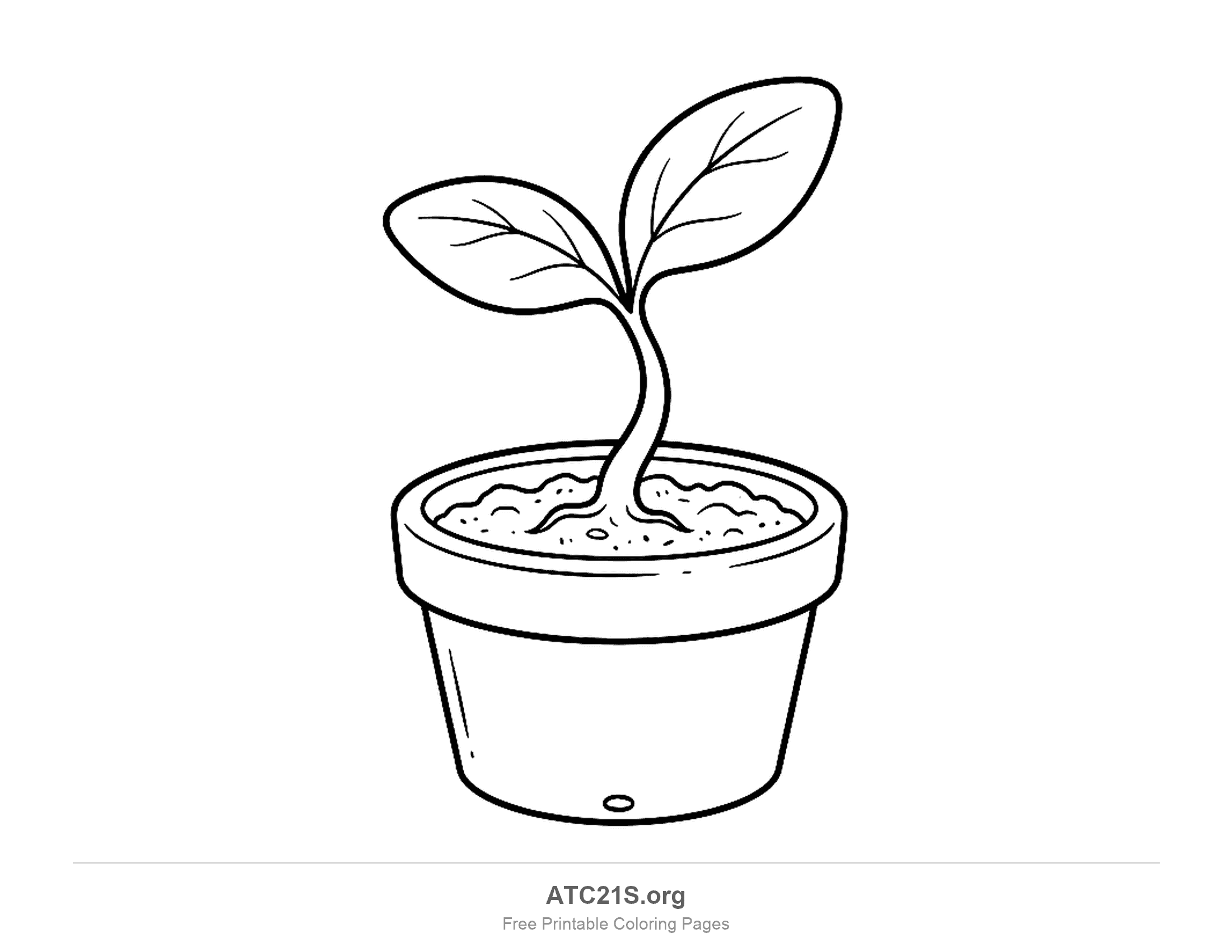
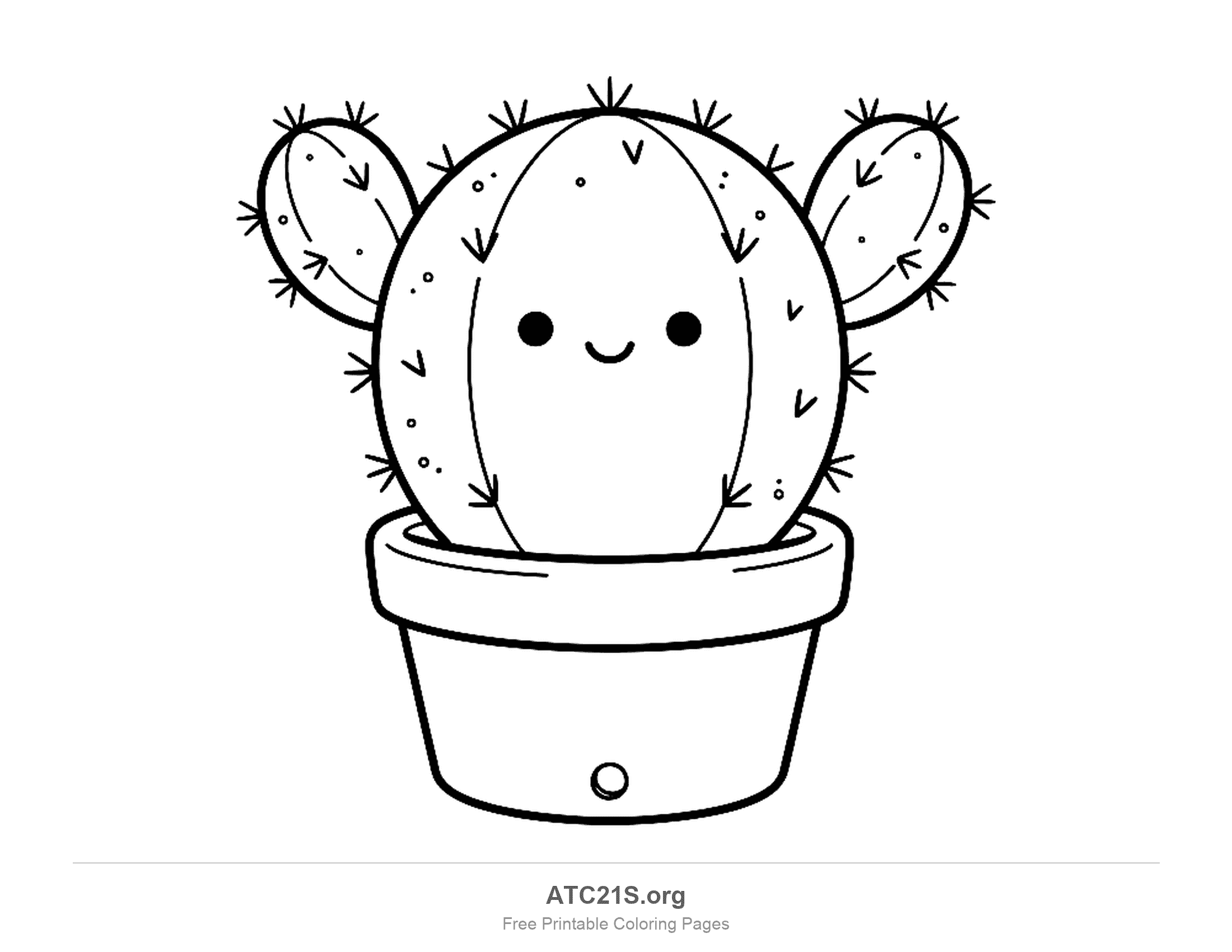
In the classroom these pages pair well with a lesson on the parts of a tree (roots, trunk, bark, branches, leaves), on the seasons, on islands, orchards and forests, on Arbor Day or Earth Day, or on the letter T. Hand out the palm or the pine for a quick, cheerful page and save the oak for a quiet afternoon, or take the class outside to collect a few real leaves and match them to the sheets. For a smaller start, a page of potted plants begins with a seedling just poking out of the soil and has a second bonsai, a cactus and a hanging fern. The sunflower coloring pages show a plant that can outgrow a grown-up in a single summer, a good contrast with a tree that takes years, and the hibiscus sheets bloom in the same warm places as the palm. If the island palm is the one children love, there is a whole page of palm trees, from a smiling cartoon palm to a coconut palm and a fan palm. Trees are homes as well as plants: the squirrel coloring pages show the animal that buries the oak's acorns, the owl sheets a bird that nests in hollow trunks, and a koala page one that spends nearly its whole life up in the branches. The flowers, skies and landscapes are in the rest of the nature coloring pages.