NaturePlants & Trees8 designsFree to print
print, color, learn
Free Leaf Coloring Pages
Eight free printable leaf coloring pages, from ten big maple and oak leaves in thick outlines for little hands to a dense pile of overlapping autumn leaves for older kids. Download the PNG or print straight from this page.
share:
pick a favourite
8 Leaf designs to color
Tap any sheet for a closer look, then download or print it.
Leaf Coloring Page - Round Eucalyptus Sprigs
Leaf Coloring Page - Monstera Split Leaves
Leaf Coloring Page - Ginkgo Fan Leaves
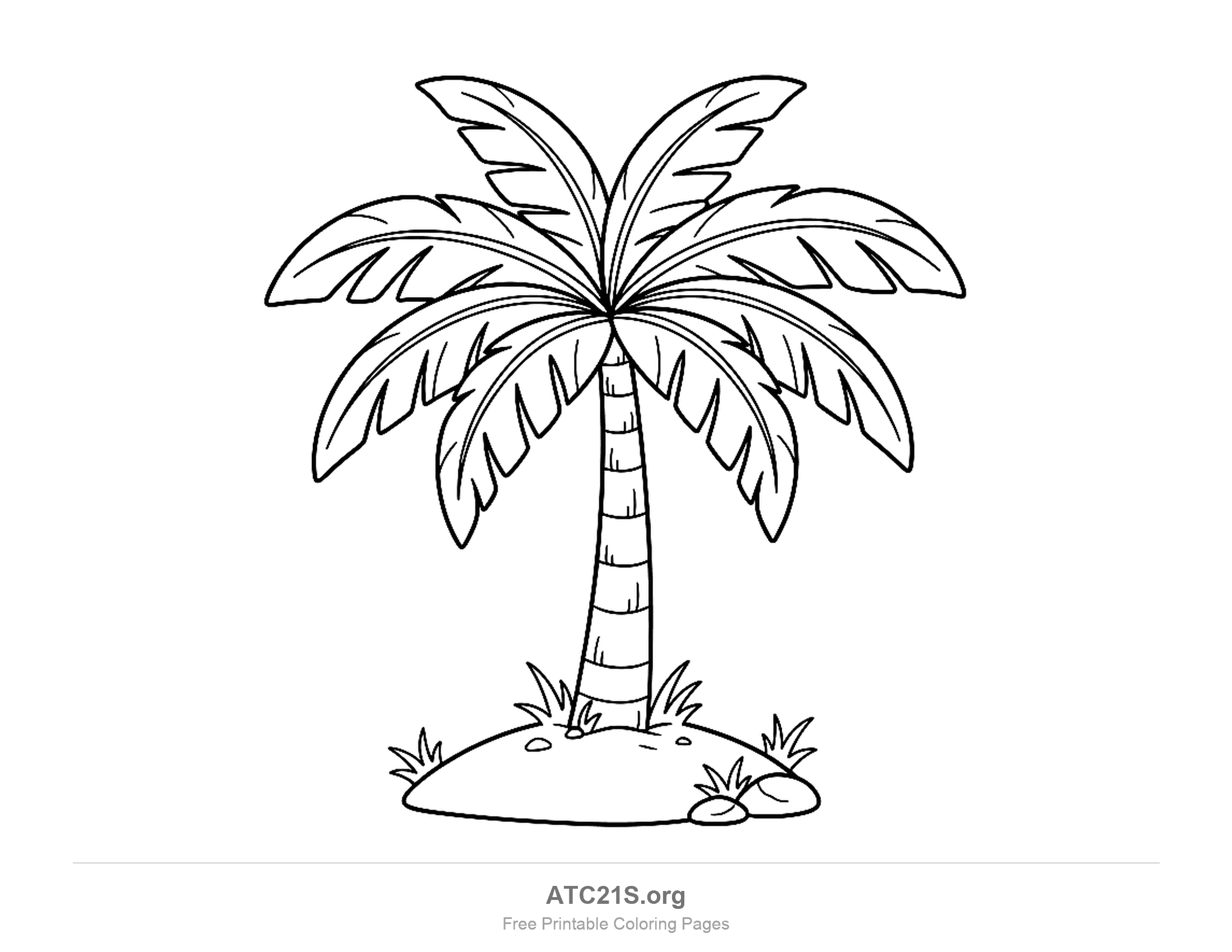
Leaf Coloring Page - Tropical Palm Fronds
Leaf Coloring Page - Feathery Fern Fronds
Leaf Coloring Page - Tangled Ivy Vines
Leaf Coloring Page - Detailed Autumn Leaf Pile
quick instructions
How to download and print
1. Pick your sheet
Preview any design below and choose the one you like best.
2. Print or download
Print straight from the page, or save the PNG to print later.
3. Color it in
Crayons, colored pencils or markers — plain paper works fine.
Every sheet is sized for landscape US Letter (11" x 8.5") at 200 DPI, so it fills the page without cropping. A4 works too — choose "fit to page" when printing.
while you color…
6 fun facts about the leaf
Leaves are green because of chlorophyll, which catches sunlight so the plant can make sugar from water and air.
In autumn many trees stop making chlorophyll, so the green fades and yellows and oranges that were hidden in the leaf show through.
Under most leaves are thousands of tiny holes called stomata that let air in and water vapour out.
Koalas eat almost nothing but eucalyptus leaves, which are tough and poisonous to most other animals.
Ginkgo trees have been around since the time of the dinosaurs, and fossils of their fan-shaped leaves are millions of years old.
A new fern leaf starts as a tight curl called a fiddlehead and slowly unrolls as it grows.
About the leaf coloring page
Leaves are the part of a plant children actually get their hands on. They kick through piles of them in autumn, press them flat inside heavy books, make crayon rubbings of their veins and bring the best ones home in a pocket. A leaf is also one of the first shapes a child learns to draw, and almost every tree, bush and houseplant has its own. So this page is not eight copies of one leaf: it has maple and oak leaves, round eucalyptus, split monstera, fan-shaped ginkgo, palm fronds, fern fronds, climbing ivy and a whole heap of mixed autumn leaves, so a child can color the leaves from the tree outside the window and meet some from much farther away.
Most leaves are green in spring and summer, in every shade from the pale lime of a new leaf to the dark, glossy green of ivy, and eucalyptus leaves are often a dusty, silvery blue-green. In autumn many change: maples turn scarlet, orange and gold, oaks go russet and brown, and ginkgo leaves turn a clear butter yellow. That is a perfectly good way to color these sheets. It is also fine to ignore it. A purple oak leaf, a rainbow maple or a monstera covered in stripes is just as welcome, and coloring one leaf half green and half orange is a nice way to show it changing. The shapes worth pointing out are the ones that tell leaves apart: the sharp points of a maple, the soft, wavy lobes of an oak, the open fan of a ginkgo and the round coin of a eucalyptus. Then show the parts every leaf shares: a stalk joining it to the plant, a main vein down the middle, and smaller veins branching off it.
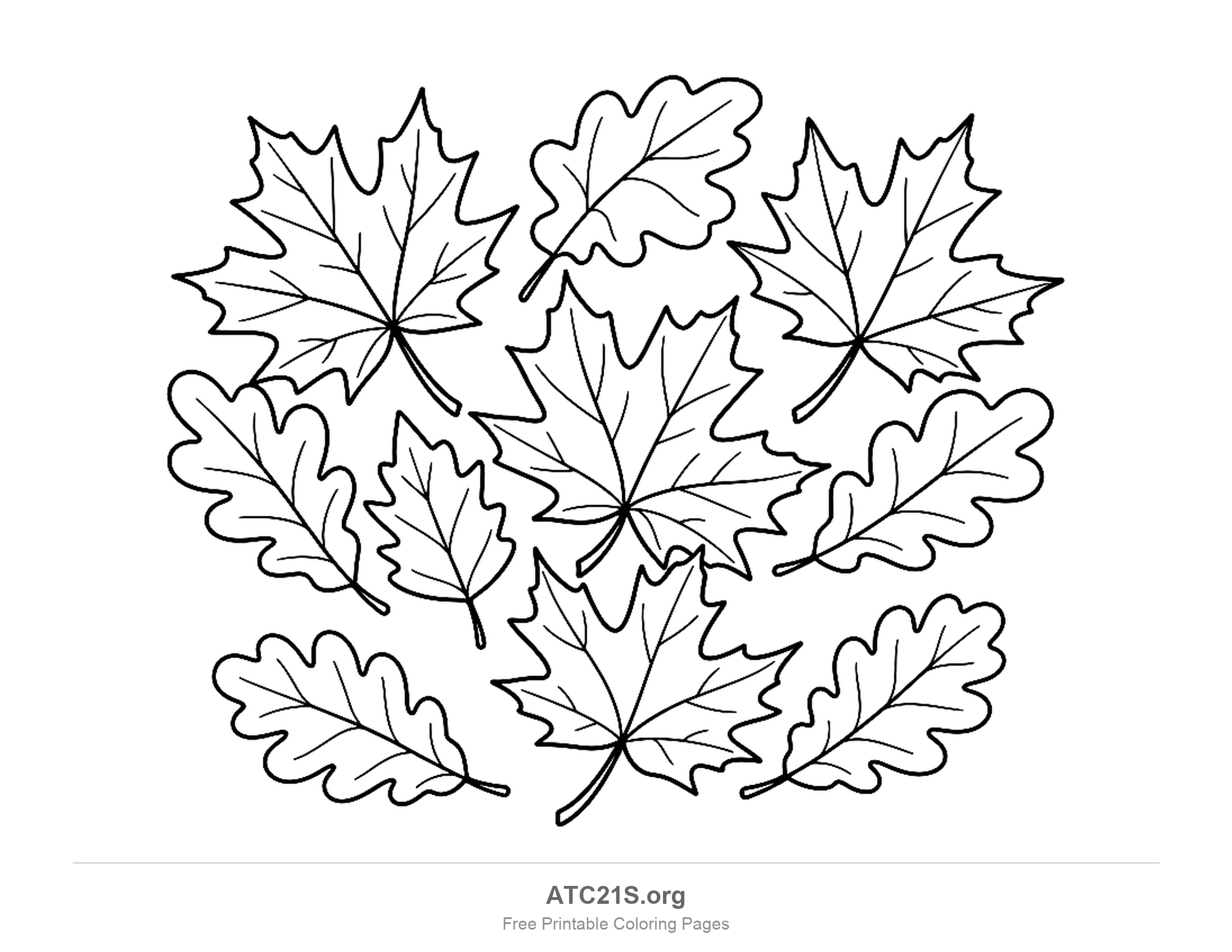
The eight designs get steadily harder. First are ten separate leaves spread across the page with space between them: four maple leaves with pointed lobes, five oak leaves with rounded, wavy edges and one smaller toothed leaf, all in the thickest outlines of the set with just a few veins, so a toddler can color one leaf at a time and stop whenever they like. Then three sprigs of eucalyptus covered in dozens of round, coin-shaped leaves, each with a single line down the middle. The third sheet is a monstera with seven big heart-shaped leaves cut with deep splits and oval holes, on long curving stalks. The fourth is a cluster of nearly twenty fan-shaped ginkgo leaves hanging from a branching twig, each with a notch in its wavy edge and fine lines spreading out from the stalk. After that the drawings add more to do: four feathery palm fronds lined with narrow pointed leaflets, spreading out on both sides behind a fan-shaped leaf of rounded segments that all open from one point; five fern fronds rising from a single point, each lined with rows of small veined leaflets and one tip curling over; a square panel of ivy whose vines loop and tangle across each other, with dozens of pointed, lobed ivy leaves and a few plain heart-shaped ones; and finally a dense pile of overlapping autumn leaves (maple, oak, toothed oval leaves like birch, and sprays of small leaflets like rowan) with every vein drawn in, for children who like a long, careful page.
How a leaf makes food is the part worth pausing on. Leaves are green because they are full of chlorophyll, which catches light from the sun. A leaf uses that energy to turn water, drawn up from the roots, and carbon dioxide, taken in through tiny holes on its underside, into sugar that feeds the whole plant, and it gives out the oxygen we breathe. In autumn, trees like maples and oaks get ready to drop their leaves for the winter. They stop making chlorophyll, the green fades, and the yellows and oranges that were hidden in the leaf all summer show through. The reds of a maple are new colour the leaf makes in autumn. Ivy and eucalyptus are evergreen and keep their leaves all year. Print the maple and oak sheet twice and color one for summer and one for autumn, then find the same two trees on the tree coloring pages, where a big oak is covered in lobed leaves and acorns. The palm, fern and autumn-pile sheets also show a second kind of leaf: a compound leaf, split into many small leaflets along one stalk, next to the simple, one-piece leaves of the maple, ginkgo and ivy. Ask children to sort the leaves on every sheet into the two groups. Some plants have changed their leaves out of all recognition: the spines on a cactus are leaves too, shrunk to sharp points to save water in the desert, and a printable cactus makes a good odd one out to add to the pile.
Every sheet prints on landscape US Letter paper at 200 DPI, so the leaves fill the page without being cut off. Plain copier paper is fine for crayons and colored pencils. If you are using markers or paint, slightly thicker card stock stops the colour bleeding through. It is worth doing on the ginkgo, ivy and autumn-pile sheets, where the fine fan lines, the tangled vines and the overlapping leaf edges put the lines closest together.
In the classroom these pages pair well with a lesson on autumn and the seasons, on the parts of a plant, on how plants make their food, on a nature walk, or on the letter L. Take the class outside to collect real leaves, match them to the shapes on the sheets, then make rubbings on the back. The plant coloring pages put the monstera and a hanging fern in pots, the palm tree sheets show where those big fronds grow, and the flower coloring pages show the part of a plant that the leaves are busy feeding. Leaves feed animals too: koalas eat almost nothing but eucalyptus, which the koala coloring pages cover; caterpillars munch through leaves, and one opens the bug coloring pages; and the hedgehog sheets show an animal that sleeps through winter in a nest of fallen leaves. The flowers, skies and landscapes are in the rest of the nature coloring pages.