NatureLandscapes8 designsFree to print
print, color, learn
Free Mountain Coloring Pages
Eight free printable mountain coloring pages, from a gentle rolling hill drawn in one bold outline for little hands to a crowd of jagged rocky peaks for older kids. Download the PNG or print straight from this page.
share:
pick a favourite
8 Mountain designs to color
Tap any sheet for a closer look, then download or print it.
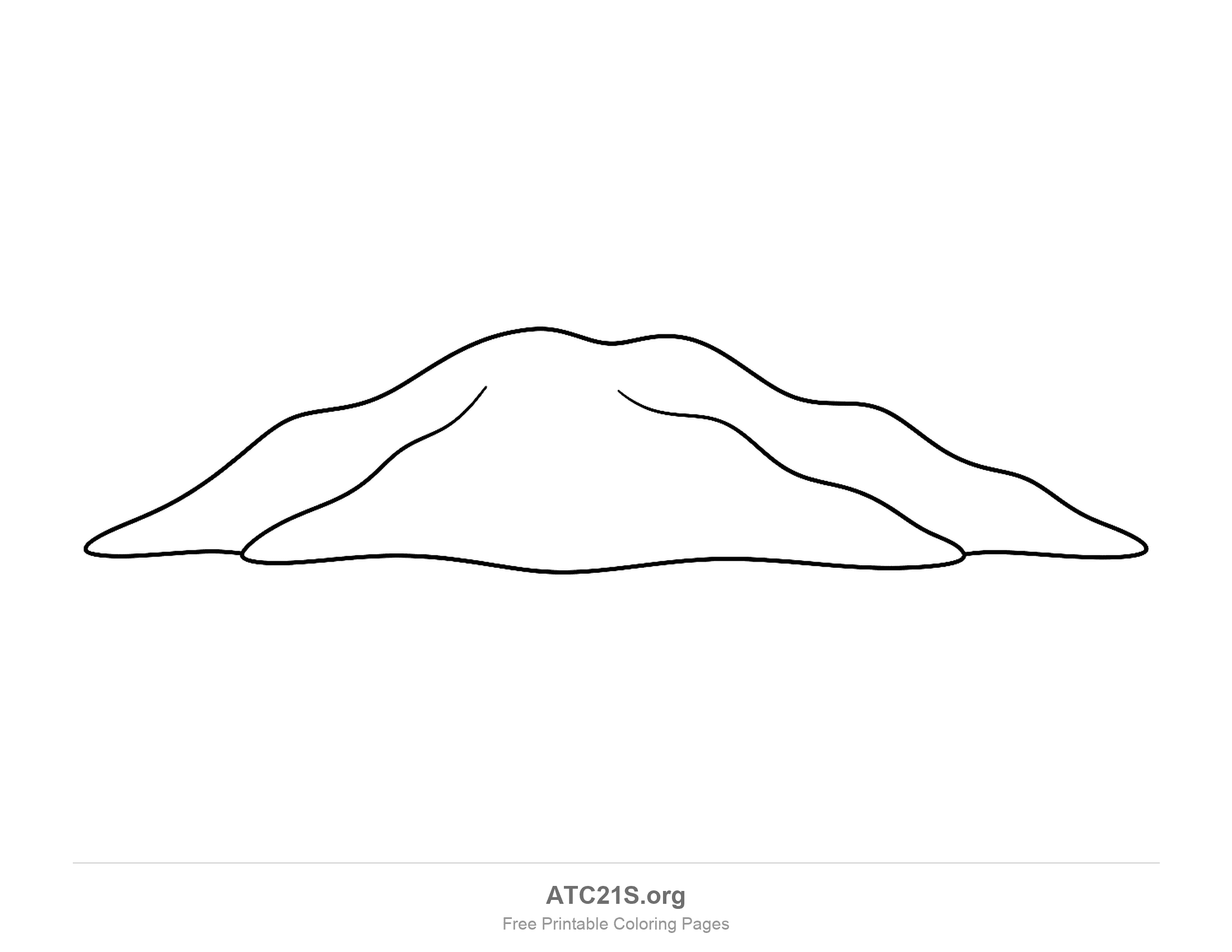
Mountain Coloring Page - Rounded Layered Hills
Mountain Coloring Page - Three Snow Capped Peaks
Mountain Coloring Page - Twin Snowy Peaks
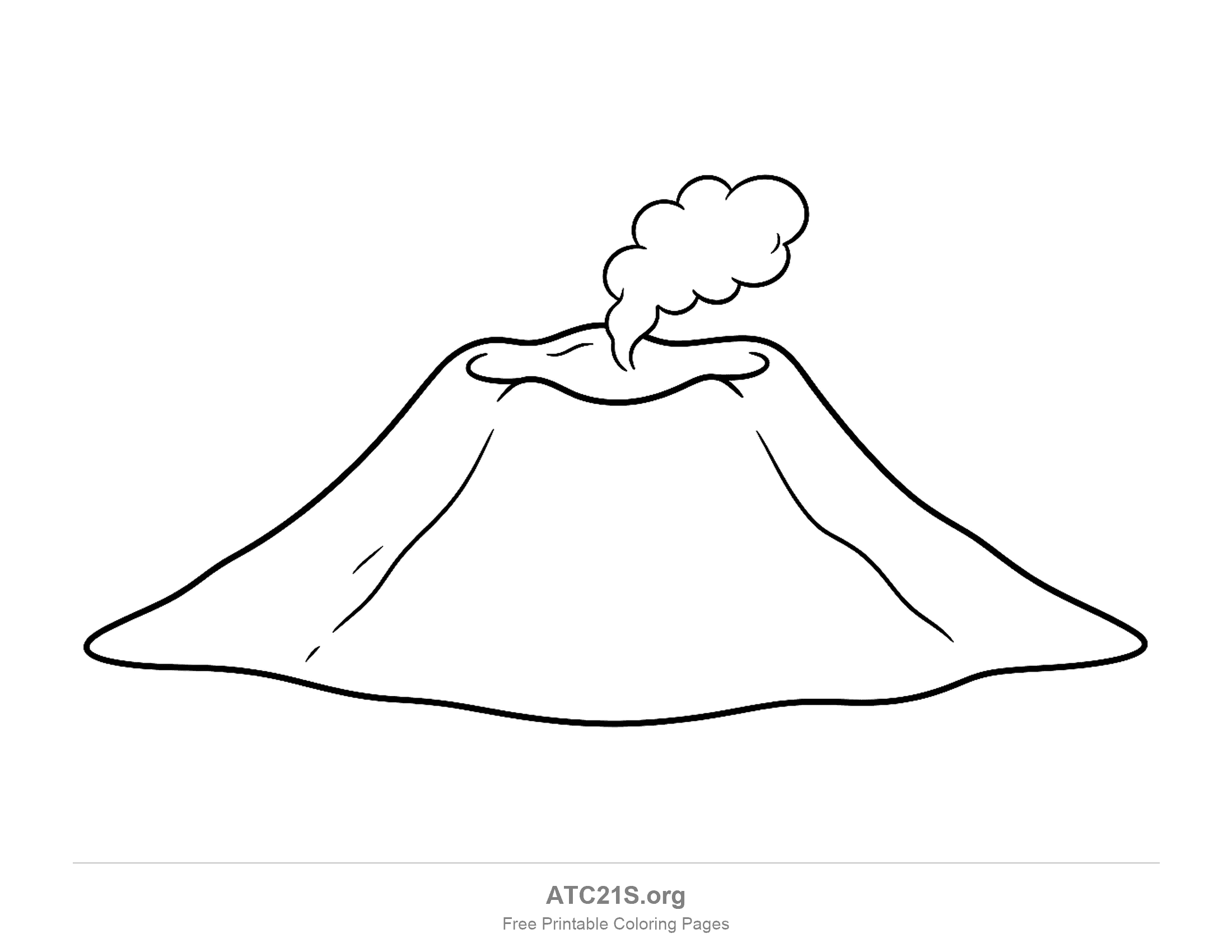
Mountain Coloring Page - Volcano With Smoke Puffs
Mountain Coloring Page - Smiling Mountain Waving
Mountain Coloring Page - Terraced Mountain With Stairs
Mountain Coloring Page - Jagged Rocky Peaks
quick instructions
How to download and print
1. Pick your sheet
Preview any design below and choose the one you like best.
2. Print or download
Print straight from the page, or save the PNG to print later.
3. Color it in
Crayons, colored pencils or markers — plain paper works fine.
Every sheet is sized for landscape US Letter (11" x 8.5") at 200 DPI, so it fills the page without cropping. A4 works too — choose "fit to page" when printing.
while you color…
6 fun facts about the mountain
Mount Everest, on the border of Nepal and China, is the highest mountain above sea level, at 8,849 metres (29,032 feet).
Measured from its base on the sea floor, Mauna Kea in Hawaii is more than 10,000 metres tall, taller than Everest, but more than half of it is under the ocean.
The Himalayas are still growing a few millimetres taller every year, because India is still pushing slowly into the rest of Asia.
The air gets colder the higher you climb, which is why Kilimanjaro has snow and ice on top even though it is close to the equator.
The Andes in South America are the longest mountain range on land, stretching about 7,000 kilometres.
Above a certain height it is too cold for trees to grow. Where the forest stops on a mountainside is called the tree line.
About the mountain coloring page
Mountains are the biggest things most children will ever see in a landscape: land that rises steeply far above everything around it, often with a pointed summit, rocky sides and snow on top. Many children have only met them through a car window, a holiday photo or a picture book, but they draw them all the time, usually as a row of upside-down V shapes along the bottom of a page. That makes a mountain an easy subject to start on, and the sheets here go from a soft, low hill to a towering range of jagged spires, with a smoking volcano and a friendly cartoon mountain along the way.
Real mountains come in grey and brown rock, green where grass and forest cover the lower slopes, and white where snow sits on the peaks. Purple and blue are good choices too, because faraway mountains really do look bluish through all the air between them and us. That is a perfectly good way to color these sheets, and it is also fine to ignore it: a pink mountain, a striped one or a volcano in rainbow colours is just as welcome. What makes the shape read as a mountain is a broad base that narrows to a peak, and on most of these sheets a wavy line near the top marks where the snow cap ends, so children can colour the snow and the rock below it in two different shades.
The eight designs get steadily harder. First is a gentle rolling hill, one long, low outline with a rounded double top and two soft curves marking the slopes, drawn in thick lines with huge open spaces that suit toddlers still learning to stay inside the lines. Next is a rounded dome-shaped mountain with smaller humps overlapping in front of it, still just a handful of big shapes. The third sheet is three pointed peaks side by side, the tallest in the middle, each with a drippy snow cap and a wavy line across its slopes, and the fourth is a pair of tall snowy peaks standing one behind the other, their thick snow caps hanging down in rounded drips above wiggly ridges and rolling ground. After that the drawings add more to do: a volcano with a crater rim on its flat top, four puffs of smoke drifting up out of it and rocky ridges running down its sides; a cartoon mountain with a big smile, rosy cheeks and both arms waving, a snowy tip, two smaller peaks behind it, three little clouds, a smiling pine tree and a few rocks at its foot; a stepped mountain built from five rocky layers stacked like giant stairs, with carved staircases climbing between the levels, tufts of grass, boulders and a little flag on the summit; and finally a craggy mountain made of dozens of sharp, needle-like spires crowding up to one tall point, every ridge, gully and crack drawn in, for children who like a long, careful page.
The snow caps are the detail worth pausing on, because they show something surprising: the higher you climb, the colder the air gets, by roughly 6.5 °C for every 1,000 metres. That is why the tops of tall mountains can stay white all year, even Kilimanjaro, which sits close to the equator in Africa. The same cold air makes clouds. When wind pushes damp air up a mountainside, the air cools and its water vapour turns into tiny droplets, which is why so many summits wear a cap of cloud, a good reason to put the cloud coloring pages next to these. When it is cold enough, those clouds drop snowflakes instead of rain, and that is where the snow caps come from. The cold also explains the tree line: trees grow thickly on the lower slopes, pines and other conifers usually go highest, and above a certain height the summers are too short and cold for any tree to grow at all, so the tree coloring pages are a natural partner for the bottom half of the picture. The volcano sheet adds a second lesson. Most mountain ranges are pushed up over millions of years as the great plates of the Earth's crust press into each other and crumple, while a volcano grows a different way, from melted rock and ash that burst out from deep underground and pile up, layer after layer, into a cone; the volcano coloring pages follow that idea through eight more of them, from a smiling cartoon volcano to a rocky cone in full eruption. The stepped mountain fits in too: in the Andes of South America and the rice-growing hills of Asia, farmers have cut steps like these, called terraces, into steep mountainsides for hundreds of years so they have flat ground to grow food on.
Every sheet prints on landscape US Letter paper at 200 DPI, so the mountain fills the page without being cut off. Plain copier paper is fine for crayons and colored pencils. If you are using markers or paint, slightly thicker card stock stops the colour bleeding through. It is worth doing on the stepped mountain and the jagged peaks, where the little staircases, grass tufts and rock cracks put the lines closest together, and on the smiling mountain for its small clouds and tree.
In the classroom these pages pair well with a lesson on landforms, the layers of the Earth, volcanoes, the weather on high ground, or the letter M. Lay the rolling hill next to the jagged peaks and ask children which one is a hill and which is a mountain; there is no single official height that turns one into the other, which makes for a good discussion. Older children can look up the heights of a few famous summits, such as Everest, Kilimanjaro and Denali, and turn them into a bar chart with the graph maker. Mountains are home to animals built for steep, cold places: golden eagles nest on high cliff ledges, which the eagle coloring pages are good for, and llamas were bred by people in the Andes to carry loads along narrow mountain paths, so a printable llama sits nicely beside the stepped mountain. To see a range as one part of a bigger picture, the landscape coloring pages put snowy peaks at the back of a valley, behind two pine forests and a winding river, and a smiling snow-capped peak with three little pines at its foot turns up again in a nature sampler set alongside the sun, a cactus and a curling wave. The trees, the flowers and the whole sky are in the nature coloring pages.
keep coloring