NaturePlants & Trees8 designsFree to print
print, color, learn
Free Palm Tree Coloring Pages
Eight free printable palm tree coloring pages, from a short palm on a little grassy island in thick outlines for little hands to a feathery palm with a criss-cross trunk for older kids. Download the PNG or print straight from this page.
share:
pick a favourite
8 Palm Tree designs to color
Tap any sheet for a closer look, then download or print it.
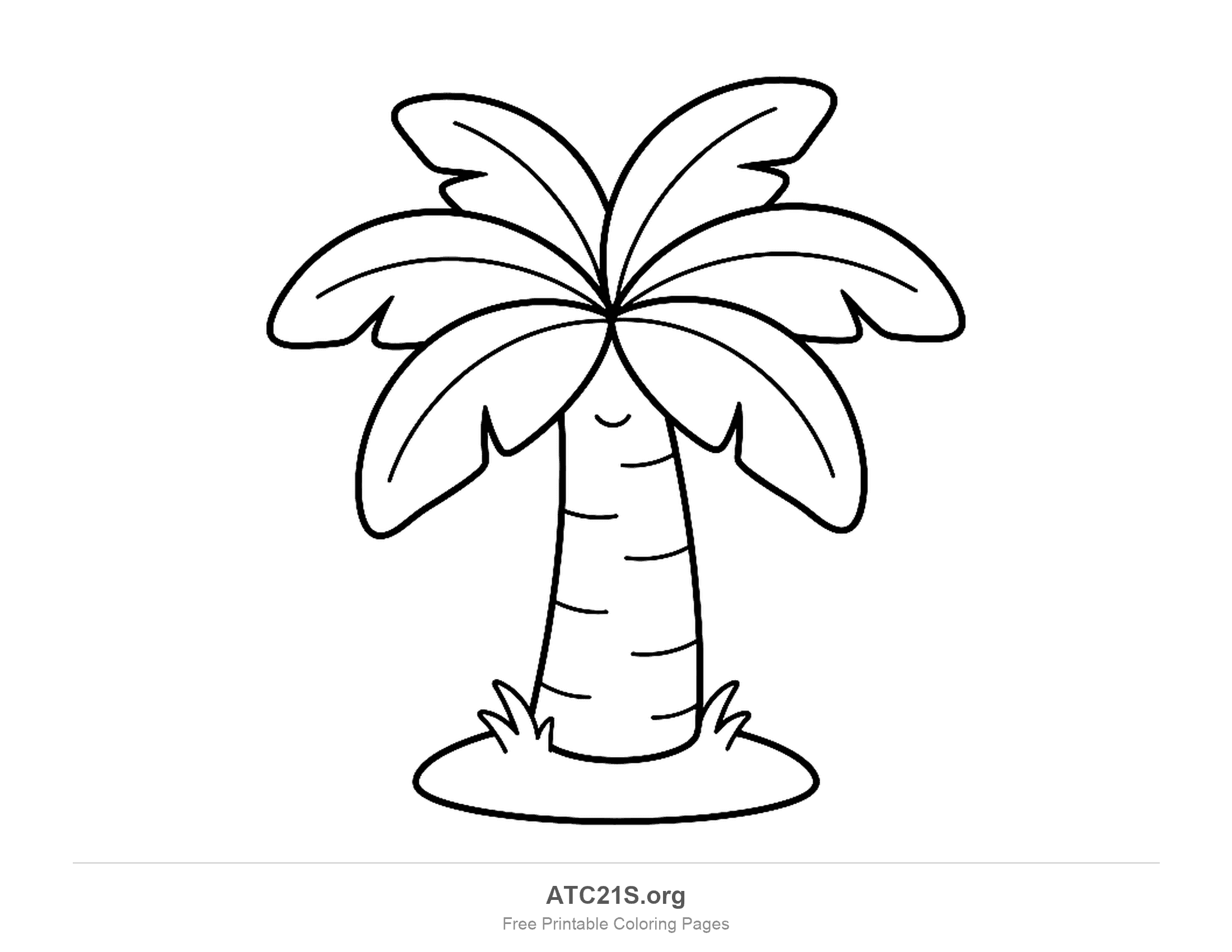
Palm Tree Coloring Page - Smiling Cartoon Palm
Palm Tree Coloring Page - Geometric Starburst Palm
Palm Tree Coloring Page - Windswept Leaning Palm
Palm Tree Coloring Page - Drooping Feathery Fronds
Palm Tree Coloring Page - Coconut Palm With Clusters
Palm Tree Coloring Page - Fan Palm Round Leaves
Palm Tree Coloring Page - Detailed Diamond Pattern Trunk
quick instructions
How to download and print
1. Pick your sheet
Preview any design below and choose the one you like best.
2. Print or download
Print straight from the page, or save the PNG to print later.
3. Color it in
Crayons, colored pencils or markers — plain paper works fine.
Every sheet is sized for landscape US Letter (11" x 8.5") at 200 DPI, so it fills the page without cropping. A4 works too — choose "fit to page" when printing.
while you color…
6 fun facts about the palm tree
There are about 2,600 kinds of palm, and almost all of them grow in warm tropical or subtropical places.
A coconut can float across the sea for weeks and still sprout into a new palm when it washes up on a beach.
Palm trunks do not grow a new ring of wood each year like an oak, so you cannot count rings to tell a palm's age.
The Quindío wax palm, Colombia's national tree, can grow more than 45 metres (150 feet) tall, making it one of the tallest palms in the world.
The coco de mer palm from the Seychelles grows the biggest seed of any plant, which can weigh more than 15 kilograms (33 pounds).
Dates grow on date palms, and people in the Middle East and North Africa have been growing them for thousands of years.
About the palm tree coloring page
Palm trees are the trees of beaches, islands and desert oases. There are around 2,600 kinds, and almost all of them grow in warm places: along tropical coasts, in rainforests, in the hot dry lands of the Middle East and North Africa, and on the streets of cities like Los Angeles, Miami and Dubai. Children know one the moment they see it — a tall bare trunk with a burst of big leaves at the very top — because it is the picture on every holiday postcard and every desert-island cartoon. With no branches to draw, it is also one of the easiest trees to color. This page has eight palms, from a short smiling tree on a little grassy island to a feathery palm with a criss-cross trunk.
Real palms have a grey, tan or brown trunk and fronds in every green from bright lime to dusty blue-green, with the oldest fronds at the bottom of the crown turning yellow and brown before they drop. Coconuts are green while they are young and brown and hairy once they ripen. That is a perfectly good way to color these sheets. It is also fine to ignore it. A pink palm, a trunk striped in rainbow bands or fronds in every shade of blue at sunset is just as welcome, and coloring the fronds lighter at the tips and darker near the middle is a nice first try at shading. The shapes worth pointing out are the long trunk with no branches at all and the crown of fronds that all spring from a single point at the top — that is what makes a palm look like a palm rather than an oak or a pine.
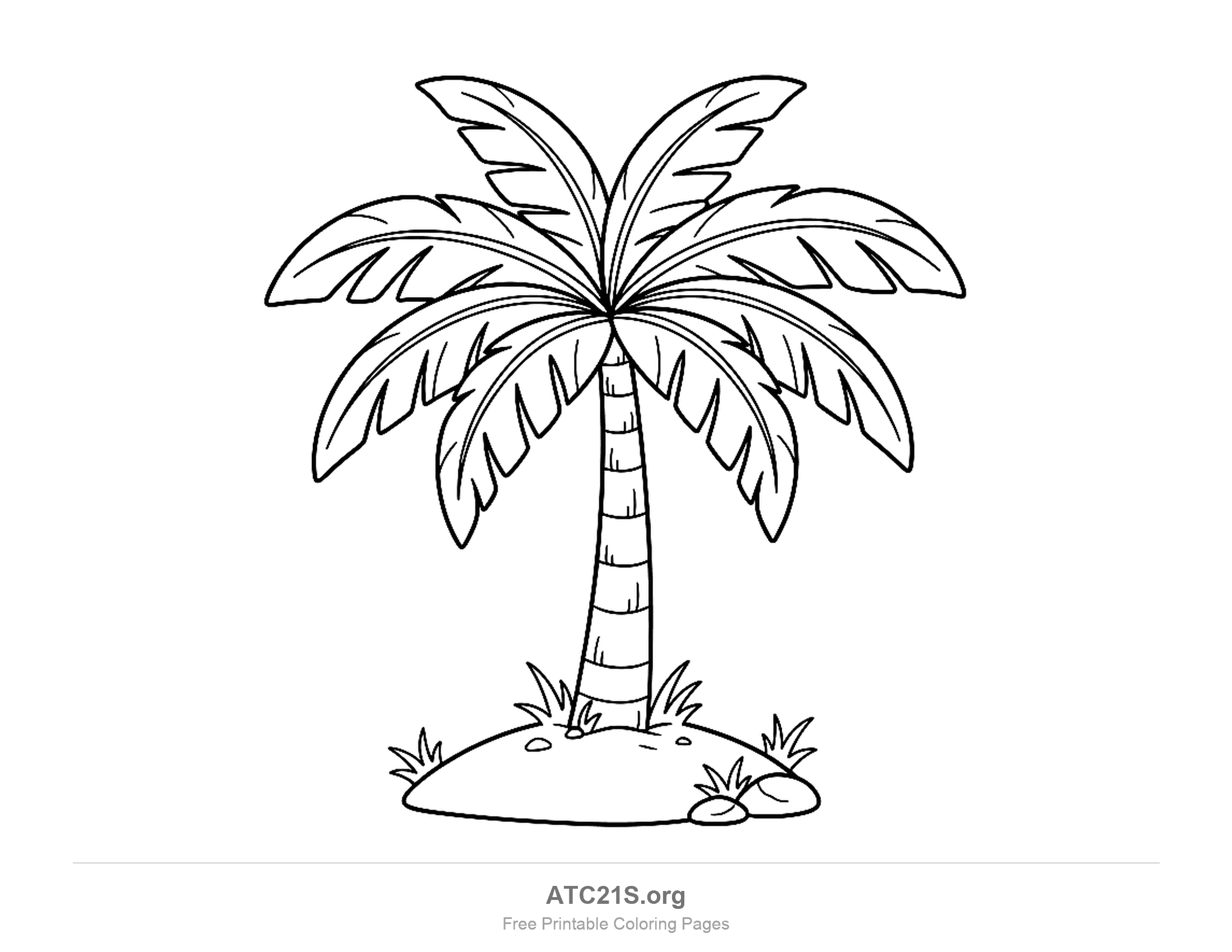
The eight designs get steadily harder. First is a short palm on a little oval island with a tuft of grass on each side, six big rounded fronds with a single line down each, a ringed trunk and a tiny smile tucked under the leaves, all in the thickest outlines of the set for toddlers still learning to stay inside the lines. Then a cartoon palm with a big smiling face, rosy cheeks and a banded trunk under a crown of jagged-edged fronds. The third sheet is a geometric palm drawn entirely with straight lines: pointed fronds radiate from one centre like a star, each split into angled sections like the feathers on an arrow, above a trunk of stacked triangles standing on a flat, tiled patch of ground. After that the drawings add more to do: a tall, slender palm leaning over in the wind with its fronds blown to one side and one tip curling over, roots gripping the sand at its foot; a palm whose fronds arch up and hang down like a fountain, each lined with dozens of narrow leaflets; a coconut palm with two heavy bunches of round coconuts hanging just below its feathery crown; a fan palm whose round, pleated leaves are each split into dozens of pointed segments fanning out from the stalk; and finally a dense crown of feathery fronds with fine lines on every leaflet, above a trunk covered in a criss-cross pattern of overlapping diamonds, for children who like a long, careful page.
The trunk is the detail worth pausing on, because a palm grows differently from most trees. An oak or a pine adds a ring of new wood every year and gets fatter as it ages, but a palm grows all its leaves from a single bud at the very top, and its trunk has no growth rings at all. The rings on the island and cartoon palms are scars where old fronds have fallen off, and the diamond pattern on the last sheet shows the stubs of old leaf stalks that some palms, like the date palm, keep on their trunks. Put the palm next to the oak on the tree coloring pages and let children spot the differences. The coconut and fan palm sheets make a second good pair: most palms have either feather-shaped fronds, with leaflets lined up along a central stalk, or fan-shaped ones that spread out from a single point like an open hand, and children can sort the other six sheets into the two kinds.
Every sheet prints on landscape US Letter paper at 200 DPI, so the palm fills the page without being cut off. Plain copier paper is fine for crayons and colored pencils. If you are using markers or paint, slightly thicker card stock stops the colour bleeding through — worth doing on the coconut, fan palm and diamond-trunk sheets, where the leaflets, the pleated fan segments and the criss-cross trunk put the lines closest together.
In the classroom these pages pair well with a lesson on islands and beaches, on deserts and oases, on hot and cold climates, on summer holidays, or on the letter P. Hand out the island palm for a quick, cheerful page and save the diamond-trunk palm for a quiet afternoon, or ask children to draw sand, sea and a sun around the windswept palm to turn it into a whole beach, with a scallop or a conch from the seashell sheets lying on the sand. The tree page starts with another palm on its own little island before moving on to pines, willows and oaks, and the hibiscus coloring pages are the flower that grows beneath palms from Hawaii to Malaysia. Many parrots, including macaws, feed on palm fruits and nest in hollow palm trunks, so the parrot coloring pages make a bright companion, and sea turtles lay their eggs on the same warm beaches, which the turtle sheets cover. The color-by-number math generator makes a practice sheet to go with it, and the flowers, skies and landscapes are in the rest of the nature coloring pages.