AnimalsOcean8 designsFree to print
print, color, learn
Free Turtle Coloring Pages
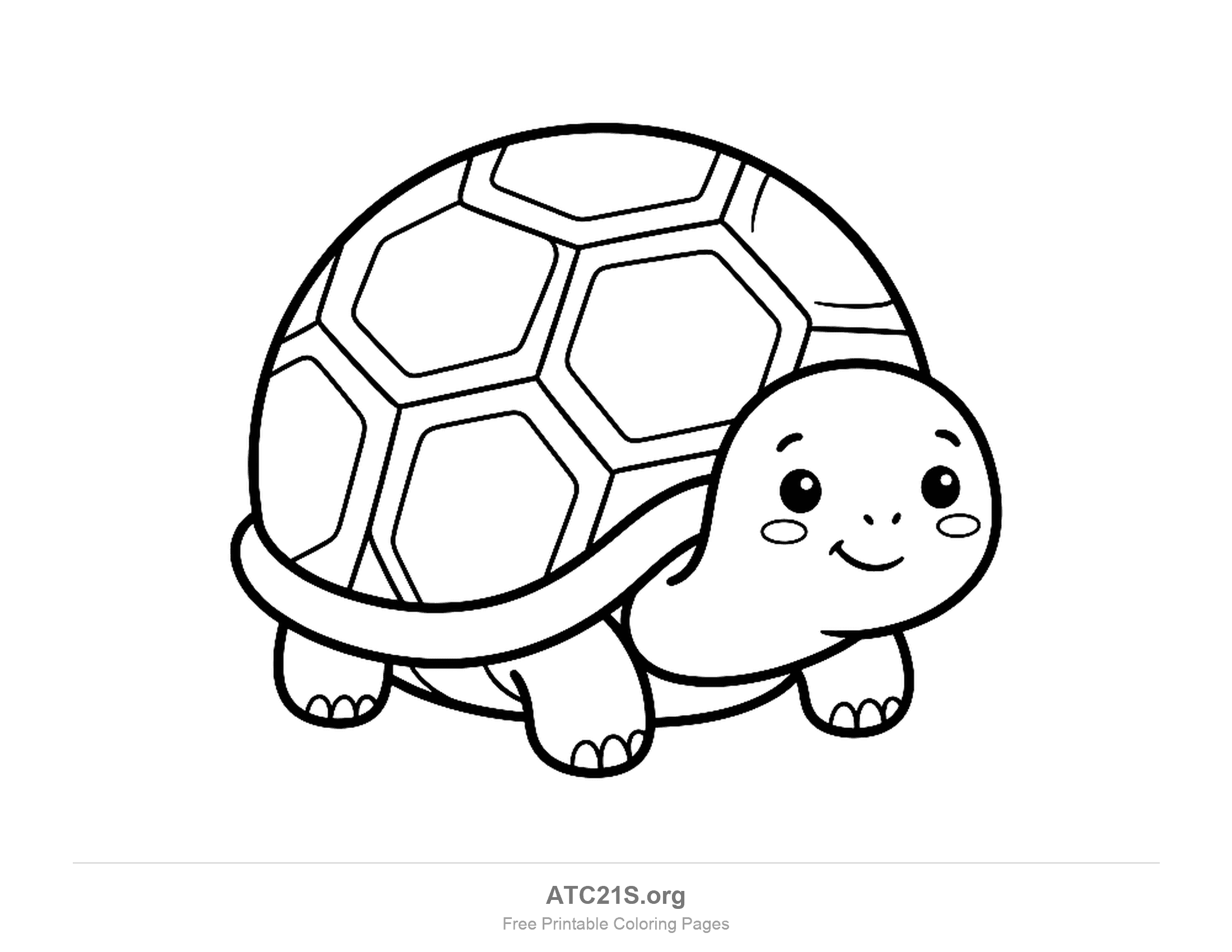
Eight free printable turtle coloring pages, from a chunky smiling turtle for little hands to a spotted swimming sea turtle for older kids. Download the PNG or print straight from this page.
share:
pick a favourite
8 Turtle designs to color
Tap any sheet for a closer look, then download or print it.
Turtle Coloring Page - Cute Sitting
Turtle Coloring Page - Cute Baby Looking Up
Turtle Coloring Page - Cute Waving
Turtle Coloring Page - Walking Land Tortoise
Turtle Coloring Page - Top Down Sea Turtle
Turtle Coloring Page - Detailed Giant Tortoise
Turtle Coloring Page - Detailed Swimming Sea Turtle
quick instructions
How to download and print
1. Pick your sheet
Preview any design below and choose the one you like best.
2. Print or download
Print straight from the page, or save the PNG to print later.
3. Color it in
Crayons, colored pencils or markers — plain paper works fine.
Every sheet is sized for landscape US Letter (11" x 8.5") at 200 DPI, so it fills the page without cropping. A4 works too — choose "fit to page" when printing.
while you color…
6 fun facts about the turtle
A turtle's shell is part of its skeleton — it is joined to the spine, so a turtle can never crawl out of it.
Giant tortoises can live more than 100 years, and some have lived past 150.
Sea turtles have flippers instead of feet, and some kinds swim thousands of miles across the ocean.
Baby sea turtles hatch from eggs buried in beach sand and race to the water on their own.
Turtles do not have teeth. They have a sharp beak, a bit like a bird's, which they use to bite plants or jellyfish.
The leatherback is the largest sea turtle and can grow longer than a small car.
About the turtle coloring page
Turtles are reptiles with a hard shell that is part of their skeleton — they cannot crawl out of it. Some live in the ocean, some in ponds and rivers, and some (usually called tortoises) live on dry land. Children meet them as the slow, gentle animal in storybooks, as the sea turtle gliding through a nature film, or as the giant tortoise at the zoo, which is why they are such a popular animal to colour.
Green, brown, olive and sandy yellow are the colours most real turtles wear, often with a paler underside. That is a good starting palette, but these pages do not have one "right" colour. Sea turtles can be mottled green and brown; giant tortoises are usually dull grey-brown; a cartoon baby turtle looks just as good in bright greens, blues or a rainbow mix. The shell is the fun part: each scute (the hexagonal plate) can be a slightly different shade, which is how real shells look in the sun.
The eight designs get steadily harder. The first four are the easy ones — a smiling turtle with a big round shell, a chubby turtle sitting up like a person, a baby turtle looking up with huge eyes, and a waving cartoon turtle standing on its hind legs. Thick outlines and wide open shapes suit toddlers and preschoolers still learning to stay inside the lines. Next is a land tortoise walking in profile, then a sea turtle seen from above with its flippers spread, both with more plates to colour. The last two are the longer projects: a long-necked giant tortoise with scaly legs, and a swimming sea turtle whose flippers are covered in spots for children who like a careful, sit-down page.
Every sheet prints on landscape US Letter paper at 200 DPI, so the turtle fills the page without being cut off. Plain copier paper is fine for crayons and colored pencils. If you are using markers or paint, slightly thicker card stock stops the color bleeding through — worth doing on the swimming sea turtle, where the spots sit close together.
In the classroom these pages pair well with a lesson on reptiles, on ocean habitats, on life cycles, or on the letter T. Laying the land tortoise next to the sea turtle is a simple way to show that "turtle" is a whole family of animals, not one shape — some walk on stumpy legs, some swim with flippers. Print two or three different designs and let each child pick: the smiling round-shell turtle is finished in a few minutes, while the spotted swimming sea turtle can fill a whole quiet afternoon, which keeps a mixed-age table busy at the same time. The crab and octopus pages come from the same tide pools, and the animal lineup covers the rest.
Sea turtles are also an easy opening for a first conversation about looking after the ocean. Baby sea turtles hatch from eggs buried in beach sand, often on warm shores fringed with coconut palms, and have to race to the water on their own, and several kinds are now endangered. Colouring one is a calm way to talk about beaches, plastic in the sea, and why these animals need protecting.