NatureLandscapes8 designsFree to print
print, color, learn
Free Nature Coloring Pages
Eight free printable nature coloring pages that put a little of everything outdoors into one set, from a smiling rainbow arch drawn in bold lines for little hands to a smiling tree full of leaves and blossoms for older kids. Download the PNG or print straight from this page.
share:
pick a favourite
8 Nature Scene designs to color
Tap any sheet for a closer look, then download or print it.
Nature Coloring Page - Smiling Sun Between Two Clouds
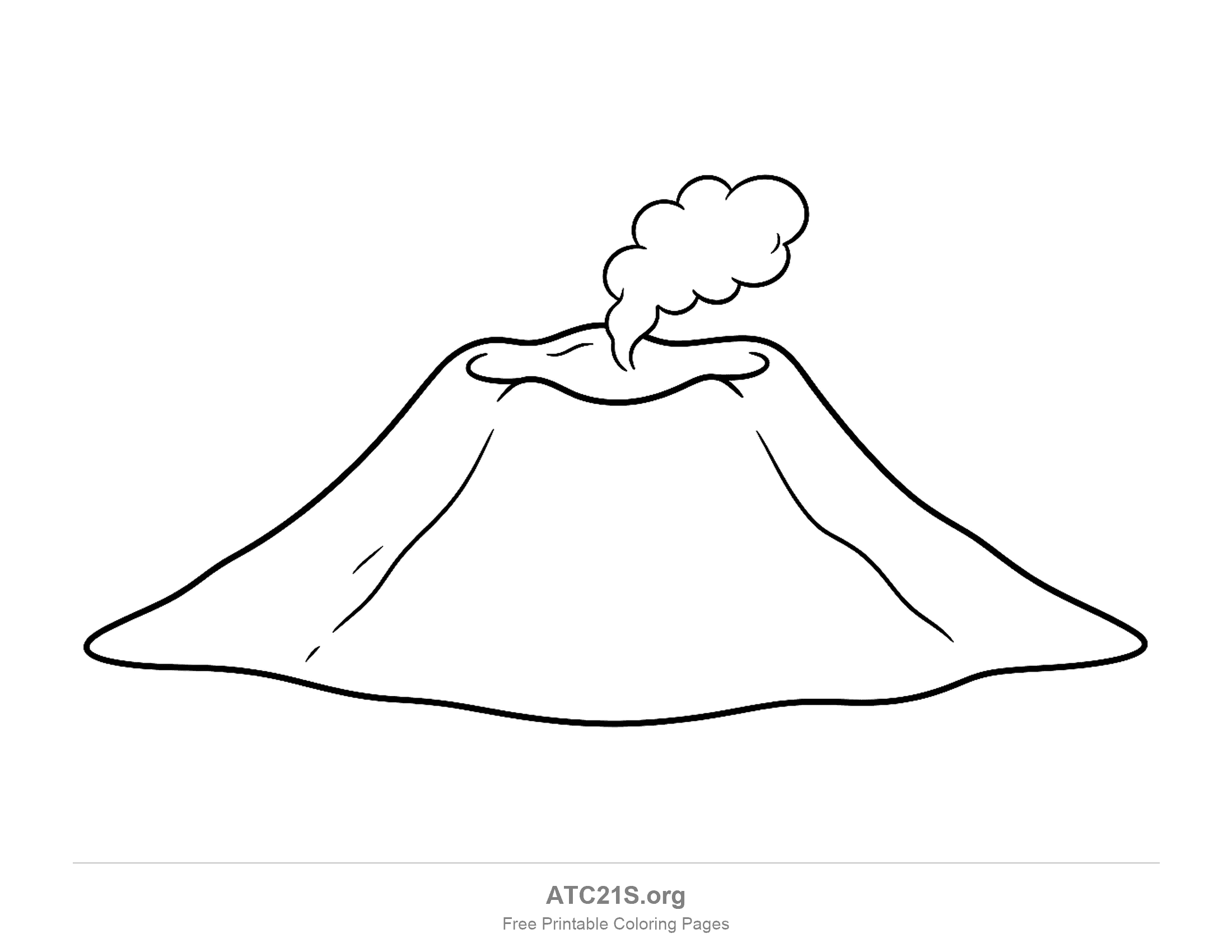
Nature Coloring Page - Smiling Snowcapped Mountain
Nature Coloring Page - Three Spotted Toadstools
Nature Coloring Page - Waving Cactus In Patterned Pot
Nature Coloring Page - Smiling Sunflower With Leaves
Nature Coloring Page - Curling Ocean Wave With Foam
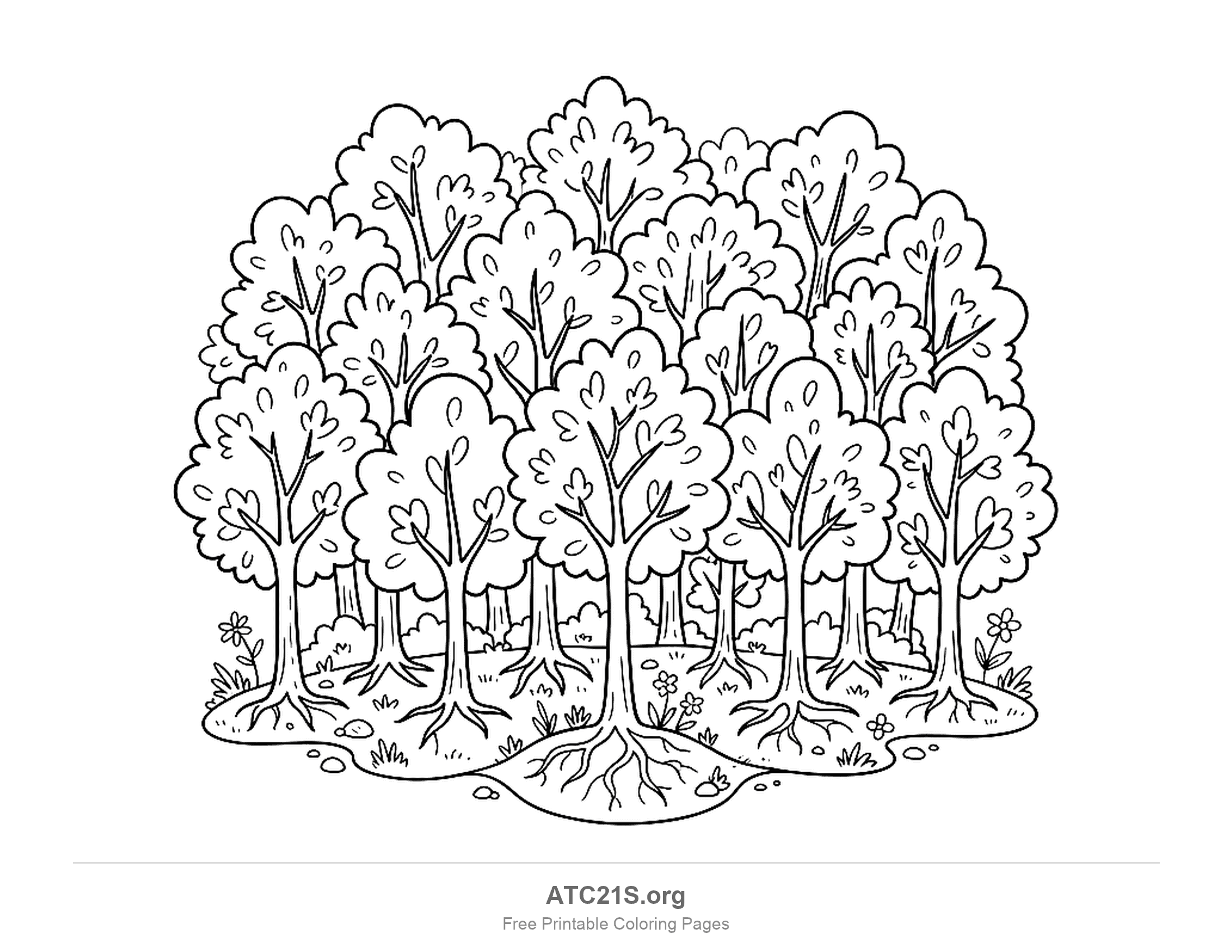
Nature Coloring Page - Smiling Tree With Blossoms
quick instructions
How to download and print
1. Pick your sheet
Preview any design below and choose the one you like best.
2. Print or download
Print straight from the page, or save the PNG to print later.
3. Color it in
Crayons, colored pencils or markers — plain paper works fine.
Every sheet is sized for landscape US Letter (11" x 8.5") at 200 DPI, so it fills the page without cropping. A4 works too — choose "fit to page" when printing.
while you color…
6 fun facts about the nature scene
You can only see a rainbow when the sun is behind you and the rain is in front of you.
The sun is a star, and it is so big that more than a million Earths could fit inside it.
Mushrooms are not plants. They belong to a different group of living things called fungi, and fungi are more closely related to animals than to plants.
After a big rainstorm, a saguaro cactus can soak up hundreds of litres of water and store it in its pleated stem, which swells like an accordion.
The middle of a sunflower is made of hundreds of tiny flowers called florets, and each one can turn into a seed.
Most ocean waves are made by the wind blowing across the top of the water.
About the nature scene coloring page
Nature is everything outside that people did not make: the sky and the weather, the land and the sea, and all the plants and living things in between. Children meet it every day, in the sun through the window, a puddle on the path or a dandelion in a crack in the pavement, and it is often the first thing they draw on their own. This page is a sampler that gathers eight favourites into one set, each with a friendly smiling face: a rainbow, a sun between two clouds, a snowy mountain, a cluster of toadstools like the ones in the forest, a cactus, a sunflower, an ocean wave and a tree in blossom. It is a good page for a child who cannot decide what to colour, because there is a bit of sky, land, sea and garden to choose from.
The real colours make an easy starting point. A rainbow always runs red, orange, yellow, green, blue, indigo and violet, with red on the outside of the arch. The sun is usually coloured yellow or orange, clouds are white or grey, and a mountain is grey or brown rock with white snow on top. The toadstool with white spots on a red cap is the fly agaric, a cactus is green in a terracotta pot, a sunflower has yellow petals around a brown middle, the sea is blue and green with white foam, and a tree has brown bark and green leaves, with pink or white blossom in spring. Any colour is welcome, though: a purple mountain, a striped cactus or a pink sea are all fine. Each subject has one shape that makes it recognisable, so it still reads right whatever the colour: the arch of the rainbow, the ring of rays round the sun, the pointed peak, the domed caps, the upright arms of the cactus, the ring of petals, the curl of the wave and the round crown of the tree.
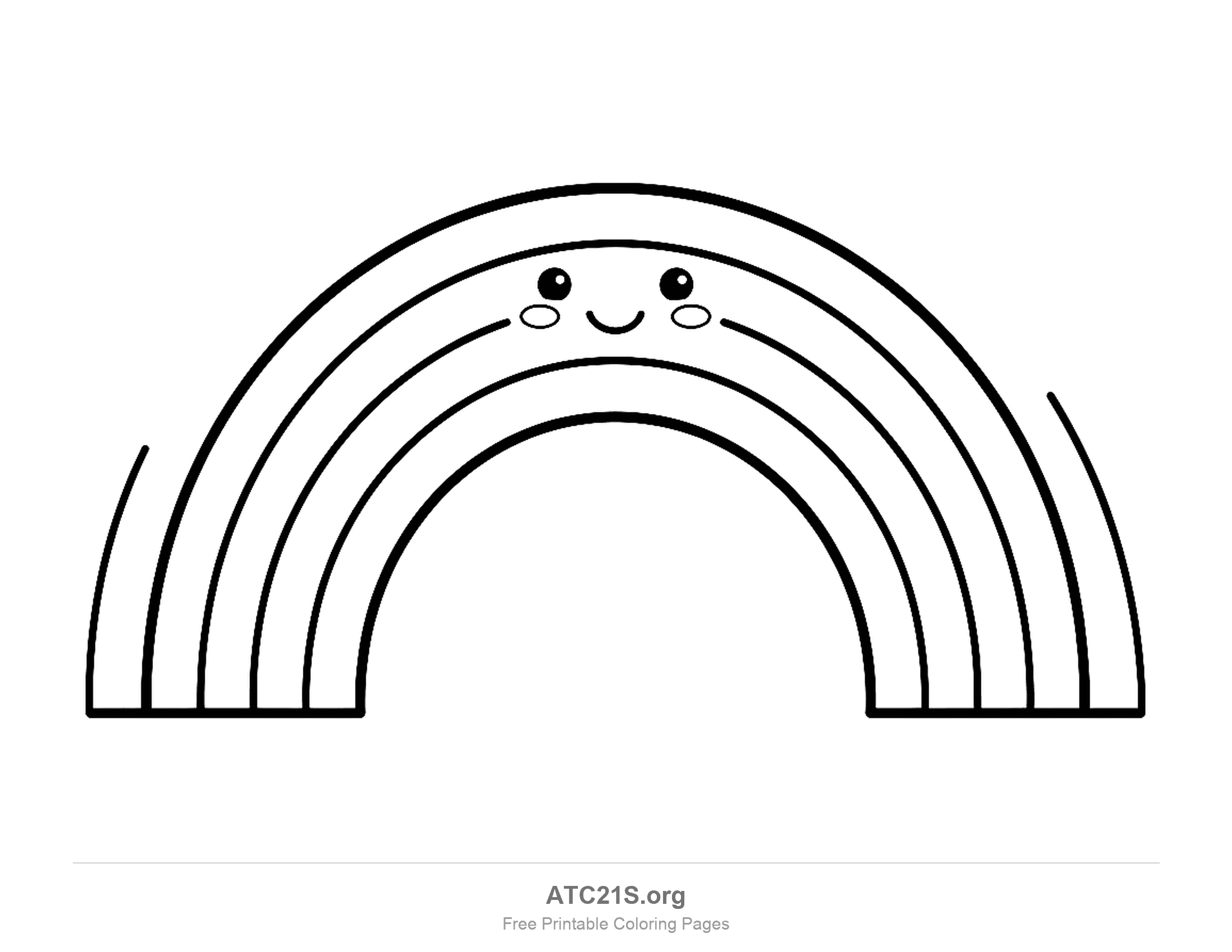
The eight designs get steadily harder. First is a big smiling rainbow arch made of four wide bands in thick outlines, standing on flat feet at both ends, with a little face and rosy cheeks near the top and a curved line on each side like a glow. The line between the second and third bands stops on either side of the smile, so those two bands join around the face: children can carry one colour through the gap or draw the missing line in themselves. Next is a round, smiling sun with wavy rays, peeking out between two puffy clouds, one wide awake and one with its eyes squeezed shut in a happy grin. The third sheet is a smiling, wide-eyed mountain with a drippy snow cap, three small pine trees on a grassy slope at its foot and rocks and bushes around its base. After that the drawings add more to do: three toadstools, a tall one in the middle and two smaller ones on either side, each with a spotted cap, fine gills drawn underneath and a little smiling face on its stalk, standing in tufts of grass with tiny sprouting leaves; a ribbed cactus holding up both arms as if it were waving, with a tiny face on each arm as well as its big face, tufts of spines along its ribs and a pot painted with a wavy band, dots and little flowers; a smiling sunflower with a full ring of petals, each lined with veins, a face in its seed head ringed with dots and small crosses, and two big leaves on its stem; an ocean wave curling over into a C shape with a laughing face, foam bubbling off its crest and its base and long streaks of water swirling underneath; and finally a smiling tree whose trunk splits into branches inside a cloud-shaped crown packed with leaves and small flowers, with four smiling flowers, grass tufts and pebbles on the mound at its feet, for children who like a long, careful page.
These eight subjects are a nice way to show that nature is all connected. The sun warms the sea, water rises from it into the air and gathers into clouds, the clouds drop rain or snow on the mountains, and the water runs back down to the sea, which is the water cycle. When the sun shines through falling raindrops behind you, the light splits into a rainbow. The tree, the sunflower and the cactus use sunlight to make their own food from water and air, and the cactus is so good at saving water that it can go weeks without rain. The toadstools are the odd ones out: they are not plants at all but fungi, which cannot use sunlight and instead feed on dead leaves and wood. A simple sorting game works well here: ask children which four drawings are living things and which four are not. It is also a good moment to say that wild mushrooms should never be picked or eaten, because some, like the red-and-white fly agaric, are poisonous.
Every sheet prints on landscape US Letter paper at 200 DPI, so each drawing fills the page without being cut off. Plain copier paper is fine for crayons and colored pencils. If you are using markers or paint, slightly thicker card stock stops the colour bleeding through. It is worth doing on the sunflower, the ocean wave and the tree, where the petal veins, the clusters of foam bubbles and the little leaves and flowers in the treetop put the lines closest together.
In the classroom these pages pair well with Earth Day, a lesson on living and non-living things, the water cycle, the seasons, or the letter N. Hand out the rainbow for a quick, cheerful page and save the tree for a quiet afternoon, or give each child a different sheet and pin them up together as one big nature wall. For a classroom weather chart, the weather coloring pages put rain clouds, storms and a four seasons wheel side by side, and to see a mountain, a river and a forest together in a single scene, the landscape sheets fill a whole page. The curling wave has no page of its own yet, but a printable dolphin loves to surf the bow waves of boats, the scallops, conches and cowries it washes up onto the sand are waiting among the printable seashells, and the rest of the wildlife is in the animal coloring pages. Each subject here has its own set of designs in the full nature coloring collection.
keep coloring