NatureLandscapes8 designsFree to print
print, color, learn
Free Volcano Coloring Pages
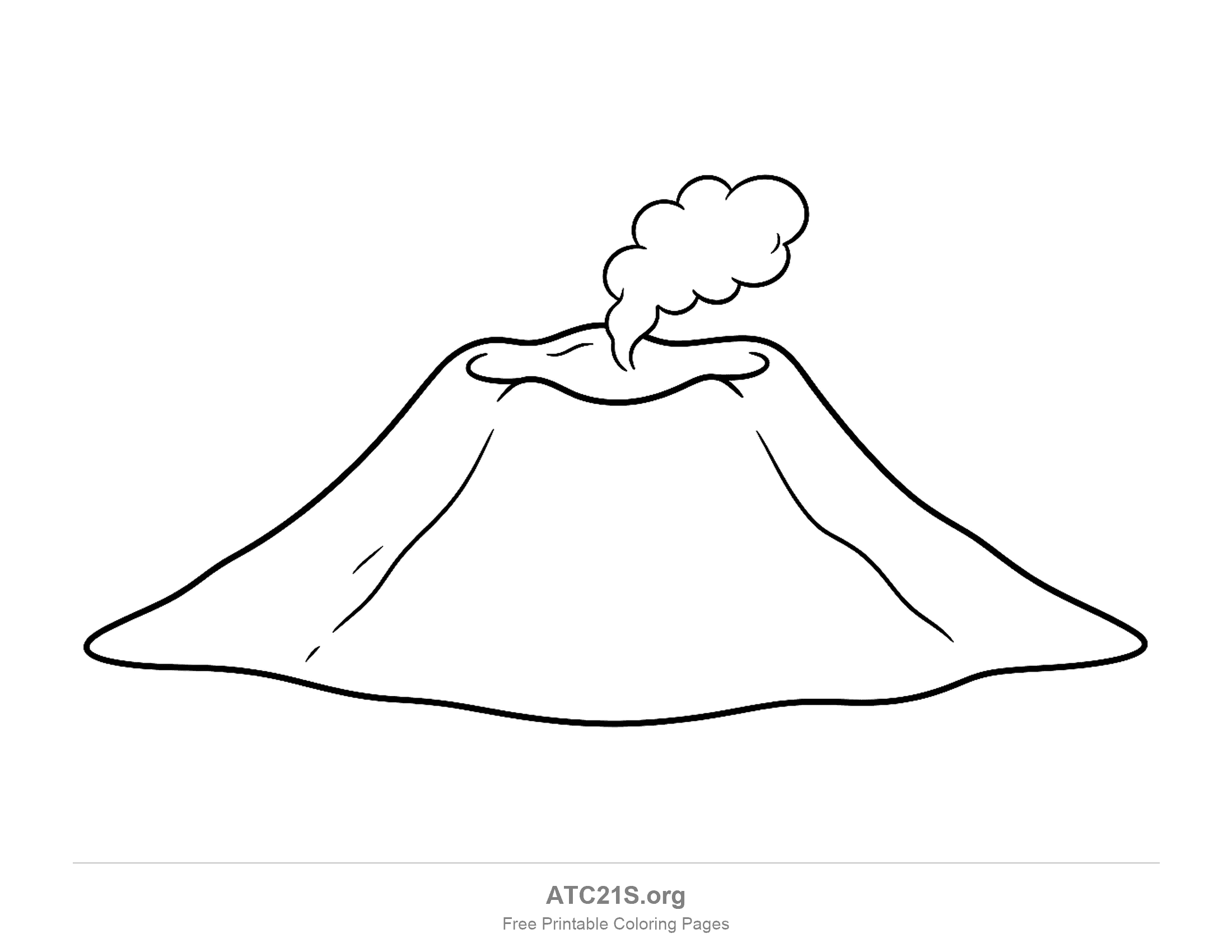
Eight free printable volcano coloring pages, from a low, wide volcano with one puff of smoke drawn in a few bold lines for little hands to a rocky cone in full eruption, ringed with boulders and streaked with lava, for older kids. Download the PNG or print straight from this page.
share:
pick a favourite
8 Volcano designs to color
Tap any sheet for a closer look, then download or print it.
Volcano Coloring Page - Smiling Volcano Blowing Bubbles
Volcano Coloring Page - Happy Volcano Waving Hello
Volcano Coloring Page - Tall Steep Cone With Steam
Volcano Coloring Page - Three Ash Clouds And Rocks
Volcano Coloring Page - Lava Flowing Down One Side
Volcano Coloring Page - Three Steaming Volcanoes
Volcano Coloring Page - Rocky Boulder Eruption
quick instructions
How to download and print
1. Pick your sheet
Preview any design below and choose the one you like best.
2. Print or download
Print straight from the page, or save the PNG to print later.
3. Color it in
Crayons, colored pencils or markers — plain paper works fine.
Every sheet is sized for landscape US Letter (11" x 8.5") at 200 DPI, so it fills the page without cropping. A4 works too — choose "fit to page" when printing.
while you color…
6 fun facts about the volcano
Melted rock is called magma while it is still underground and lava once it comes out onto the surface.
Fresh lava can be hotter than 1,100 °C, about four times hotter than a kitchen oven turned all the way up.
There are about 1,350 volcanoes on land around the world that could erupt again, and many more are hidden under the sea.
Mauna Loa in Hawaii is the biggest active volcano on Earth.
Pumice is a rock made from frothy lava that is so full of air bubbles it can float on water.
The biggest volcano in the solar system is Olympus Mons on Mars, about two and a half times as tall as Mount Everest.
About the volcano coloring page
A volcano is a place where melted rock from deep inside the Earth breaks through to the surface. Over hundreds or thousands of years the lava and ash it throws out pile up around the opening, and that pile becomes a mountain with a hole in the top. Children love volcanoes because they are the most exciting thing a mountain can do: they rumble, smoke, glow and pour out rivers of red-hot rock, and the eruption is the part every child wants to draw. Three of the sheets here turn the volcano into a friendly cartoon with a face, and the other five show real-looking cones, some quietly steaming and some in full eruption.
Real volcanoes are mostly dark: black, charcoal grey and brown rock, sometimes with green forest on the lower slopes of an older one. Fresh lava glows yellow, orange and red, then cools to a black crust, and the clouds above an eruption are grey ash and white steam. Those are good colours to start with, but a purple volcano with blue lava or a rainbow eruption is just as welcome. What makes the shape read as a volcano is a cone with a flat top and a bowl-shaped hole in it called a crater, with something coming out, whether that is smoke, steam or lava, and every design here is built on that cone.
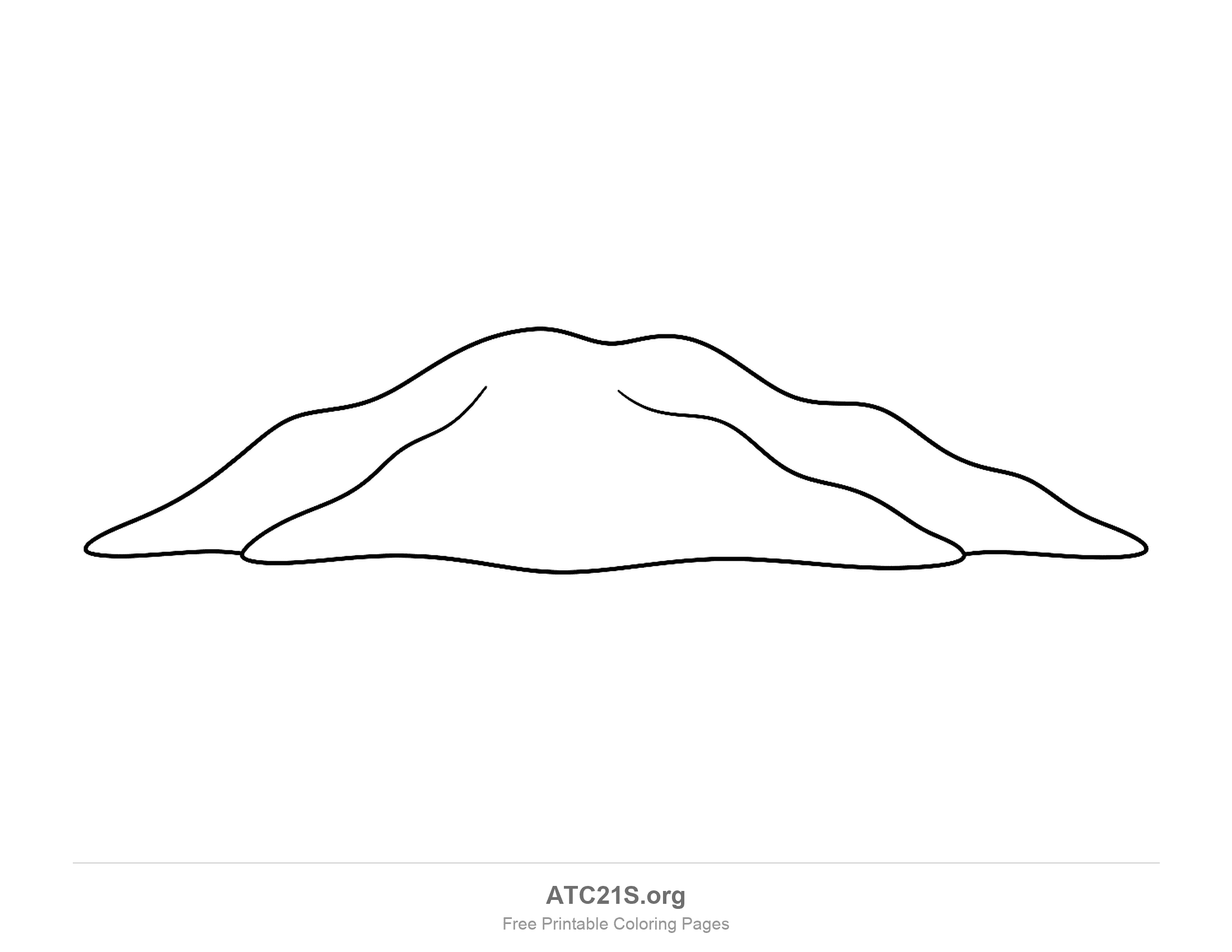
The eight designs get steadily harder. First is a low, wide volcano spreading right across the page, with an oval crater on its flat top, one curly puff of smoke rising out of it and only a few soft lines on its slopes, so there are big open spaces that suit toddlers still learning to stay inside the lines. Next is a smiling volcano with round eyes, raised eyebrows and a small grin, a wavy band of lava around its top and a fountain of round bubbles bursting out of the crater, some with shiny highlights and some drawn as rings inside rings. The third sheet is a happy volcano with a big open-mouthed grin waving one hand, lava dripping over its rim, a puff of lava shooting out of the top with splashes flying off it, and cracks and boulders around its base. The fourth has no face: a tall, steep cone with a jagged crater rim and a small wisp of steam, ridges and cracks running all the way down its sides to a long ground line. After that the drawings add more to do: a volcano puffing out three big ash clouds, one straight up and two curling off to the sides, with a broken crater rim and rocks and grass tufts at its foot; a volcano with smoke and splashes at the top and a thick river of lava pouring down one side in long drips before it pools at the bottom beside a boulder; three volcanoes side by side, the tallest in the middle, each with lava drooping over its rim and wavy lines of steam rising, with a lava river winding between them; and finally a rocky volcano erupting a bubbly cloud with blobs of lava flying around it, its slopes streaked with lava and dotted with blobs, and a ring of jagged rocks and boulders around its base, for children who like a long, careful page.
What is inside a volcano is the lesson that goes with these pages. Far below the ground, in places where the rock is hot enough to melt, a pool of melted rock called magma collects in a magma chamber. Magma has gas dissolved in it, much like the fizz in a bottle of soda, and because it is lighter than the solid rock around it, it pushes slowly upwards. When it finds a way through cracks and up a narrow pipe called a vent, the gas bubbles out, the pressure is let go and the magma bursts out of the crater. Once it reaches the surface it has a new name: lava. As lava cools it hardens into new rock, so every eruption makes the volcano a little bigger. The classic classroom model shows the same idea safely. Build a cone of play dough or papier-mâché around a small bottle, put a spoonful of baking soda inside with a squirt of dish soap and a drop of red food colouring, then pour in vinegar. The two react and make carbon dioxide gas, and the bubbles push a foamy red "lava" up and over the rim. Real lava is melted rock, not a chemical reaction in a bottle, but in both cases it is gas that drives the eruption. Volcanoes are where some of the mountain coloring pages come from too: Mount Fuji in Japan and Kilimanjaro in Africa are both volcanoes, and the mountain set even has a smoking volcano of its own.
Every sheet prints on landscape US Letter paper at 200 DPI, so the volcano fills the page without being cut off. Plain copier paper is fine for crayons and colored pencils. If you are using markers or paint, slightly thicker card stock stops the colour bleeding through. It is worth doing on the bubble fountain, the three steaming volcanoes and the rocky eruption, where the little bubbles, the steam lines and the crowded boulders put the lines closest together.
In the classroom these pages pair well with a lesson on landforms, the layers of the Earth, rocks, the baking soda model above, or the letter V. The grey plumes on the ash-cloud sheet are a good way into the cloud coloring pages, because an ash cloud is not made of water droplets at all but of tiny bits of rock and glass, and it can grow so tall and stormy that it makes its own lightning. Many islands are the tops of volcanoes that grew up from the sea floor, including every island in Hawaii, where beaches of black sand made from broken-up lava sit beneath rows of palm trees. And volcanoes are a favourite backdrop for a prehistoric scene: the world of the dinosaurs had plenty of them, so a dinosaur coloring page next to the three steaming volcanoes makes a ready-made wall display. The flowers, trees and the whole sky are in the nature coloring pages.
keep coloring