AnimalsFarm8 designsFree to print
print, color, learn
Free Llama Coloring Pages
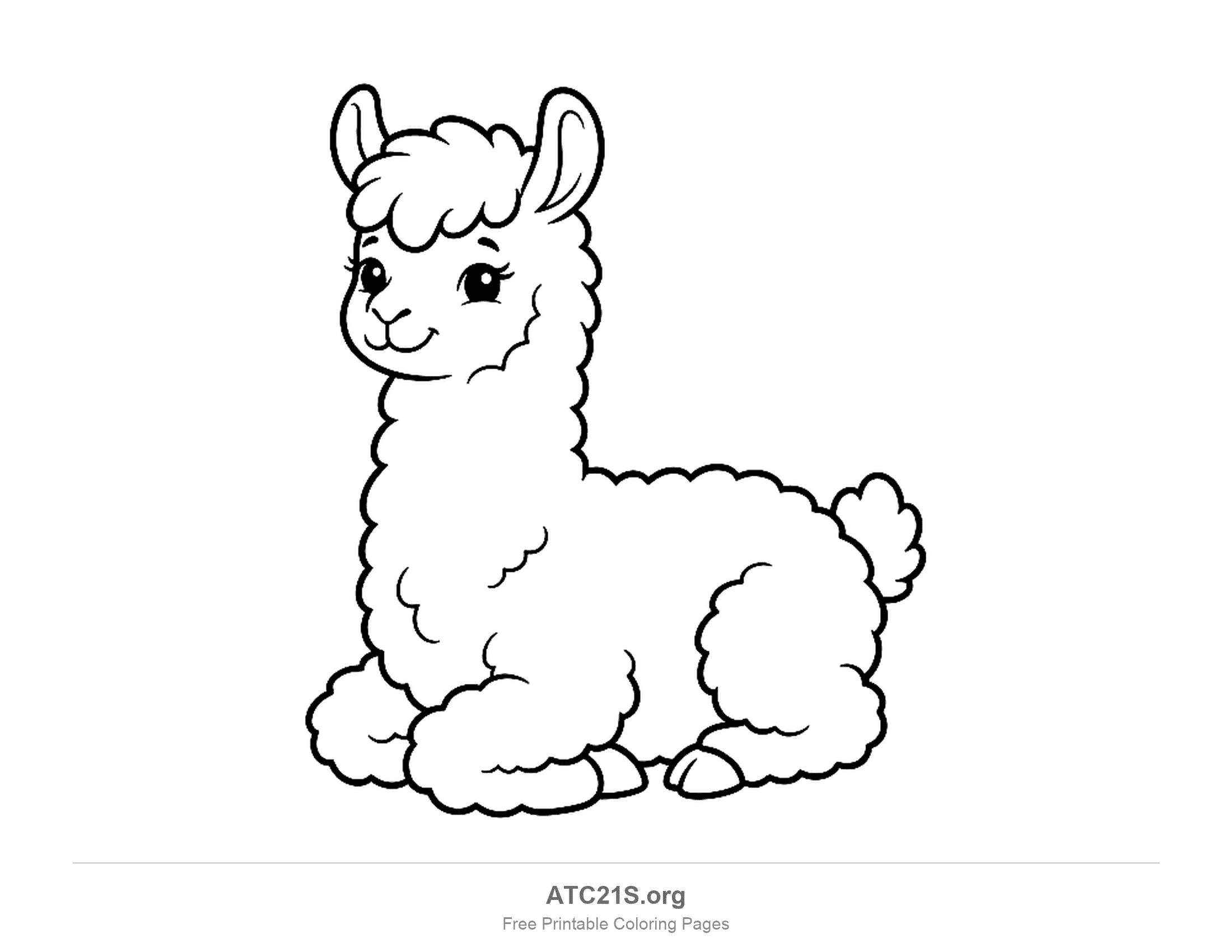
Eight free printable llama coloring pages, from a chunky sitting cria for little hands to a detailed, tasseled pack llama for older kids. Download the PNG or print straight from this page.
share:
pick a favourite
8 Llama designs to color
Tap any sheet for a closer look, then download or print it.
Llama Coloring Page - Sleeping Curled
Llama Coloring Page - Looking Over Shoulder
Llama Coloring Page - Cute Winking
Llama Coloring Page - Prancing With Saddle
Llama Coloring Page - Standing Patterned Saddle
Llama Coloring Page - Smiling Face
Llama Coloring Page - Detailed Ornate Standing
quick instructions
How to download and print
1. Pick your sheet
Preview any design below and choose the one you like best.
2. Print or download
Print straight from the page, or save the PNG to print later.
3. Color it in
Crayons, colored pencils or markers — plain paper works fine.
Every sheet is sized for landscape US Letter (11" x 8.5") at 200 DPI, so it fills the page without cropping. A4 works too — choose "fit to page" when printing.
while you color…
6 fun facts about the llama
A baby llama is called a cria, and it can usually stand up within an hour of being born.
Llamas come from the Andes mountains of South America, where people have kept them for more than 5,000 years.
Llamas spit when they are annoyed — usually at other llamas, not at people.
A llama can carry about 50 to 75 pounds (23 to 34 kg) on its back, which is why people used them as pack animals.
Llama wool is warm, light and almost waterproof, so it is used for blankets, ropes and clothes.
Llamas are cousins of camels, but they have no hump and are much smaller.
About the llama coloring page
Llamas are woolly, long-necked animals that live in the Andes mountains of South America — Peru, Bolivia, Chile and Argentina. People have kept them for more than 5,000 years as pack animals and for their fleece. They are cousins of camels, though they have no hump and stand only about four feet tall at the shoulder. Children usually meet them as the fluffy smiling face on a jumper or a farm-visit photo, which is why they are such a satisfying animal to sit down and color.
The real coat is white, brown, black, grey, or a mix of those, often in patches. That is a perfectly good way to color these sheets. It is also fine to ignore it. A pink llama, a rainbow one, or one whose saddle blanket is every color in the crayon box is just as welcome. Point out the banana-shaped ears, the long neck and the fluffy tail — those three shapes are what make it look like a llama rather than a sheep or a horse. The saddle blankets and bridles on the later sheets are the extra shapes most children enjoy picking out in bright colors.
The eight designs get steadily harder. First is a cute baby llama sitting with big round eyes and a smile, thick outlines and wide open wool that suit toddlers still learning to stay inside the lines. Then a llama sleeping curled up with its eyes closed, one standing and looking back over its shoulder, and a winking llama with fluffy bangs and a star collar, all still bold and friendly. After that the drawings add more to do: a prancing llama with a small saddle and a bell on its ear, one standing with a patterned saddle blanket of crosses and diamonds, a smiling face with a decorated halter and a pom-pom necklace, and a detailed standing llama with a tasseled bridle and an ornate geometric blanket for children who like a longer, careful page.
The fleece is the part worth pausing on. Llama wool is warm, light and almost waterproof, and Andean weavers have used it for blankets, ropes and clothes for thousands of years. Color the patterned saddle on the standing sheet while talking about the shapes — crosses, diamonds, triangles, tassels — and the page suddenly looks like a real textile. The prancing sheet is the natural one to color while talking about how llamas carried loads along mountain trails, and the sitting cria is the one for a baby-and-grown-up comparison.
Every sheet prints on landscape US Letter paper at 200 DPI, so the llama fills the page without being cut off. Plain copier paper is fine for crayons and colored pencils. If you are using markers or paint, slightly thicker card stock stops the color bleeding through — worth doing on the ornate standing sheet, where the blanket pattern sits a little closer together.
In the classroom these pages pair well with a lesson on South America, on farm animals, on how people and animals work together, or on the letter L. Print a llama next to a horse coloring page and let children spot which animal has a mane and which has banana-shaped ears — it turns coloring into a short observation exercise. The sitting cria is finished in a few minutes; the ornate standing llama can fill a quiet stretch of the afternoon. The cow sheets and pig pages fill out the farmyard, the capybara coloring pages and sloth sheets cover more of South America, and the other printable animals has the rest.