AnimalsPrehistoric8 designsFree to print
print, color, learn
Free Dinosaur Coloring Pages
Eight free printable dinosaur coloring pages covering eight different species, from a plain-outlined Parasaurolophus for little hands to a finely textured Spinosaurus for older kids. Download the PNG or print straight from this page.
share:
pick a favourite
8 Dinosaur designs to color
Tap any sheet for a closer look, then download or print it.
Dinosaur Coloring Page - Long-Necked Brachiosaurus
Dinosaur Coloring Page - Gliding Pterodactyl
Dinosaur Coloring Page - Cute T. Rex
Dinosaur Coloring Page - Smiling Triceratops
Dinosaur Coloring Page - Armored Ankylosaurus
Dinosaur Coloring Page - Stegosaurus with Back Plates
Dinosaur Coloring Page - Sail-Backed Spinosaurus
quick instructions
How to download and print
1. Pick your sheet
Preview any design below and choose the one you like best.
2. Print or download
Print straight from the page, or save the PNG to print later.
3. Color it in
Crayons, colored pencils or markers — plain paper works fine.
Every sheet is sized for landscape US Letter (11" x 8.5") at 200 DPI, so it fills the page without cropping. A4 works too — choose "fit to page" when printing.
while you color…
6 fun facts about the dinosaur
Nobody knows what colour dinosaurs really were, so any colour you choose could be right.
A Tyrannosaurus rex tooth could grow as long as a banana — about 12 inches with the root.
Brachiosaurus was so tall it could have looked into a fourth-floor window.
Ankylosaurus had a bony club on its tail that it swung like a hammer to defend itself.
Triceratops had a skull the size of a small car, one of the biggest heads of any land animal ever.
Pterodactyls were flying reptiles, not dinosaurs — they were cousins of the dinosaurs instead.
About the dinosaur coloring page
Dinosaurs ruled the Earth for over 160 million years, long before there were any people to see them. Everything we know about them comes from fossils — bones, footprints, eggs and even droppings turned to stone — which is why nobody can tell a child their dinosaur is the wrong colour. Each of the eight sheets here shows a different real species, named on the page description so children pick up the names as they colour.
Colour is the best part of a dinosaur page. Scientists have only worked out the true colours of a handful of species, so greens, browns, greys, blues and bold stripes are all fair game. A good prompt for older children is to ask why they chose their colours: camouflage in a forest, warning colours like a poison frog, or bright patterns for showing off, which is one real theory for why Spinosaurus had a sail on its back.
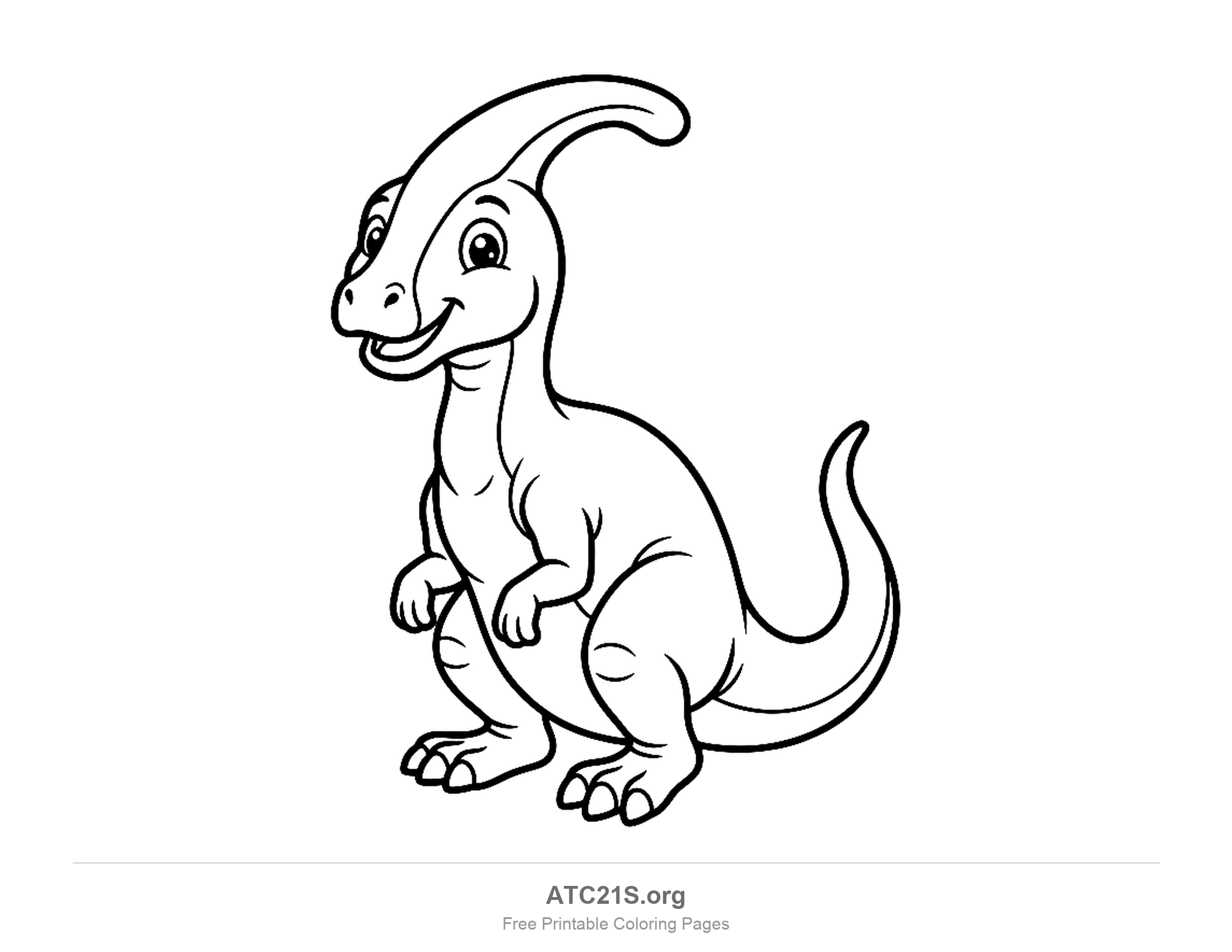
The eight designs get steadily harder. The Parasaurolophus standing on its back legs and the long-necked Brachiosaurus come first — thick outlines, wide open shapes and almost no interior detail, which suits toddlers and preschoolers still learning to stay inside the lines. The gliding Pterodactyl, the smiling T. rex on its grassy patch and the Triceratops with its dotted neck frill sit in the middle, adding some pattern without becoming fussy. The last three are for children who want a long project: an Ankylosaurus covered in armour plates, a Stegosaurus with big back plates and patterned skin, and a Spinosaurus whose tall sail and wrinkled body are drawn in fine, closely spaced lines.
Every sheet prints on landscape US Letter paper at 200 DPI, so the dinosaur fills the page without being cut off. Plain copier paper is fine for crayons and colored pencils. Use slightly thicker card stock for markers or paint, especially on the last three designs, where thin lines can smudge together on flimsy paper.
In the classroom these pages pair naturally with a unit on fossils, on what herbivores and carnivores eat, or on the letter D. Look at the mouths together: the T. rex and Spinosaurus have pointed teeth for meat, while the Brachiosaurus, Triceratops, Stegosaurus and Ankylosaurus have blunt beaks and flat teeth for plants. Printing several designs and letting each child choose their own turns a quiet activity into a sorting exercise, and the finished sheets pin up neatly as a wall-sized prehistoric scene. Children who like teeth and scales usually move on to the crocodile or snake sheets next; the animals section has both. For a backdrop, a printable volcano fits right in: the dinosaurs shared their world with plenty of erupting volcanoes, and right at the end of their time huge eruptions in India, called the Deccan Traps, were pouring out lava that many scientists think made life harder for them just as the asteroid struck.
The Pterodactyl is worth a quick note, since it comes up every time. Pterosaurs were flying reptiles that lived alongside the dinosaurs but were not dinosaurs themselves — a small distinction children usually love knowing, and one that makes them the expert at the table.