AnimalsPolar8 designsFree to print
print, color, learn
Free Polar Bear Coloring Pages
Eight free printable polar bear coloring pages, from a curled-up sleeper for little hands to a detailed face portrait for older kids. Download the PNG or print straight from this page.
share:
pick a favourite
8 Polar Bear designs to color
Tap any sheet for a closer look, then download or print it.
Polar Bear Coloring Page - Cute Rolling
Polar Bear Coloring Page - Cute Sitting Waving
Polar Bear Coloring Page - Cute Standing Arms Up
Polar Bear Coloring Page - Belly Slide
Polar Bear Coloring Page - Curious Sitting
Polar Bear Coloring Page - Walking Profile
Polar Bear Coloring Page - Detailed Face Portrait
quick instructions
How to download and print
1. Pick your sheet
Preview any design below and choose the one you like best.
2. Print or download
Print straight from the page, or save the PNG to print later.
3. Color it in
Crayons, colored pencils or markers — plain paper works fine.
Every sheet is sized for landscape US Letter (11" x 8.5") at 200 DPI, so it fills the page without cropping. A4 works too — choose "fit to page" when printing.
while you color…
6 fun facts about the polar bear
Polar bears live in the Arctic, around the North Pole — they never live in Antarctica with the penguins.
A polar bear's fur is not really white. Each hair is hollow and clear, and the skin underneath is black.
Polar bears are the largest bears in the world. A big male can weigh as much as ten grown-ups put together.
Polar bears are strong swimmers. They use their big front paws like oars and can swim for hours between pieces of ice.
Polar bear cubs are born in a snow den, about the size of a guinea pig, and stay with their mother for about two years.
A polar bear's paws are huge — about 12 inches (30 cm) across — and they work like snowshoes on the ice.
About the polar bear coloring page
Polar bears live on the sea ice of the Arctic, around the North Pole. They never live in Antarctica with the penguins — a fact that surprises a lot of children, and a useful one to get on the table before the crayons come out. They are the largest bears in the world, and they spend their lives hunting seals from the ice, swimming between floes, and resting on the snow. Children usually meet them as the white bear in a winter storybook, which is why they are such a popular animal to colour.
The real coat looks white or creamy yellow, but each hair is actually hollow and clear, with black skin underneath. That is a perfectly good way to colour these sheets: leave most of the body uncoloured, or use a pale cream or light yellow crayon, and fill the nose and paw pads in black or dark brown. It is also fine to ignore it. A blue polar bear, a rainbow one, or one whose fur is every colour of the crayon box is just as welcome. The black nose and the big paw pads are the two shapes that make it look like a polar bear rather than a white teddy, so those are worth pointing out.
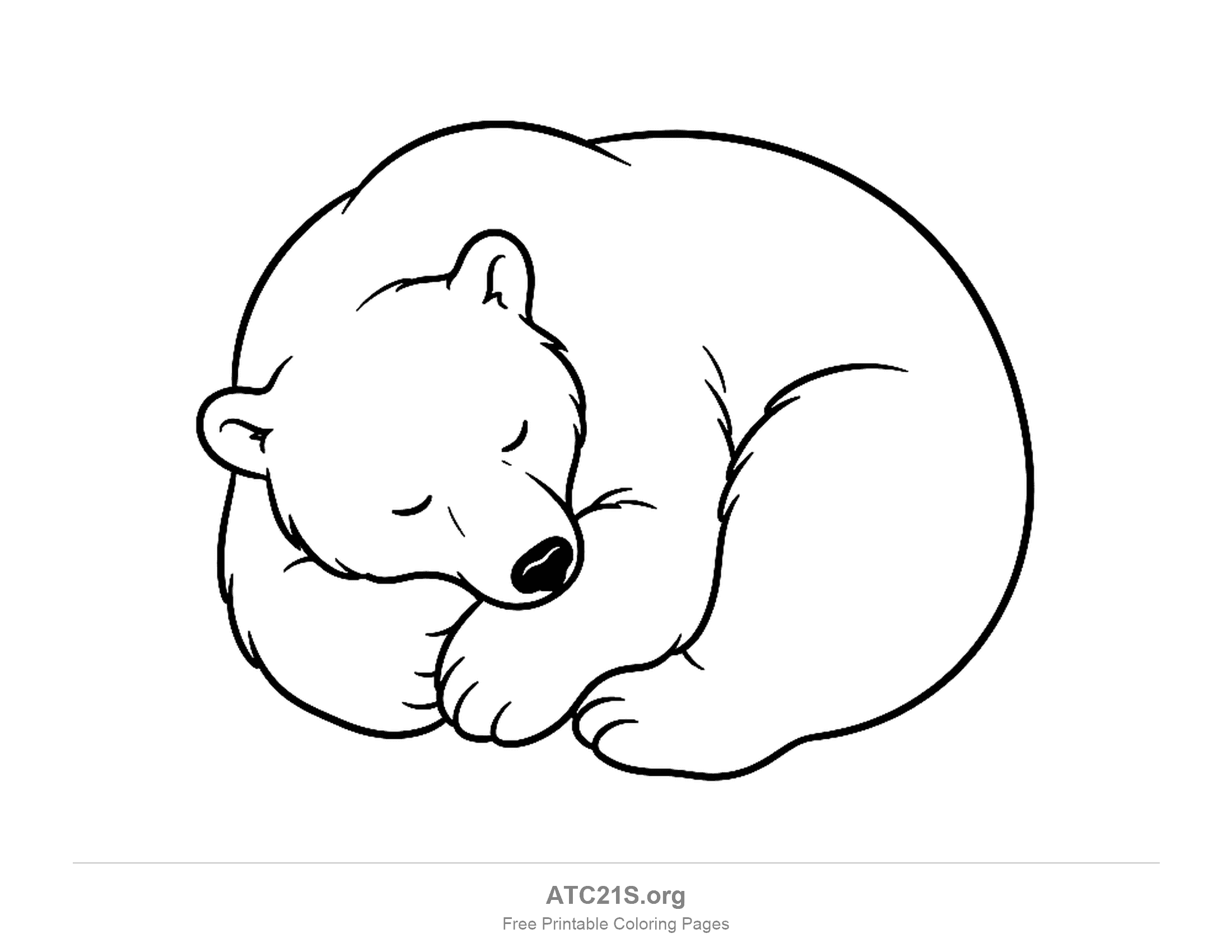
The eight designs get steadily harder. First is a polar bear curled into a ball asleep, thick outlines and one huge open shape that suit toddlers still learning to stay inside the lines. Then a cub rolling on its back with paws in the air, a sitting cub waving, and one standing on its hind legs with both paws raised, all still bold and friendly. After that the poses get more interesting: a polar bear sliding on its belly, one sitting with its head tilted, a walking profile with fur along the body, and a detailed face portrait with fluffy fur for children who like a longer, careful page.
Belly-sliding is the pose most children want to act out. Polar bears slide on their stomachs to get across the ice quickly, the same way a child goes down a snowy hill. The sliding sheet is the natural one to talk about while colouring, and it pairs well with the sleeping sheet, which shows how a polar bear rests with its paws tucked in against the cold.
Every sheet prints on landscape US Letter paper at 200 DPI, so the polar bear fills the page without being cut off. Plain copier paper is fine for crayons and colored pencils. If you are using markers or paint, slightly thicker card stock stops the colour bleeding through — worth doing on the portrait, where the fur lines sit a little closer together.
In the classroom these pages pair well with a lesson on the Arctic, on how animals stay warm, on the letter P, or on the difference between the North Pole and the South Pole. Print a polar bear next to a penguin page and let children spot which animal lives where. A cartoon snowflake or two on the same display adds the snow both of them live with. The sleeping sheet is finished in a few minutes; the face portrait can fill a quiet stretch of the afternoon. Print a few different designs and let each child pick the one that matches their patience that day. The bear pages show the brown and black relatives, the same bear waves beside a penguin slide on the printable zoo scenes, and the other animal pages has every animal that lives somewhere warmer.