AnimalsJungle8 designsFree to print
print, color, learn
Free Elephant Coloring Pages
Eight free printable elephant coloring pages, from a chunky-outline baby calf for little hands to a finely wrinkled African elephant for older kids. Download the PNG or print straight from this page.
share:
pick a favourite
8 Elephant designs to color
Tap any sheet for a closer look, then download or print it.
Elephant Coloring Page - Sleeping Calf
Elephant Coloring Page - Smiling Front View
Elephant Coloring Page - Walking Side View
Elephant Coloring Page - Playful Running Calf
Elephant Coloring Page - Standing and Waving
Elephant Coloring Page - Asian Elephant
Elephant Coloring Page - Trumpeting African Elephant
quick instructions
How to download and print
1. Pick your sheet
Preview any design below and choose the one you like best.
2. Print or download
Print straight from the page, or save the PNG to print later.
3. Color it in
Crayons, colored pencils or markers — plain paper works fine.
Every sheet is sized for landscape US Letter (11" x 8.5") at 200 DPI, so it fills the page without cropping. A4 works too — choose "fit to page" when printing.
while you color…
6 fun facts about the elephant
An elephant's trunk has no bones but around 40,000 muscles — your whole body has fewer than 700.
Elephants can't jump, but they can swim well and use their trunk as a snorkel.
African elephants have big fan-shaped ears; Asian elephants have smaller, rounder ones.
Elephants flap their ears to cool down, because the blood vessels inside lose heat to the air.
A baby elephant can stand up within about an hour of being born, and it drinks with its mouth, not its trunk.
Elephants greet friends by touching trunks, and they can recognise a familiar elephant years later.
About the elephant coloring page
Elephants are the largest land animals on Earth. There are two main kinds: African elephants, which have huge fan-shaped ears and usually grow tusks, and Asian elephants, which are a little smaller with rounded backs and smaller ears. Both live in family herds led by the oldest female, and both use their trunks for almost everything — drinking, eating, greeting, and spraying themselves with water and dust.
The trunk is the part children enjoy most, and it is worth pointing out before they start coloring. It has no bones at all, just muscle, and the ridged lines drawn along it are what let it curl and stretch. Grey is the obvious color choice, but elephants roll in whatever mud is around, so a reddish-brown or dusty tan elephant is just as true to life. Children who want a pink or purple elephant should have one — nothing here is wrong.
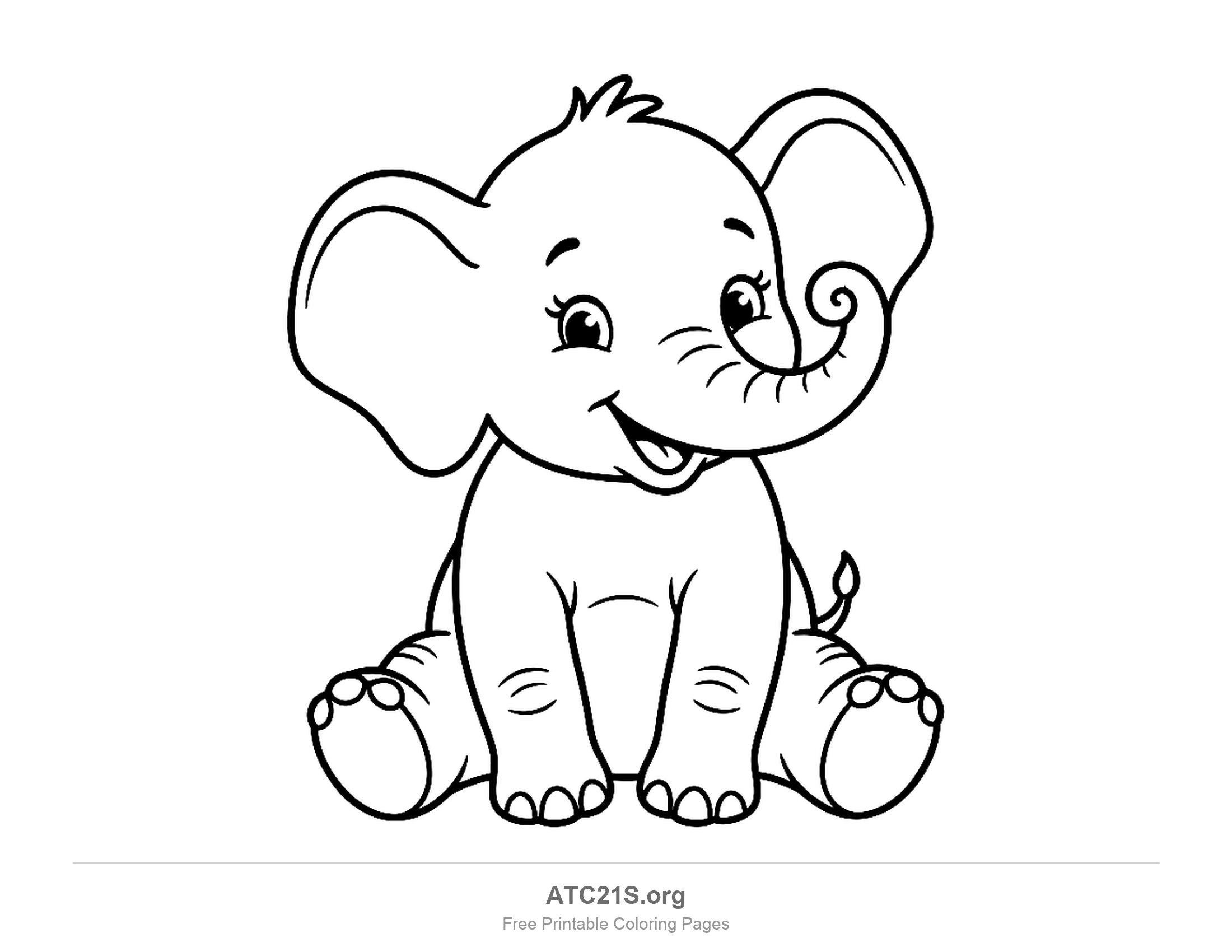
The eight designs on this page are deliberately different from one another. The first four are the easy ones: a baby elephant sitting up with big round eyes, a calf curled up fast asleep, a smiling elephant facing straight forward with its trunk curled to one side, and a simple elephant walking in side view. These use thick outlines and wide open shapes that suit toddlers and preschoolers still learning to stay inside the lines. The next two add movement and a little texture — a playful calf running with its ears flapping, and a cartoon elephant standing tall with its trunk raised in a wave. The last two are the long projects: an Asian elephant standing in three-quarter view and an African elephant trumpeting with its trunk in the air, both covered in fine wrinkle lines and ear veins for children who like careful, detailed work.
Every sheet prints on landscape US Letter paper at 200 DPI, so the elephant fills the page without being cut off. Plain copier paper is fine for crayons and colored pencils. If you are using markers or paint, slightly thicker card stock stops the color bleeding through — worth doing on the last two sheets, where the closely spaced wrinkle lines can run together on flimsy paper.
In the classroom these pages pair well with a lesson on African and Asian animals, on big and small, or on the letter E. Print the Asian and African elephants side by side and let children spot the differences in the ears, the back and the tusks — it turns coloring into a short observation exercise. The sleeping calf works well as a wind-down activity, and printing two or three designs at once lets a mixed-age table work at its own pace, since the easy sheets finish quickly and the detailed ones can fill a whole quiet afternoon. Pair them with the giraffe, rhino, zebra coloring pages or hippo sheets for a full savanna wall, print a whole zoo to color if you want the elephant in a scene with its neighbours, or browse the rest of the animal set for more.
Elephants are also a gentle way into talking about protecting animals. Herds need a lot of space and a lot of water, and children who have just spent twenty minutes coloring one are usually curious about where they live and who looks after them.