AnimalsWoodland8 designsFree to print
print, color, learn
Free Deer Coloring Pages
Eight free printable deer coloring pages, from a thick-outlined sleeping fawn for little hands to a leaping stag with branching antlers for older kids. Download the PNG or print straight from this page.
share:
pick a favourite
8 Deer designs to color
Tap any sheet for a closer look, then download or print it.
Deer Coloring Page - Simple Standing Buck
Deer Coloring Page - Spotted Fawn Lying Down
Deer Coloring Page - Young Fawn Facing Forward
Deer Coloring Page - Grazing Doe
Deer Coloring Page - Buck with Branching Antlers
Deer Coloring Page - Stag Looking Back
Deer Coloring Page - Leaping Stag
quick instructions
How to download and print
1. Pick your sheet
Preview any design below and choose the one you like best.
2. Print or download
Print straight from the page, or save the PNG to print later.
3. Color it in
Crayons, colored pencils or markers — plain paper works fine.
Every sheet is sized for landscape US Letter (11" x 8.5") at 200 DPI, so it fills the page without cropping. A4 works too — choose "fit to page" when printing.
while you color…
6 fun facts about the deer
Baby deer are called fawns, and they are born with white spots that disappear as they grow up.
Only male deer grow antlers, and they drop off and grow back bigger every year.
Antlers are one of the fastest-growing things in nature — up to an inch a day in summer.
A deer can run about 30 miles an hour and jump higher than a grown-up's head.
Deer can swivel their ears in different directions to listen for danger behind them.
A fawn has almost no smell for its first few days, which helps hide it from predators.
About the deer coloring page
Deer are gentle, long-legged animals that live in woods, meadows and even the edges of towns on nearly every continent. Children usually meet them first in storybooks, but they are one of the few large wild animals a family might actually spot on a walk, which makes a deer page an easy one to talk about while colouring.
Real deer are mostly soft brown, tan or reddish, turning greyer in winter, with a pale belly and a white patch under the tail. Baby deer, called fawns, are born with rows of white spots that fade after a few months — three of the sheets here show those spots, so children can leave them white and colour around them, which is a good exercise in careful control. Older children who want realism can layer light brown over darker brown to get the coat texture; anyone who wants a purple deer should absolutely have one.
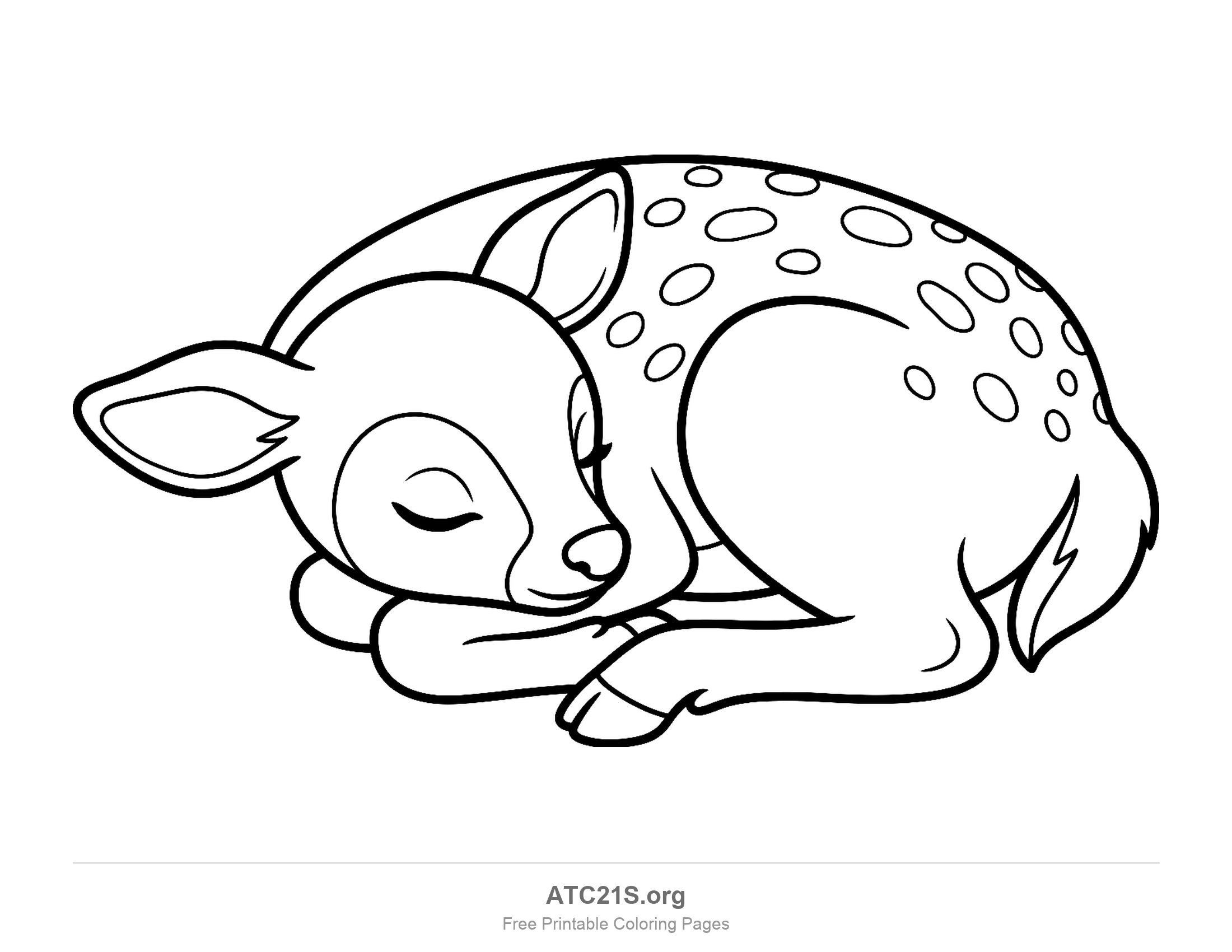
The eight designs get steadily harder. The curled-up sleeping fawn comes first, with very thick outlines and big open shapes for toddlers who are still learning to stay inside the lines. The simple standing cartoon buck, the spotted fawn lying down and the wide-eyed fawn facing forward follow, all still bold but with a few more shapes to fill. The grazing doe in the middle has finer lines and long slender legs. The last three are proper projects: a standing buck with branching antlers, a stag glancing back over its shoulder with fur strokes across its chest, and a leaping stag whose big multi-point antlers and mid-jump legs take real patience.
Antlers are the part worth pausing on. Only male deer grow them, they are made of bone rather than horn, and they fall off and regrow bigger every single year. Count the points on the leaping stag together, then compare them with the two small nubs on the young fawn facing forward — the same animal at different ages, which children find genuinely surprising.
Every sheet prints on landscape US Letter paper at 200 DPI, so the deer fills the page without being cut off. Plain copier paper is fine for crayons and colored pencils. Use slightly thicker card stock for markers or paint, especially on the last three designs, where the thin antler lines can smudge shut on flimsy paper.
In the classroom these pages fit a unit on woodland habitats, on herbivores and what they eat, on animal families (buck, doe and fawn), or on the letter D. Print several designs, let each child pick the one that matches their patience that day, and the finished sheets pin up together as a forest scene with deer of every age and colour in it. To give them somewhere to stand, pin a printable forest of birches or pines behind them. The moose pages show the biggest member of the same family, the fox shares the same woods, and every animal we have drawn covers the rest of the forest.