AnimalsPets8 designsFree to print
print, color, learn
Free Teddy Bear Coloring Pages
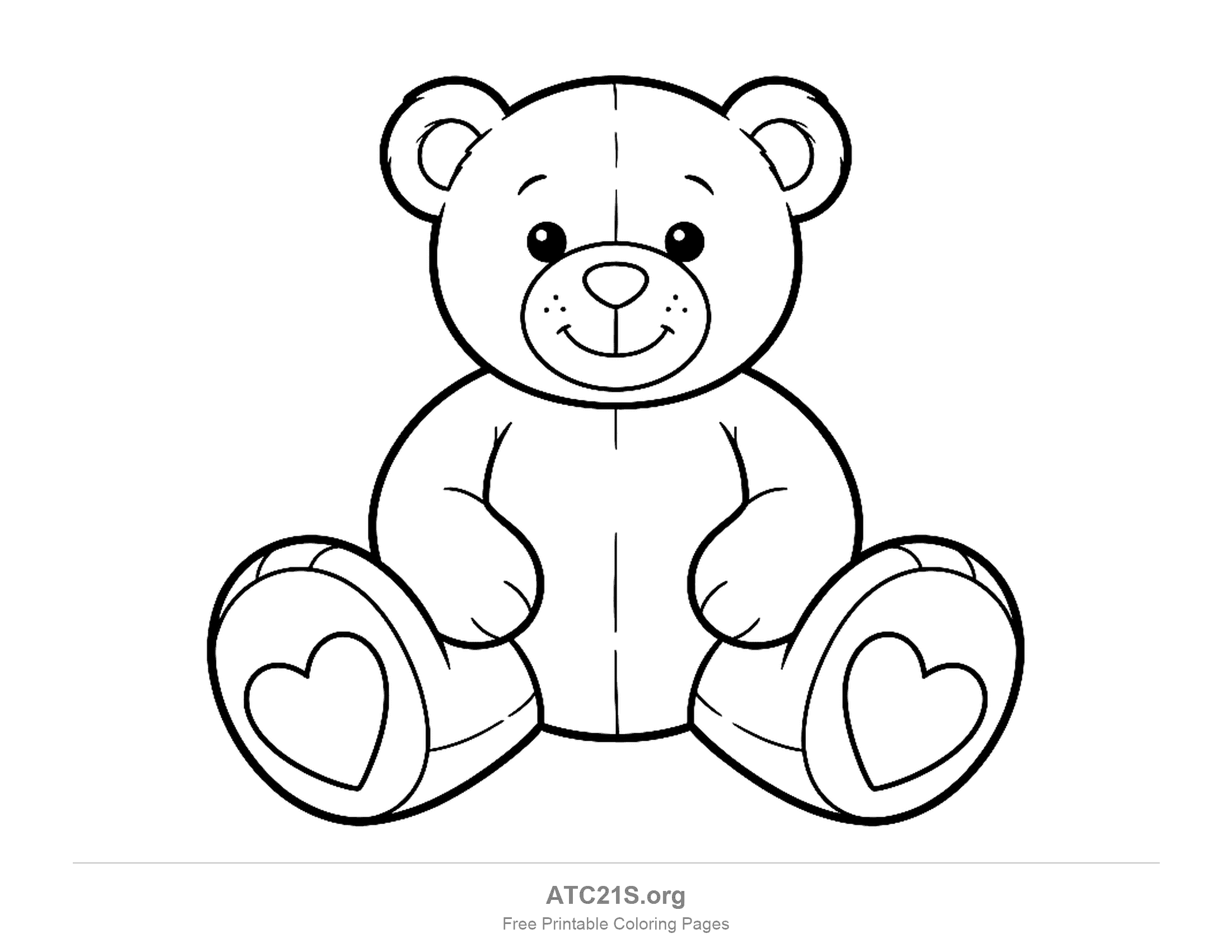
Eight free printable teddy bear coloring pages, from a chunky sitting bear with heart-shaped paws for little hands to a vintage stitched bear for older kids. Download the PNG or print straight from this page.
share:
pick a favourite
8 Teddy Bear designs to color
Tap any sheet for a closer look, then download or print it.
Teddy Bear Coloring Page - Cute Standing Waving
Teddy Bear Coloring Page - Cute Open Arms Hug
Teddy Bear Coloring Page - Cute Paws On Cheeks
Teddy Bear Coloring Page - Sitting With Bow
Teddy Bear Coloring Page - Sitting Overalls
Teddy Bear Coloring Page - Sleeping Nightcap
Teddy Bear Coloring Page - Vintage Stitched Heart
quick instructions
How to download and print
1. Pick your sheet
Preview any design below and choose the one you like best.
2. Print or download
Print straight from the page, or save the PNG to print later.
3. Color it in
Crayons, colored pencils or markers — plain paper works fine.
Every sheet is sized for landscape US Letter (11" x 8.5") at 200 DPI, so it fills the page without cropping. A4 works too — choose "fit to page" when printing.
while you color…
6 fun facts about the teddy bear
The teddy bear is named after US President Theodore "Teddy" Roosevelt, who refused to shoot a bear on a 1902 hunting trip.
The first teddy bears were made in 1902 in both the United States and Germany, almost at the same time.
Traditional teddy bears have arms, legs and a head that move, joined inside with discs and a pin.
Many children sleep with a teddy bear. Holding one can help a child feel safer at bedtime.
Winnie-the-Pooh was inspired by a real teddy bear that belonged to a boy named Christopher Robin.
A Steiff teddy bear sold for more than two million dollars, which makes it one of the most expensive toys ever.
About the teddy bear coloring page
A teddy bear is a stuffed toy, not a wild animal — the kind that sits on a bed, rides in a backpack, or gets tucked under a chin at bedtime. The name comes from US President Theodore "Teddy" Roosevelt, who in 1902 refused to shoot a bear that had been tied up for him on a hunting trip. Toy makers in the United States and Germany started sewing plush bears almost at once, and children have been carrying them around ever since. That mix of real history and bedtime comfort is why a teddy bear page is such an easy one to sit down with.
Colour is wide open. Real teddy bears come in honey brown, cream, grey, pale pink and almost every other shade a fabric shop sells, so there is no single "right" colour. Classic tan with a darker brown nose and inner ears is a good starting point. A rainbow bear, a blue one, or one whose bow is every colour in the crayon box is just as welcome. Point out the paw pads, the inner ears and the nose — those three shapes are what make it look like a stuffed bear rather than a cartoon dog.
The eight designs get steadily harder. First is a simple sitting teddy with heart-shaped pads on oversized feet, thick outlines and a few huge open shapes that suit toddlers still learning to stay inside the lines. Then a standing teddy waving one paw, one sitting with both arms spread for a hug, and a chubby bear with paws on its cheeks, all still bold and friendly. After that the drawings add more to do: a classic sitting bear with a ribbon bow at the neck, one wearing dungaree overalls with buttons and a pocket, a sleeping teddy in a nightcap, and a vintage stitched bear with button eyes and a heart sewn on its chest for children who like a longer, careful page.
The name story is the part worth pausing on. Roosevelt's refusal to shoot a helpless bear made the newspapers, and a Brooklyn shopkeeper named Morris Michtom put a stuffed bear in his window labelled "Teddy's bear." Around the same time, the Steiff company in Germany was already making jointed plush bears. Colour the vintage stitched sheet while talking about how a toy is sewn — the X-shaped button eyes, the heart patch, the running stitches down the arms — and the page suddenly looks like a real object a child could hold.
Every sheet prints on landscape US Letter paper at 200 DPI, so the teddy bear fills the page without being cut off. Plain copier paper is fine for crayons and colored pencils. If you are using markers or paint, slightly thicker card stock stops the colour bleeding through — worth doing on the vintage sheet, where the stitch lines sit a little closer together.
In the classroom these pages pair well with a lesson on toys through history, on how fabric is sewn, on bedtime routines, or on the letter T. Print a teddy bear next to a bear coloring page and let children spot stuffed toy versus wild animal — it turns colouring into a short observation exercise. The heart-paw sheet is finished in a few minutes; the vintage stitched bear can fill a quiet stretch of the afternoon. The polar bear sheets and panda pages cover the living relatives, a dog coloring page sits in the same household, and the other printable animals has the rest.
keep coloring