AnimalsJungle8 designsFree to print
print, color, learn
Free Tiger Coloring Pages
Eight free printable tiger coloring pages, from a chunky cartoon cub for little hands to a finely striped adult tiger for older kids. Download the PNG or print straight from this page.
share:
pick a favourite
8 Tiger designs to color
Tap any sheet for a closer look, then download or print it.
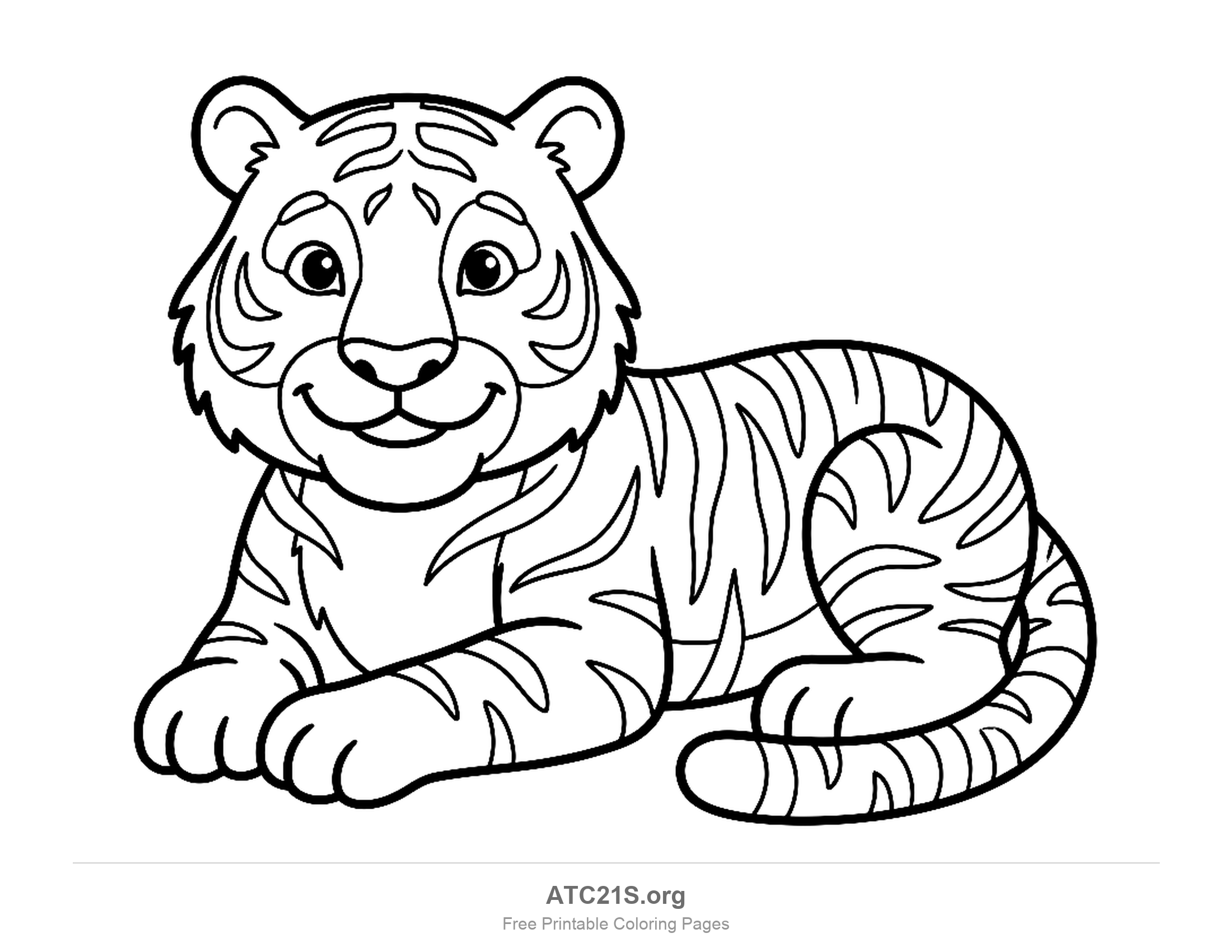
Tiger Coloring Page - Cute Cub Sitting
Tiger Coloring Page - Playful Stretching
Tiger Coloring Page - Cartoon Pouncing
Tiger Coloring Page - Sleeping Curled
Tiger Coloring Page - Smiling Face
Tiger Coloring Page - Sitting Upright
Tiger Coloring Page - Walking Tiger
quick instructions
How to download and print
1. Pick your sheet
Preview any design below and choose the one you like best.
2. Print or download
Print straight from the page, or save the PNG to print later.
3. Color it in
Crayons, colored pencils or markers — plain paper works fine.
Every sheet is sized for landscape US Letter (11" x 8.5") at 200 DPI, so it fills the page without cropping. A4 works too — choose "fit to page" when printing.
while you color…
6 fun facts about the tiger
No two tigers have the same stripes — the pattern is as unique as a fingerprint.
A tiger's stripes grow on its skin too, not just its fur, so a shaved tiger is still striped.
Tigers are the largest cats in the world and can weigh more than three grown-ups put together.
Unlike most cats, tigers love water and will happily swim to cool off.
A tiger's roar can be heard up to 2 miles (3 km) away through thick forest.
Tiger cubs are born blind and stay with their mother for about two years before living alone.
About the tiger coloring page
Tigers are the biggest cats in the world. They live in the forests, grasslands and swamps of Asia — from the steamy jungles of India and Indonesia to the snowy woods of eastern Russia — and unlike lions they live alone rather than in family groups. That mix of size, stripes and solitude makes them one of the animals children ask about most.
The stripes are the fun part to color. Every tiger's pattern is different, a bit like a fingerprint, so nobody can color one of these pages "wrong". Orange and black is the classic choice, but children can also try the white tiger look — pale grey or blue-tinted stripes on a white body — or invent their own rainbow tiger. Point out the white patches on the chin, chest and belly, which stay pale on almost every real tiger.
The eight designs are deliberately different from one another. The first three — a tiger lying down, a sitting cub and a stretching, playful tiger — use thick outlines and wide open shapes that suit toddlers and preschoolers still learning to stay inside the lines. The middle sheets, a pouncing cartoon tiger and a curled-up sleeping tiger, add more stripes without getting fussy. The last three step up: a big smiling face with fine whiskers and fur, an upright sitting tiger, and a detailed walking tiger in profile whose coat is covered in thin, closely spaced stripes for children who like a long, careful project.
Every sheet prints on landscape US Letter paper at 200 DPI, so the tiger fills the page without being cut off. Plain copier paper is fine for crayons and colored pencils. If you are using markers or paint, slightly thicker card stock stops the color bleeding through — worth doing on the detailed sheets, where thin stripes can smudge together on flimsy paper.
In the classroom these pages pair well with a lesson on big cats, on Asian habitats, or on the letter T. The close-up tiger face makes a good mask: color it, cut around the head, and add a string. The detailed walking tiger works as a quiet-time activity for early primary students, and printing two or three different designs lets each child pick the one that matches their patience that day. For another striped or spotted cat try the cheetah or the leopard coloring pages, or go bigger with the elephant sheets; the full animal collection lists everything else.
Tigers are also an easy way into a first conversation about endangered animals. There are far fewer wild tigers than there once were, and children who have just spent twenty minutes coloring one tend to want to know why — a small, natural opening for talking about habitats and protecting them.