AnimalsJungle8 designsFree to print
print, color, learn
Free Zebra Coloring Pages
Eight free printable zebra coloring pages, from a chunky-outline sitting foal for little hands to a finely striped head portrait for older kids. Download the PNG or print straight from this page.
share:
pick a favourite
8 Zebra designs to color
Tap any sheet for a closer look, then download or print it.
Zebra Coloring Page - Cute Standing
Zebra Coloring Page - Looking Over Shoulder
Zebra Coloring Page - Standing Profile
Zebra Coloring Page - Playful Leaping
Zebra Coloring Page - Grazing
Zebra Coloring Page - Detailed Galloping
Zebra Coloring Page - Detailed Head Portrait
quick instructions
How to download and print
1. Pick your sheet
Preview any design below and choose the one you like best.
2. Print or download
Print straight from the page, or save the PNG to print later.
3. Color it in
Crayons, colored pencils or markers — plain paper works fine.
Every sheet is sized for landscape US Letter (11" x 8.5") at 200 DPI, so it fills the page without cropping. A4 works too — choose "fit to page" when printing.
while you color…
6 fun facts about the zebra
No two zebras have the same stripe pattern, just like no two people have the same fingerprints.
A baby zebra is called a foal, and it can usually stand up within about 20 minutes of being born.
Zebras belong to the same family as horses and donkeys.
Scientists think the stripes help keep biting flies away, and may also confuse predators.
Zebras live in herds on the grasslands of Africa, and they take turns watching for danger while others graze.
A zebra can run about 40 miles per hour (65 km/h) to get away from lions and hyenas.
About the zebra coloring page
Zebras are striped members of the horse family that live on the grasslands and open woodlands of Africa. There are three kinds — plains, mountain and Grevy's — and children usually meet them as the black-and-white shape in a picture book or at the zoo. A grown plains zebra stands about four to five feet at the shoulder, and a baby, called a foal, can stand within about twenty minutes of being born.
The stripes are what everyone wants to color first. Real zebras are black with white stripes (the skin underneath is dark), but there is no single "right" zebra on a coloring page. Children can copy the classic black-and-white, try a golden or brown one, or invent a rainbow zebra. Point out the short upright mane, which is striped too, and the tufted tail — those two details are what make it a zebra rather than a horse.
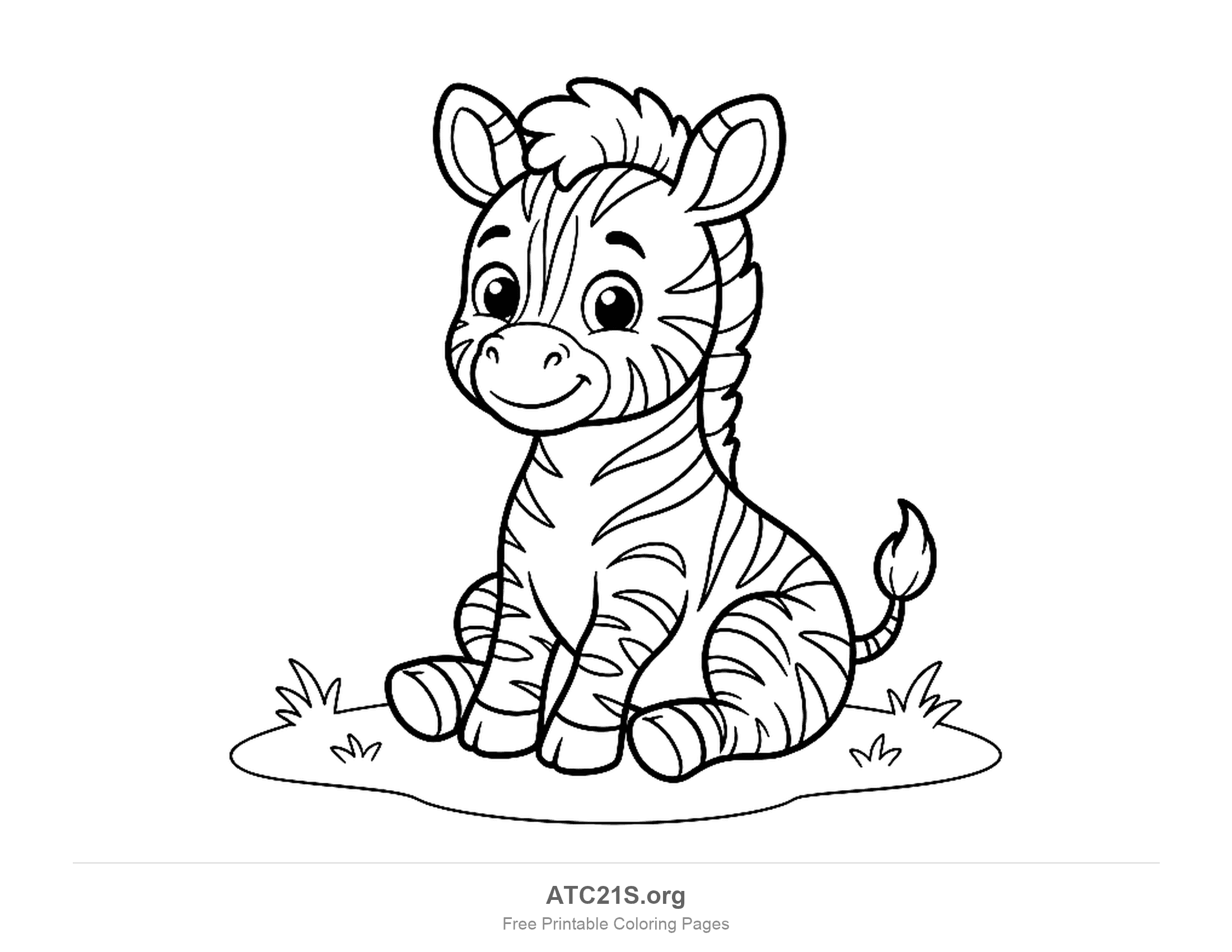
The eight designs get steadily harder. First is a cute baby zebra sitting on a patch of grass, with thick outlines, big round eyes and only a few broad stripes, right for toddlers still learning to stay inside the lines. Then a smiling zebra standing and facing forward, one looking back over its shoulder, and a standing zebra in side view, all still bold and friendly. After that the drawings add more stripe work: a zebra leaping with its tail flying, a grazing zebra with its head down, a galloping zebra with a flowing mane and many fine body stripes, and a close-up head portrait whose densely striped face takes a little more patience.
Every sheet prints on landscape US Letter paper at 200 DPI, so the zebra fills the page without being cut off. Plain copier paper is fine for crayons and colored pencils. If you are using markers or paint, slightly thicker card stock stops the color bleeding through — worth doing on the last two sheets, where the stripe lines sit close together.
In the classroom these pages pair well with a lesson on African grasslands, on patterns and camouflage, or on the letter Z. Print a zebra next to a horse page and let children spot the stripes versus a plain coat — it turns coloring into a short observation exercise. The sitting foal is finished in a few minutes; the head portrait can fill a quiet stretch of the afternoon. The giraffe coloring pages, elephant sheets and hippo pages share the same rivers and grasslands, a lion coloring page opens a predator-and-prey talk, and the other printable animals has the rest.
Printing two or three different designs and letting each child pick keeps a mixed-age group busy at the same table, since the easy sheets finish quickly and the detailed ones can stretch across a whole quiet afternoon.