AnimalsJungle8 designsFree to print
print, color, learn
Free Hippo Coloring Pages
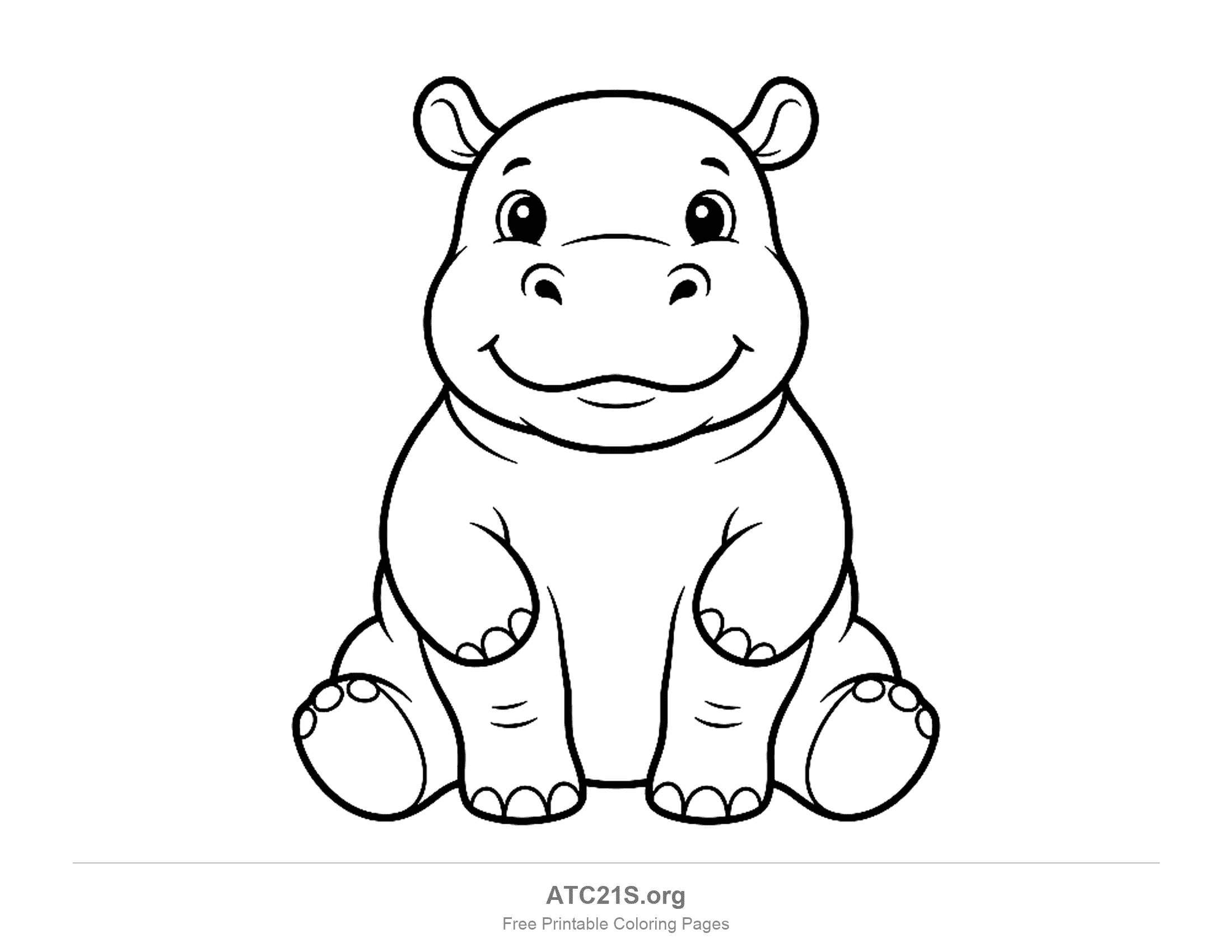
Eight free printable hippo coloring pages, from a chunky sitting calf for little hands to a walking adult for older kids. Download the PNG or print straight from this page.
share:
pick a favourite
8 Hippo designs to color
Tap any sheet for a closer look, then download or print it.
Hippo Coloring Page - Cute Standing Waving
Hippo Coloring Page - Cute Face
Hippo Coloring Page - Sleeping Lying Down
Hippo Coloring Page - Curious Standing
Hippo Coloring Page - Yawning Sitting
Hippo Coloring Page - Playful Rolling
Hippo Coloring Page - Walking Profile
quick instructions
How to download and print
1. Pick your sheet
Preview any design below and choose the one you like best.
2. Print or download
Print straight from the page, or save the PNG to print later.
3. Color it in
Crayons, colored pencils or markers — plain paper works fine.
Every sheet is sized for landscape US Letter (11" x 8.5") at 200 DPI, so it fills the page without cropping. A4 works too — choose "fit to page" when printing.
while you color…
6 fun facts about the hippo
The name hippopotamus means "river horse" in Greek, even though hippos are more closely related to whales than to horses.
Hippos spend up to 16 hours a day in the water to stay cool, because their skin dries out and sunburns easily.
A hippo can open its mouth about 150 degrees — wide enough that a child could sit inside the jaws.
Baby hippos are born underwater and have to swim to the surface for their first breath.
Hippos cannot really swim. They walk or bounce along the river bottom, holding their breath for up to five minutes.
A hippo looks slow, but it can run about 19 miles per hour (30 km/h) on land — as fast as a car in town.
About the hippo coloring page
Hippos are huge, barrel-shaped mammals that live in the rivers, lakes and wetlands of sub-Saharan Africa. The name hippopotamus means "river horse" in Greek, though they are more closely related to whales and dolphins than to horses. Children usually meet them as the wide-mouthed river giant in a picture book or at the zoo, which is why they are such a satisfying animal to sit down and color.
The real color is grey-brown, often looking pinkish because hippo skin makes a reddish oily liquid that works like sunscreen. That is a perfectly good way to color these sheets. It is also fine to ignore it. A pink hippo, a purple one, or a rainbow one is just as welcome. Point out the tiny ears, the wide muzzle and the stubby tail — those three shapes are what make it look like a hippo rather than a pig or a rhino. The inside of a real hippo's mouth is pink, and the yawning sheet is the one to try that on.
The eight designs get steadily harder. First is a cute baby hippo sitting facing you with big round eyes and a smile, thick outlines and wide open shapes that suit toddlers still learning to stay inside the lines. Then a friendly hippo standing upright and waving, a simple close-up face, and a hippo sleeping on its belly with its eyes closed, all still bold and friendly. After that the drawings add more to do: a curious hippo standing in three-quarter view, a sitting hippo with its mouth stretched wide in a yawn, one rolling on its back with its paws in the air, and a realistic walking profile for children who like a longer, careful page.
The yawn is the part worth pausing on. A hippo can open its mouth almost 150 degrees — wide enough that the whole head seems to split in two — and the sitting yawn sheet shows the teeth, the tongue and the inside of the jaws. Color the tongue a different shade from the rest and the page suddenly looks finished. The rolling sheet is the natural one to color while talking about how hippos stay cool in the water, and the walking profile shows the barrel body and short legs that look slow but can run about as fast as a city car.
Every sheet prints on landscape US Letter paper at 200 DPI, so the hippo fills the page without being cut off. Plain copier paper is fine for crayons and colored pencils. If you are using markers or paint, slightly thicker card stock stops the color bleeding through.
In the classroom these pages pair well with a lesson on African rivers, on large mammals, on the letter H, or on how animals stay cool. Print the sitting calf next to the walking adult and let children spot the same animal at two ages. The waving sheet is finished in a few minutes; the walking profile can fill a quiet stretch of the afternoon. The elephant coloring pages and rhino sheets cover the other African giants, a crocodile page shares the same river, the zebra coloring pages and giraffe pages complete a savanna set, and the other printable animals has the rest.
Printing two or three different designs and letting each child pick keeps a mixed-age group busy at the same table, since the easy sheets finish quickly and the detailed ones can stretch across a whole quiet afternoon.