AnimalsJungle8 designsFree to print
print, color, learn
Free Capybara Coloring Pages
Eight free printable capybara coloring pages, from a simple standing outline for little hands to a detailed yawning capybara for older kids. Download the PNG or print straight from this page.
share:
pick a favourite
8 Capybara designs to color
Tap any sheet for a closer look, then download or print it.
Capybara Coloring Page - Cute Sitting Head Tilt
Capybara Coloring Page - Cute Sleeping
Capybara Coloring Page - Cute Sitting Upright
Capybara Coloring Page - Walking Profile
Capybara Coloring Page - Round Three Quarter
Capybara Coloring Page - Playful Rolling
Capybara Coloring Page - Detailed Yawning
quick instructions
How to download and print
1. Pick your sheet
Preview any design below and choose the one you like best.
2. Print or download
Print straight from the page, or save the PNG to print later.
3. Color it in
Crayons, colored pencils or markers — plain paper works fine.
Every sheet is sized for landscape US Letter (11" x 8.5") at 200 DPI, so it fills the page without cropping. A4 works too — choose "fit to page" when printing.
while you color…
6 fun facts about the capybara
Capybaras are the world's largest rodents — a grown one can weigh as much as a large dog, around 100 pounds (45 kg).
They are excellent swimmers and can stay underwater for up to five minutes.
The name "capybara" comes from a South American word that means "master of the grasses".
Capybaras live in groups of about 10 to 20, and they like to sit close together.
Birds, monkeys and even small turtles often sit on a capybara's back — it does not seem to mind.
Baby capybaras can swim within a few hours of being born.
About the capybara coloring page
Capybaras are the world's largest rodents. They live along rivers, lakes and wetlands across much of South America — from Panama down through Brazil, Venezuela, Colombia and Argentina. Children often meet them as the calm, potato-shaped animals that let birds sit on their backs, which makes them an easy favourite to colour.
The coat is a warm brownish-grey, like a guinea pig's, which is no coincidence: capybaras and guinea pigs are close cousins. There is no single "right" colour. Real capybaras range from sandy gold to dark chocolate brown, usually with a slightly paler belly. Children can copy that, or invent a pink, orange or rainbow one. The big square snout and tiny ears are the parts that make it look like a capybara rather than a giant hamster, so those are worth pointing out.
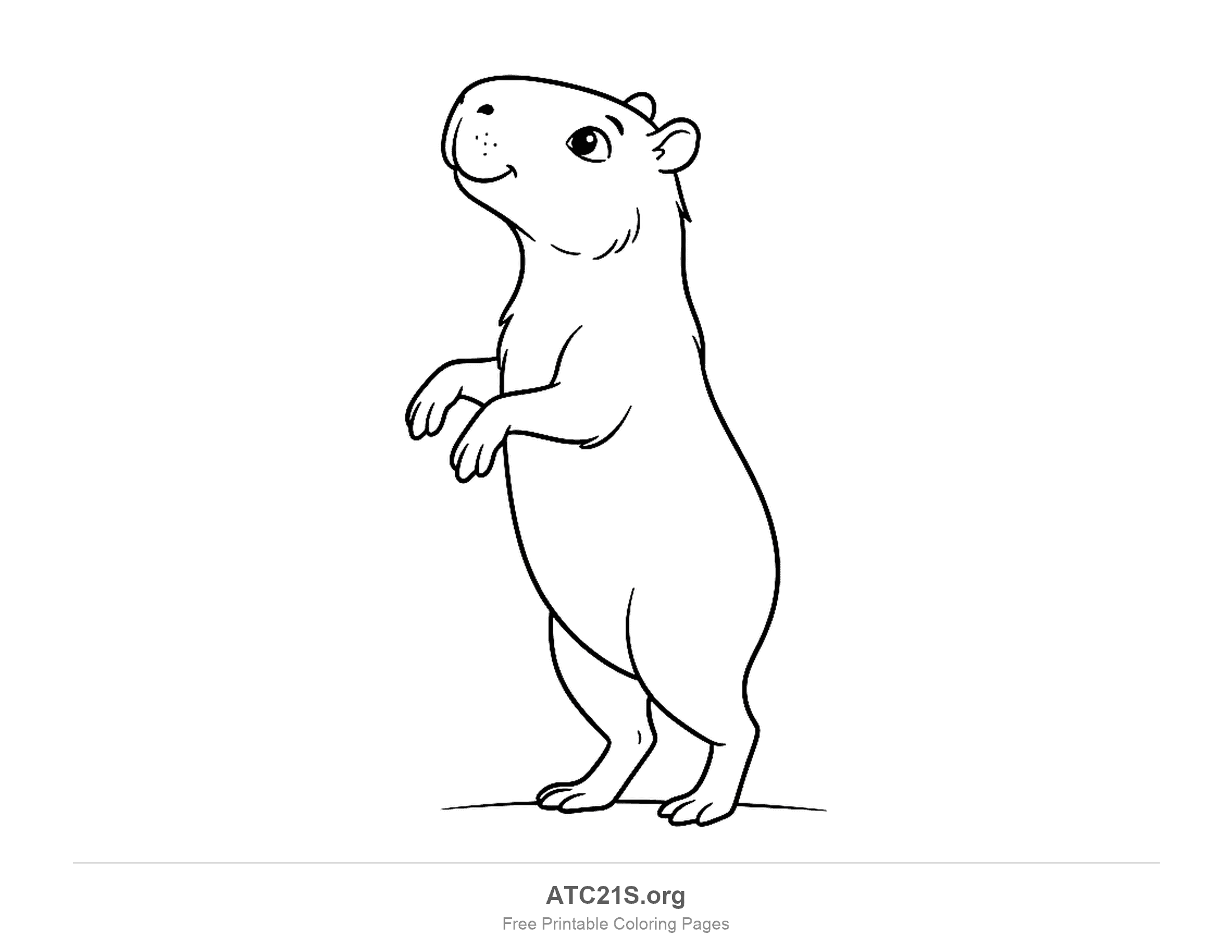
The eight designs get steadily harder. First is a simple capybara standing on its hind legs looking up — thick clean outlines and a huge empty belly, right for toddlers still learning to stay inside the lines. Next is a cute sitting capybara with its head tilted, then a sleeping loaf with closed eyes, both still simple. A sitting-upright capybara with its paws together adds a little fur on the chest. Then a walking capybara in side profile, and a round, barrel-shaped one seen from a three-quarter angle. The last two are the longer projects: a playful capybara rolling on its back with all four paws in the air, and a detailed yawning capybara whose fur, teeth and tongue give older children a careful, sit-down page.
Capybaras spend a lot of time in the water. They have slightly webbed feet, can hold their breath for several minutes, and will nap in a pond with just their noses sticking out. The standing-upright sheet and the walking sheet are good ones to talk about while colouring — ask whether the capybara is heading to the river or just standing up to look around.
Every sheet prints on landscape US Letter paper at 200 DPI, so the capybara fills the page without being cut off. Plain copier paper is fine for crayons and colored pencils. If you are using markers or paint, slightly thicker card stock stops the colour bleeding through — worth doing on the yawning sheet, where the fur lines sit close together.
In the classroom these pages pair well with a lesson on South American wildlife, on rodents (a capybara next to a guinea pig or hamster is a memorable size comparison), on wetland habitats, or on the letter C. Print a few different designs and let each child pick: the standing-upright capybara is finished in a few minutes, while the yawning one can fill a whole quiet afternoon, which keeps a mixed-age table busy at the same time. The otter pages show another swimmer that lives on riverbanks, the llama sheets another South American mammal, and the main animal index has the rest.