AnimalsFarm8 designsFree to print
print, color, learn
Free Horse Coloring Pages
Eight free printable horse coloring pages, from a chunky-outline foal for little hands to a detailed saddled horse for older kids. Download the PNG or print straight from this page.
share:
pick a favourite
8 Horse designs to color
Tap any sheet for a closer look, then download or print it.
Horse Coloring Page - Cute Leaping
Horse Coloring Page - Simple Grazing
Horse Coloring Page - Galloping
Horse Coloring Page - Rearing Up
Horse Coloring Page - Braided Mane Portrait
Horse Coloring Page - Detailed Draft Standing
Horse Coloring Page - Detailed Saddled Trot
quick instructions
How to download and print
1. Pick your sheet
Preview any design below and choose the one you like best.
2. Print or download
Print straight from the page, or save the PNG to print later.
3. Color it in
Crayons, colored pencils or markers — plain paper works fine.
Every sheet is sized for landscape US Letter (11" x 8.5") at 200 DPI, so it fills the page without cropping. A4 works too — choose "fit to page" when printing.
while you color…
6 fun facts about the horse
A baby horse is called a foal, and it can usually stand up within an hour of being born.
Horses can sleep standing up because a special locking system in their legs keeps them from falling over.
A horse's eyes sit on the sides of its head, so it can see almost all the way around without turning.
Horses cannot breathe through their mouths — they only breathe through their noses.
A horse's hoof is made of the same stuff as your fingernails, and it keeps growing all the time.
Horses talk with their ears: pricked forward means curious, pinned flat back means angry or scared.
About the horse coloring page
Horses have lived alongside people for thousands of years — pulling ploughs, carrying riders, and working on farms. They are still one of the animals children most want to draw, whether they have met a real horse or only know them from stories. A grown horse stands about five to six feet tall at the shoulder, and a baby horse, called a foal, can usually stand up within an hour of being born.
The coat is the fun part to color. Real horses come in bay (brown with a black mane and tail), chestnut (reddish brown all over), palomino (gold with a creamy mane), black, grey, white, and the patchwork brown-and-white of a pinto. There is no single "right" horse color, so children can try any of those or invent their own. Point out the mane and tail, which are often a different color from the body, and the pale socks some horses have on their lower legs.
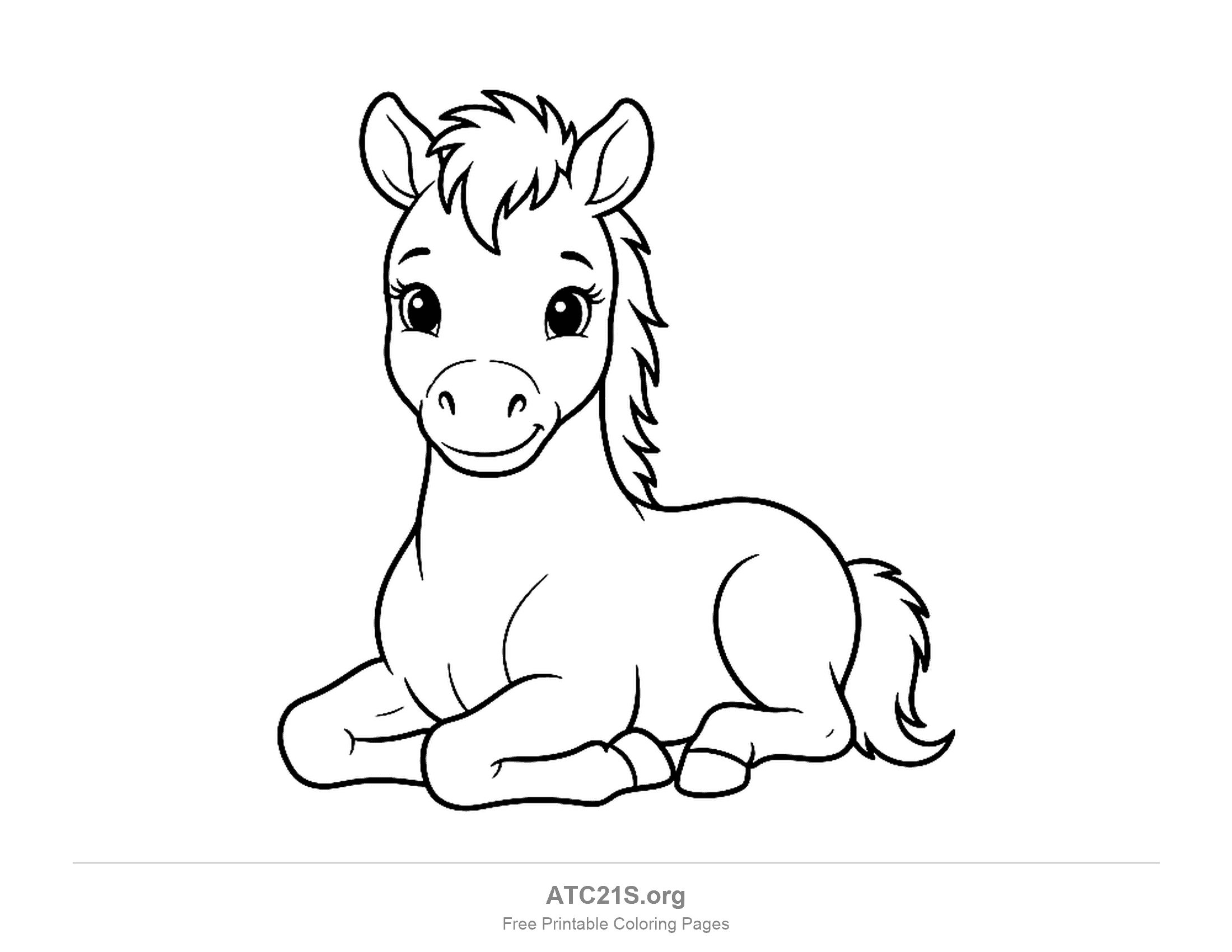
The eight designs are deliberately different from one another. The first three are the easy ones: a cute foal lying down with its legs tucked under, a cartoon pony leaping through the air, and a simple grazing horse with its head down. They use thick outlines and big open shapes that suit toddlers and preschoolers still learning to stay inside the lines. The middle sheets — a galloping horse with a flowing mane and a horse rearing up on its hind legs — add more movement without getting fussy. The last three are the longer projects: a close-up head with a braided mane and a leather halter, a heavy draft horse with feathered hooves and a long wavy mane, and a saddled horse in a high-stepping trot with bridle, saddle and muscle detail for children who like a careful, sit-down project.
Every sheet prints on landscape US Letter paper at 200 DPI, so the horse fills the page without being cut off. Plain copier paper is fine for crayons and colored pencils. If you are using markers or paint, slightly thicker card stock stops the color bleeding through — worth doing on the last three sheets, where the braid, feathered hair and saddle straps sit close together.
In the classroom these pages pair well with a lesson on farm animals, on how people and animals work together, or on the letter H. The foal and the draft horse sitting side by side make a good baby-and-grown-up comparison. Print two or three different designs and let each child pick: the lying foal is finished in a few minutes, while the saddled horse can fill a whole quiet afternoon, which keeps a mixed-age table busy at the same time. The cow and pig pages fill out the farmyard, and the llama coloring pages show another animal people have used as a pack animal. For the horse's striped wild cousin, see the zebra coloring pages, and the more animals to color covers the rest.
The grazing and foal poses also make good calm-down activities, and the simple grazing outline is open enough that younger children can add grass, a fence or a sun around the horse if they want to.