AnimalsJungle8 designsFree to print
print, color, learn
Free Rhino Coloring Pages
Eight free printable rhino coloring pages, from a chunky sleeping rhino for little hands to a detailed grazing rhino for older kids. Download the PNG or print straight from this page.
share:
pick a favourite
8 Rhino designs to color
Tap any sheet for a closer look, then download or print it.
Rhino Coloring Page - Cute Baby Sitting
Rhino Coloring Page - Cute Running
Rhino Coloring Page - Cute Standing
Rhino Coloring Page - Cute Waving Upright
Rhino Coloring Page - Smiling Face
Rhino Coloring Page - Armor Plated Standing
Rhino Coloring Page - Detailed Grazing
quick instructions
How to download and print
1. Pick your sheet
Preview any design below and choose the one you like best.
2. Print or download
Print straight from the page, or save the PNG to print later.
3. Color it in
Crayons, colored pencils or markers — plain paper works fine.
Every sheet is sized for landscape US Letter (11" x 8.5") at 200 DPI, so it fills the page without cropping. A4 works too — choose "fit to page" when printing.
while you color…
6 fun facts about the rhino
A rhino's horn is made of keratin, the same stuff as your hair and fingernails — not bone.
Despite weighing as much as a small car, a rhino can run about 30 miles per hour (50 km/h).
There are five kinds of rhino: two in Africa (white and black) and three in Asia (Indian, Javan and Sumatran).
Rhinos have poor eyesight, but their hearing and sense of smell are excellent.
A baby rhino is called a calf, and it can weigh about 100 pounds (45 kg) when it is born.
Indian rhinos have one horn and thick skin folds that look like armour plates; African rhinos have two horns.
About the rhino coloring page
Rhinos are huge, thick-skinned mammals that live on the grasslands and open woodlands of Africa and in the forests and floodplains of Asia. There are five kinds: white and black rhinos in Africa, and Indian, Javan and Sumatran rhinos in Asia. Children usually meet them as the two-horned shape in a picture book or at the zoo, which is why they are such a popular animal to colour.
The real colour is grey or grey-brown, often with a coating of dried mud that can look reddish, yellow or almost black. That is a perfectly good way to colour these sheets. It is also fine to ignore it. A green rhino, a pink one, or a rainbow one is just as welcome. The horns are the part most children want to fill first. They are made of keratin, the same stuff as hair and fingernails, not bone, and they can be sandy, dark brown or almost black. Point out that African rhinos have two horns and Indian rhinos have one — the armour-plated sheet on this page is the one-horn kind.
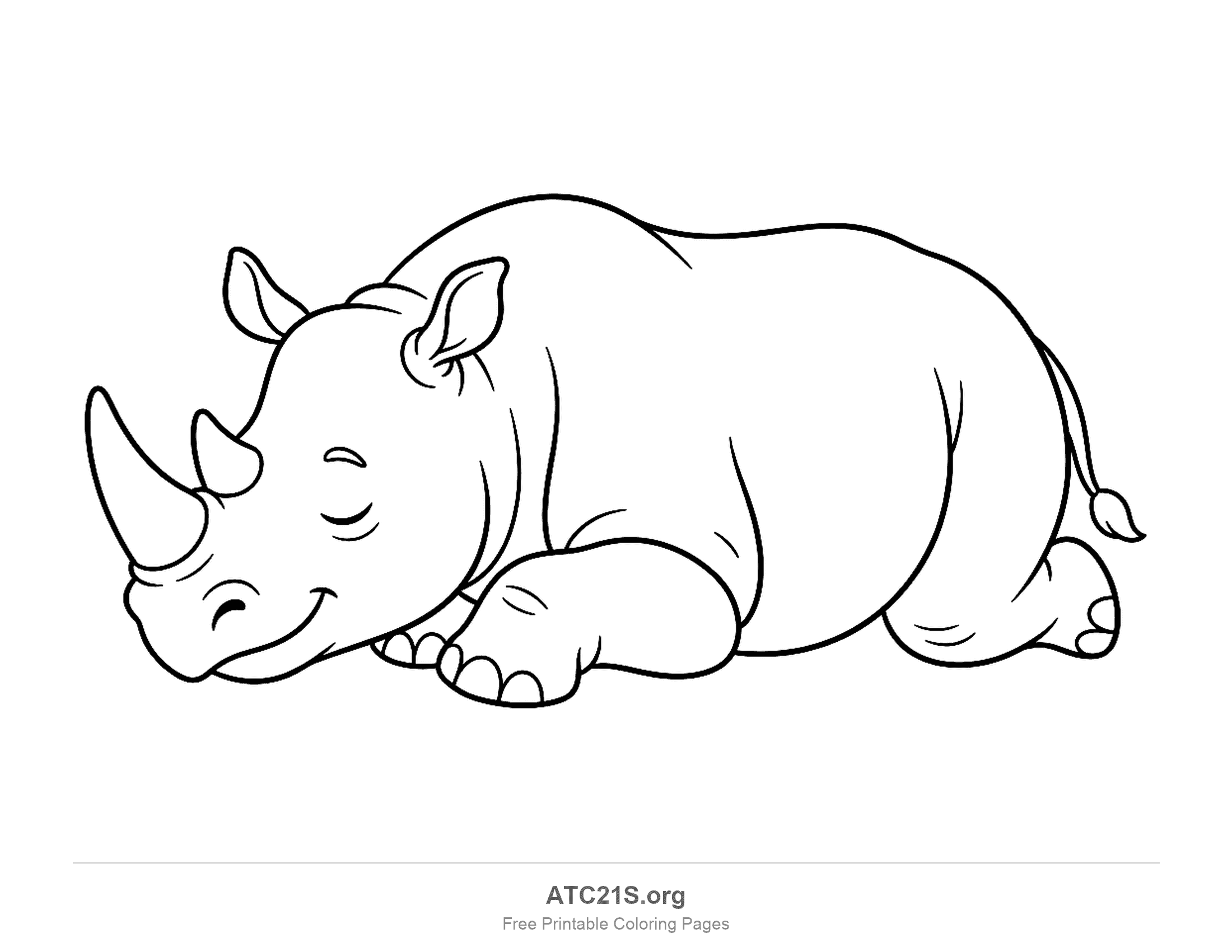
The eight designs get steadily harder. First is a rhino sleeping on its belly with its eyes closed — thick outlines and a huge empty body, right for toddlers still learning to stay inside the lines. Then a chubby baby calf sitting up with tiny nubby horns, a cartoon rhino running, and a smiling one standing in side view, all still bold and friendly. After that the detail climbs: a rhino standing upright and waving, a close-up smiling face with folds of skin, an Indian rhino whose body is covered in armour-like plates, and a detailed grazing rhino with grass, a plant and wrinkled hide for children who like a longer, careful page.
Every sheet prints on landscape US Letter paper at 200 DPI, so the rhino fills the page without being cut off. Plain copier paper is fine for crayons and colored pencils. If you are using markers or paint, slightly thicker card stock stops the colour bleeding through — worth doing on the armour-plated and grazing sheets, where the fold lines sit close together.
In the classroom these pages pair well with a lesson on African and Asian wildlife, on grasslands, on the letter R, or on how a horn is not a bone. Print the standing cartoon rhino next to the armour-plated Indian rhino and let children spot the difference in the number of horns and the skin folds — it turns colouring into a short observation exercise. The sleeping rhino is finished in a few minutes; the grazing sheet can fill a quiet stretch of the afternoon. Print a few different designs and let each child pick the one that matches their patience that day. The elephant, giraffe, zebra pages and hippo coloring pages complete a savanna set, and the other animal coloring sheets has the rest.
Rhinos are also a gentle way into talking about protecting animals. All five kinds are under pressure in the wild, and children who have just spent twenty minutes colouring one tend to want to know why — a small, natural opening for talking about habitats and looking after them.