AnimalsJungle8 designsFree to print
print, color, learn
Free Red Panda Coloring Pages
Eight free printable red panda coloring pages, from a chunky standing cub for little hands to a detailed face portrait for older kids. Download the PNG or print straight from this page.
share:
pick a favourite
8 Red Panda designs to color
Tap any sheet for a closer look, then download or print it.
Red Panda Coloring Page - Cute Shy Sitting
Red Panda Coloring Page - Cute Sitting Waving
Red Panda Coloring Page - Cute Lying Down
Red Panda Coloring Page - Playful Pouncing
Red Panda Coloring Page - Sleeping Curled
Red Panda Coloring Page - Walking Profile
Red Panda Coloring Page - Detailed Face Portrait
quick instructions
How to download and print
1. Pick your sheet
Preview any design below and choose the one you like best.
2. Print or download
Print straight from the page, or save the PNG to print later.
3. Color it in
Crayons, colored pencils or markers — plain paper works fine.
Every sheet is sized for landscape US Letter (11" x 8.5") at 200 DPI, so it fills the page without cropping. A4 works too — choose "fit to page" when printing.
while you color…
6 fun facts about the red panda
A red panda is about the size of a house cat, but its tail is almost as long as its body.
Despite the name, red pandas are not closely related to giant pandas — they belong to their own family.
Red pandas eat mostly bamboo, just like giant pandas, but they also nibble berries, eggs and insects.
They can climb down a tree head-first because their ankles can twist all the way around.
Their rusty-red fur helps them hide among the reddish moss that grows on Himalayan trees.
When a red panda sleeps, it wraps its long ringed tail around itself like a blanket.
About the red panda coloring page
Red pandas live in the cool mountain forests of the eastern Himalayas and southwestern China, where they spend most of the day sleeping in trees and most of the night climbing after bamboo. They are about the size of a house cat, with rusty-red fur, a masked face and a long ringed tail — and despite the name they are not closely related to giant pandas. That mix of raccoon-like face, fox-like tail and cat-like size is usually the first thing children notice, which is why they are such a popular animal to colour.
The real coat is rust-red or chestnut on the back, with a paler cream face, dark legs and a tail of about a dozen reddish rings. That is a perfectly good way to colour these sheets. It is also fine to ignore it. A pink red panda, a rainbow one, or one whose rings are every colour in the crayon box is just as welcome. The mask across the eyes and the striped tail are the two shapes that make it look like a red panda rather than a small fox, so those are worth pointing out.
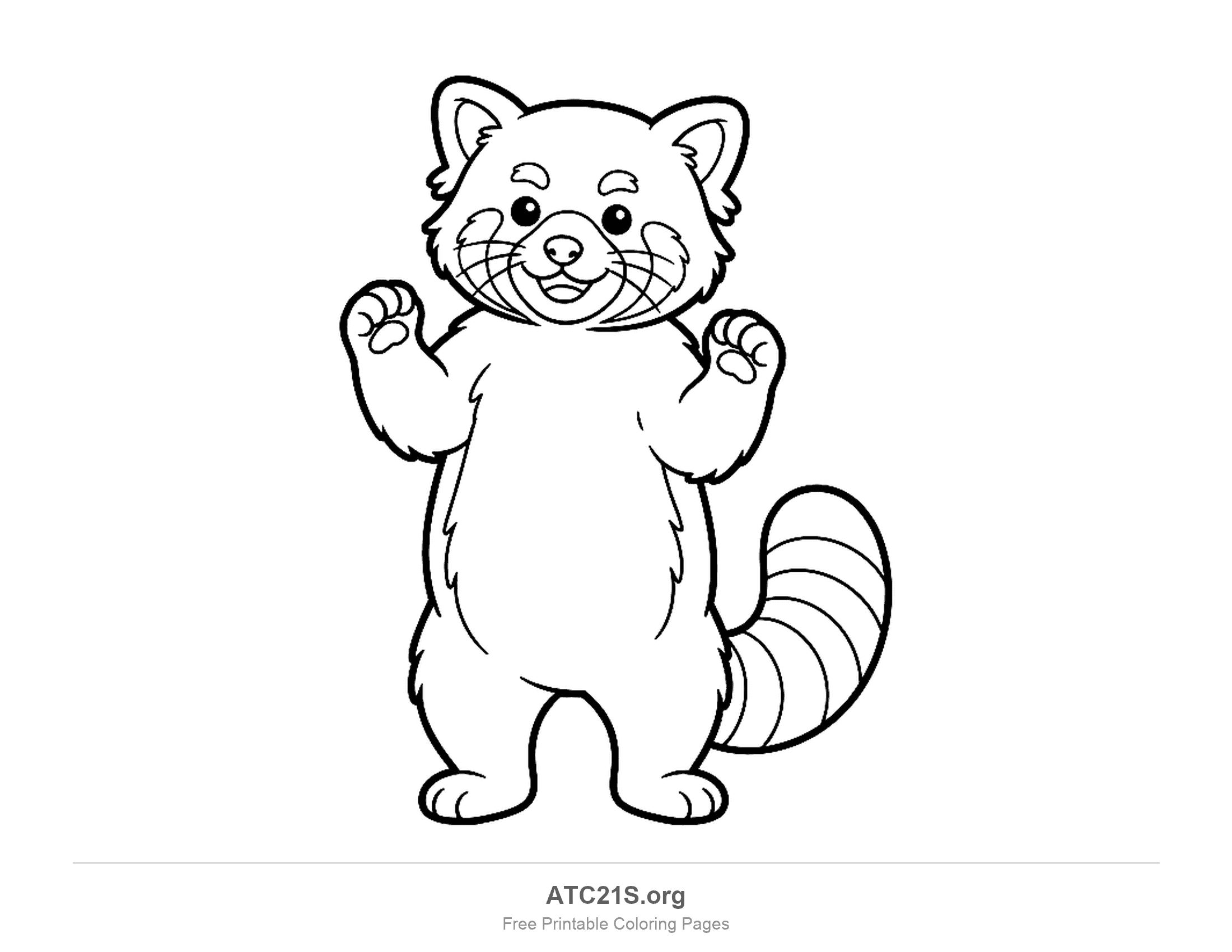
The eight designs get steadily harder. First is a chubby cartoon red panda standing on its hind legs with both paws in the air — thick outlines and a huge open belly, right for toddlers still learning to stay inside the lines. Then a shy sitting red panda with a paw over its mouth, one sitting and waving, and one lying down with its chin on its paws, all still bold and friendly. After that the poses get more interesting: a playful pounce with the tail raised high, a sleeping red panda curled up on its ringed tail, a walking profile, and a detailed face portrait with whiskers and fluffy fur for children who like a longer, careful page.
The tail is the part worth pausing on. A red panda's tail is almost as long as its body. It helps with balance in the trees, and when the animal curls up to sleep it wraps the tail around itself like a blanket. The sleeping sheet is the natural one to talk about while colouring — the tail is the pillow and the blanket at the same time.
Every sheet prints on landscape US Letter paper at 200 DPI, so the red panda fills the page without being cut off. Plain copier paper is fine for crayons and colored pencils. If you are using markers or paint, slightly thicker card stock stops the colour bleeding through — worth doing on the portrait, where the fur lines sit a little closer together.
In the classroom these pages pair well with a lesson on animals of the Himalayas, on the difference between a red panda and a giant panda, on the letter R, or on how animals live in trees. Print the standing red panda next to a giant panda page and let children spot which one is which. The standing sheet is finished in a few minutes; the face portrait can fill a quiet stretch of the afternoon. Print a few different designs and let each child pick the one that matches their patience that day. The panda pages show the giant cousin, the raccoon the animal it most resembles, and the animal coloring index the rest.