AnimalsWoodland8 designsFree to print
print, color, learn
Free Raccoon Coloring Pages
Eight free printable raccoon coloring pages, from a curled-up sleeping raccoon for little hands to a playful stretching raccoon for older kids. Download the PNG or print straight from this page.
share:
pick a favourite
8 Raccoon designs to color
Tap any sheet for a closer look, then download or print it.
Raccoon Coloring Page - Cute Baby Sitting
Raccoon Coloring Page - Sitting Looking Back
Raccoon Coloring Page - Standing Paws Clasped
Raccoon Coloring Page - Cute Waving
Raccoon Coloring Page - Walking
Raccoon Coloring Page - Sitting Washing Paws
Raccoon Coloring Page - Playful Stretch
quick instructions
How to download and print
1. Pick your sheet
Preview any design below and choose the one you like best.
2. Print or download
Print straight from the page, or save the PNG to print later.
3. Color it in
Crayons, colored pencils or markers — plain paper works fine.
Every sheet is sized for landscape US Letter (11" x 8.5") at 200 DPI, so it fills the page without cropping. A4 works too — choose "fit to page" when printing.
while you color…
6 fun facts about the raccoon
A raccoon's black mask may help it see better at night by cutting glare, a bit like the black grease athletes put under their eyes.
Baby raccoons are called kits, and they are born with their eyes closed.
Raccoons can turn their back feet all the way around so they can climb down a tree head-first.
Their front paws are almost like little hands — they can open jars, latches and garbage bins.
Raccoons dunk food in water not to wash it, but because wet paws help them feel what they are holding.
A raccoon's tail usually has five to seven dark rings.
About the raccoon coloring page
Raccoons are medium-sized mammals native to North America, famous for the black mask across their eyes and the rings on their tail. They live in woods, along streams and — more and more — in towns and backyards, which is why so many children have seen one even if they have never been to a zoo. They are clever with their front paws, almost like little hands, and that is usually the first thing children want to talk about.
The real coat is grey-brown with a darker mask, a pale snout and a tail of five to seven dark rings. That is a perfectly good way to colour these sheets. It is also fine to ignore it. A pink raccoon, a rainbow one, or one whose rings are every colour of the crayon box is just as welcome. The mask and the striped tail are the two shapes that make it look like a raccoon rather than a small bear, so those are worth pointing out.
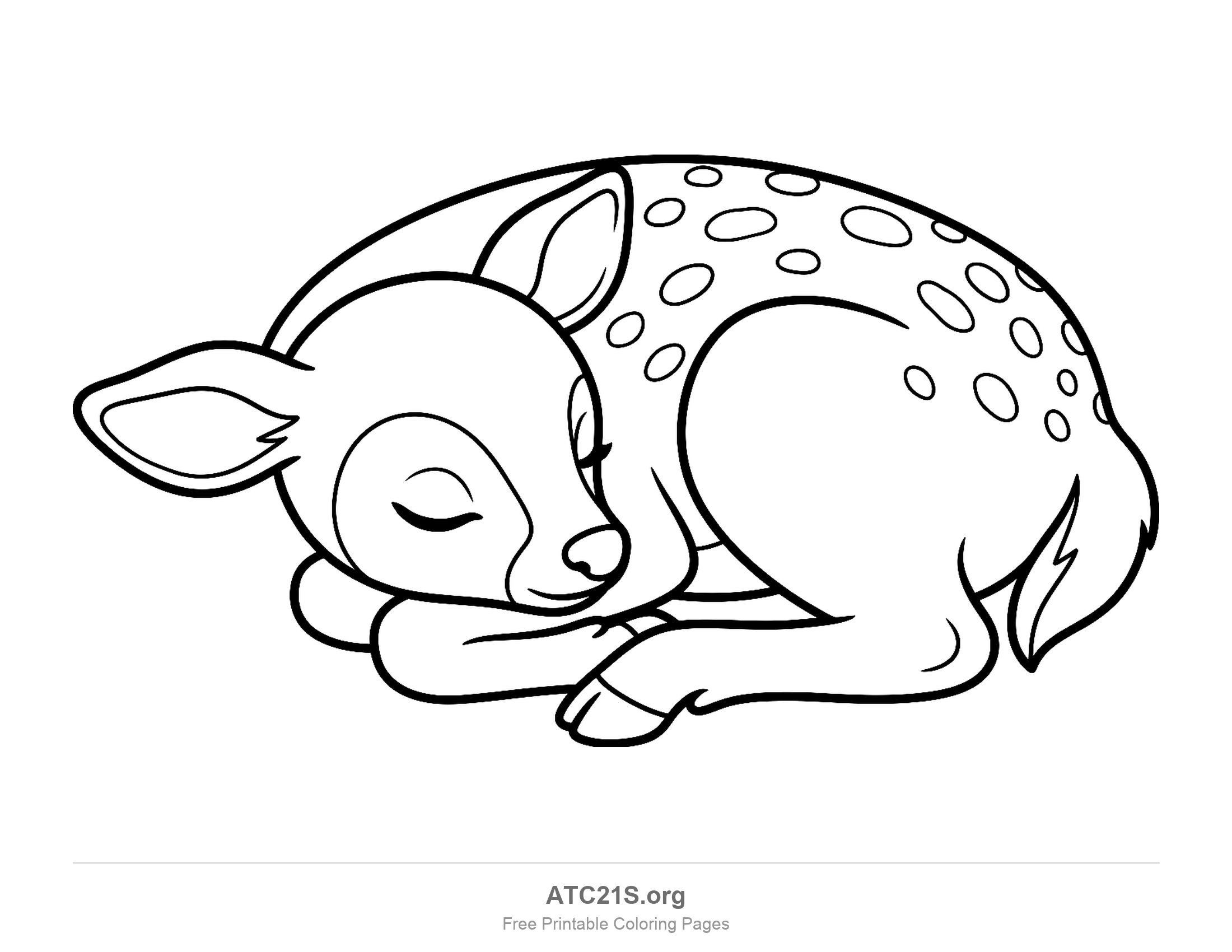
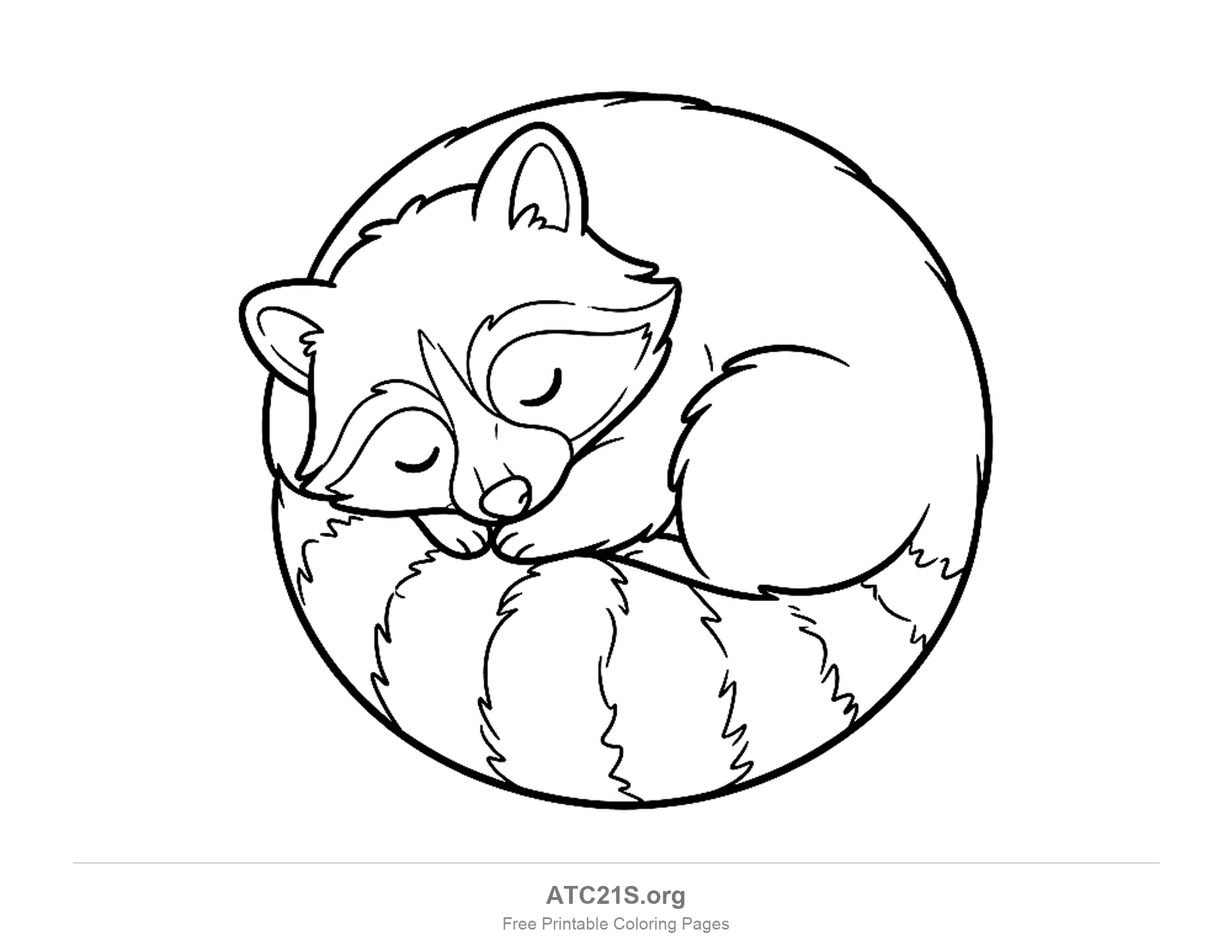
The eight designs get steadily harder. First is a raccoon curled into a circle asleep, eyes closed and tail wrapped around itself — thick outlines and a huge round shape, right for toddlers still learning to stay inside the lines. Then a chubby baby kit sitting up with enormous sparkly eyes, a sitting raccoon glancing back over its shoulder, and one standing on its hind legs with its paws clasped, all still bold and friendly. After that the detail climbs: a raccoon sitting and waving, one walking on all fours, one sitting and rubbing its paws together as if washing them, and a playful stretch with front paws out and tail in the air for children who like a longer, careful page.
The washing pose is the part worth pausing on. Raccoons often dunk food in water, which is how they got their reputation as little washers. They are not actually trying to clean it. Wet paws help them feel what they are holding, because their front feet are packed with nerve endings. The sitting-washing sheet is a good one to talk about while colouring.
Every sheet prints on landscape US Letter paper at 200 DPI, so the raccoon fills the page without being cut off. Plain copier paper is fine for crayons and colored pencils. If you are using markers or paint, slightly thicker card stock stops the colour bleeding through — worth doing on the walking and stretching sheets, where the fur lines sit a little closer together.
In the classroom these pages pair well with a lesson on woodland habitats, on nocturnal animals, on the letter R, or on how paws can work like hands. Autumn and Halloween are the obvious moments, when raccoons turn up in stories as masked night-time visitors, but they fit a spring nature unit just as well. Print a few different designs and let each child pick: the sleeping raccoon is finished in a few minutes, while the stretching sheet can fill a quiet stretch of the afternoon, which keeps a mixed-age table busy at the same time. The fox pages share the same woods, the bat sheets cover the other masked night visitor, the hedgehog pages another nocturnal neighbour, and the animal sheets have the rest.