AnimalsInsects9 designsFree to print
print, color, learn
Free Bee Coloring Pages
Nine free printable bee coloring pages, from a sleepy cartoon bee for little hands to a detailed top-down honeybee for older kids. Download the PNG or print straight from this page.
share:
pick a favourite
9 Bee designs to color
Tap any sheet for a closer look, then download or print it.
Bee Coloring Page - Cute Sitting
Bee Coloring Page - Cute Round Flying
Bee Coloring Page - Cute Waving
Bee Coloring Page - Cute Flying Upward
Bee Coloring Page - Cute Queen Flying
Bee Coloring Page - Hovering Front
Bee Coloring Page - Waving Standing
Bee Coloring Page - Detailed Top Down
quick instructions
How to download and print
1. Pick your sheet
Preview any design below and choose the one you like best.
2. Print or download
Print straight from the page, or save the PNG to print later.
3. Color it in
Crayons, colored pencils or markers — plain paper works fine.
Every sheet is sized for landscape US Letter (11" x 8.5") at 200 DPI, so it fills the page without cropping. A4 works too — choose "fit to page" when printing.
while you color…
6 fun facts about the bee
Honeybees beat their wings about 200 times a second — that is what makes the buzzing sound.
A honeybee visits about 50 to 100 flowers on a single trip out of the hive.
Only female bees can sting, and a honeybee's stinger stays behind so she can sting only once.
Bees tell each other where the good flowers are by doing a special figure-of-eight dance called the waggle dance.
A queen bee can lay about 2,000 eggs in a single day.
It takes nectar from about two million flowers to make one pound of honey.
About the bee coloring page
Bees are flying insects that live in gardens, meadows and hives on every continent except Antarctica. Children usually notice two things first: the yellow-and-black stripes and the buzz. Honeybees, bumblebees and the many wild bees that pollinate flowers are all on this page, so a child can colour a bee they might actually see on a walk, plus a queen with a crown for the ones who like a story.
The classic bee is yellow and black — yellow bands on a dark body, with clear or pale wings. That is a perfectly good way to colour these sheets. It is also fine to ignore it. A pink bee, a rainbow bee, or a bee with purple stripes is just as welcome. Point out the wings, which stay pale and see-through on a real bee, and the stripes on the abdomen, which are the most satisfying shapes to fill. The queen's crown and necklace are an open invitation to gold, pink or whatever the child has in the tin.
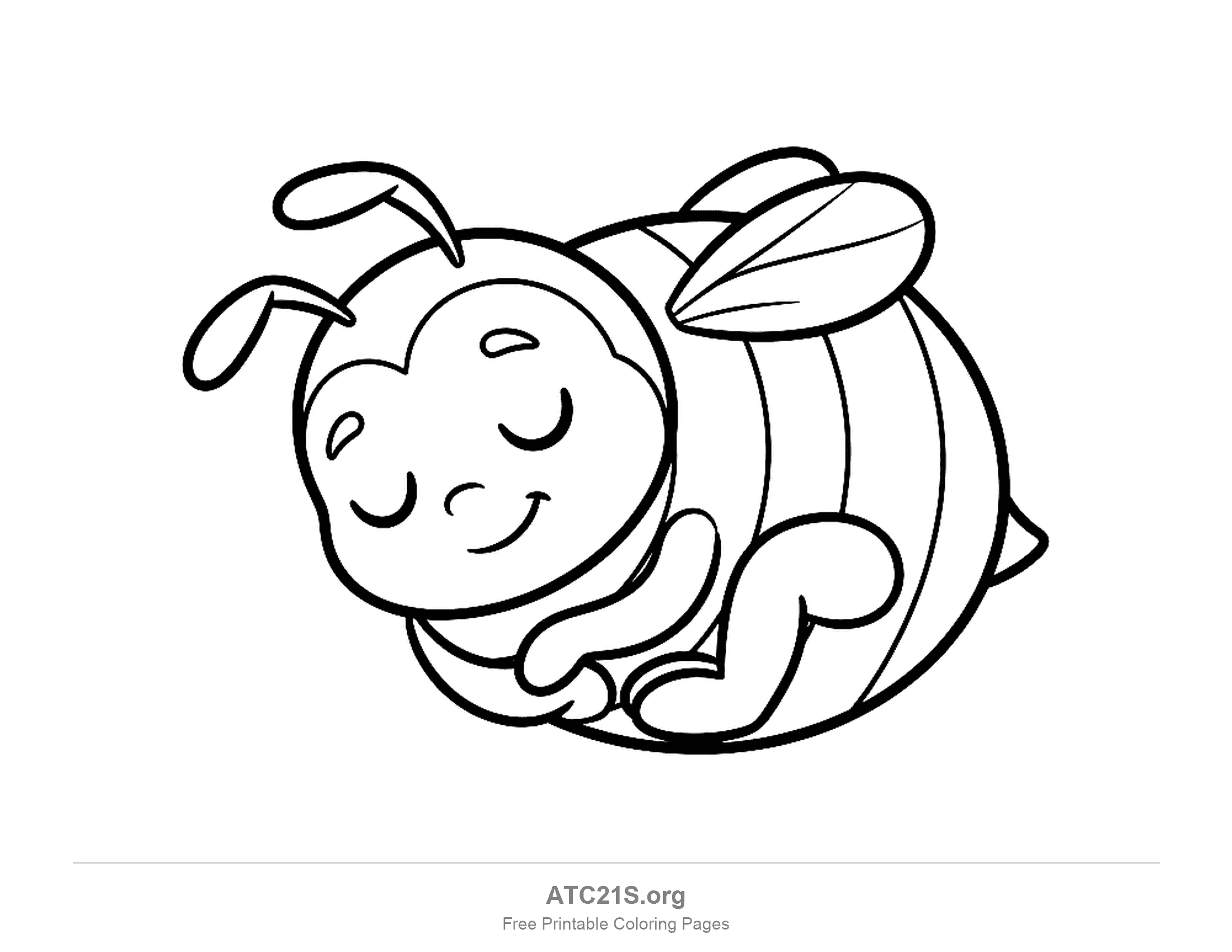
The nine designs get steadily harder. The sleeping bee comes first — thick outlines, closed eyes and a round striped body, right for toddlers still learning to stay inside the lines. Then a chubby sitting bee with paws clasped, a round flying bumblebee with fluttering wings, and a friendly bee standing and waving, all still bold and cartoonish. After that the detail climbs: a bee flying diagonally upward, a queen bee with a crown and a pendant, a hovering bee seen from the front with four large veined wings, a standing bee waving with four detailed wings and striped legs, and finally a realistic honeybee from above, with jointed legs, a fuzzy thorax and finely veined wings for children who like a long, careful project.
Every sheet prints on landscape US Letter paper at 200 DPI, so the bee fills the page without being cut off. Plain copier paper is fine for crayons and colored pencils. If you are using markers or paint, slightly thicker card stock stops the colour bleeding through — worth doing on the last three sheets, where the thin wing veins sit close together.
In the classroom these pages pair well with a lesson on pollinators and gardens, on insect body parts (head, thorax, abdomen, six legs, four wings), on the letter B, or on how honey is made. Spring is the obvious moment, when bees are out on the first flowers, but they fit a food unit just as well. Print a few different designs and let each child pick: the sleeping bee is finished in a few minutes, while the top-down honeybee can fill a whole quiet afternoon, which keeps a mixed-age table busy at the same time. The butterfly pages cover the other pollinator in the same flowerbed, the printable flower sheets give a bee something to land on, and the rest of the animal pages has the larger animals.