AnimalsJungle8 designsFree to print
print, color, learn
Free Alligator Coloring Pages
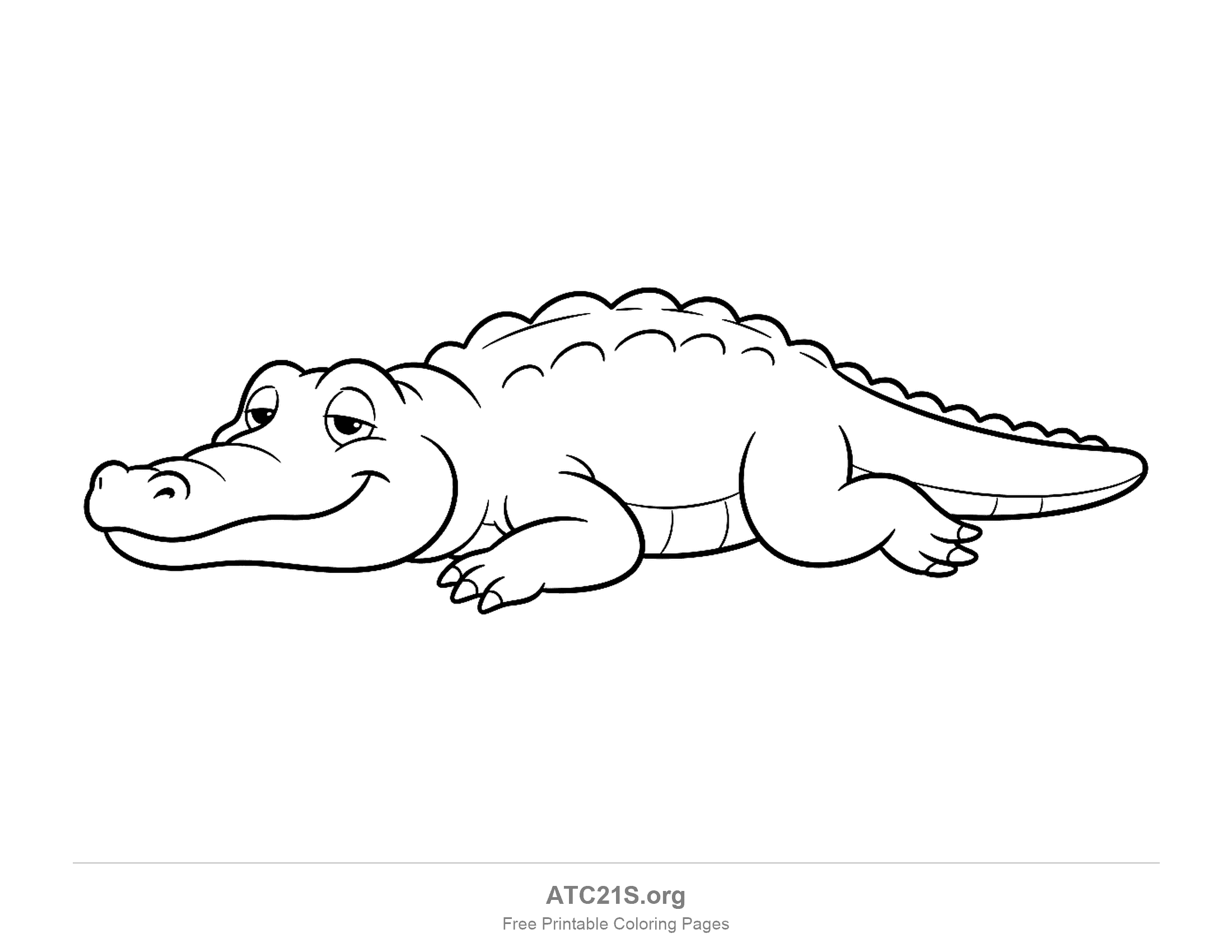
Eight free printable alligator coloring pages, from a sleepy thick-outline lounger for little hands to a finely scaled walking alligator for older kids. Download the PNG or print straight from this page.
share:
pick a favourite
8 Alligator designs to color
Tap any sheet for a closer look, then download or print it.
Alligator Coloring Page - Cute Baby Sitting
Alligator Coloring Page - Cute Sitting Waving
Alligator Coloring Page - Cute Open Mouth Sitting
Alligator Coloring Page - Cute Smiling Face
Alligator Coloring Page - Simple Walking Profile
Alligator Coloring Page - Looking Back Curled Tail
Alligator Coloring Page - Detailed Scaly Walking
quick instructions
How to download and print
1. Pick your sheet
Preview any design below and choose the one you like best.
2. Print or download
Print straight from the page, or save the PNG to print later.
3. Color it in
Crayons, colored pencils or markers — plain paper works fine.
Every sheet is sized for landscape US Letter (11" x 8.5") at 200 DPI, so it fills the page without cropping. A4 works too — choose "fit to page" when printing.
while you color…
6 fun facts about the alligator
An alligator's snout is wide and rounded like a U — a crocodile's is pointy like a V, which is the easiest way to tell them apart.
Baby alligators are only about as long as a pencil when they hatch, around 6 to 8 inches.
Whether a baby alligator is a boy or a girl depends on how warm the nest is while the eggs are sitting.
Alligators cannot chew. They swallow food in chunks, and they sometimes swallow rocks to help grind it up.
An alligator can hold its breath underwater for about 20 to 30 minutes while it waits.
Alligators do not sweat, so they open their mouths wide to cool down — which is why they often look like they are smiling.
About the alligator coloring page
Alligators are large reptiles that live in freshwater swamps, marshes, rivers and lakes. The American alligator lives across the southeastern United States — Florida, Louisiana, Georgia, the Carolinas, Alabama, Mississippi, Texas and Arkansas — and a much smaller, rarer kind lives in China. Children usually meet them as the still, smiling shape in a swamp picture book or at the zoo, which is why they are such a popular animal to colour.
Olive green, muddy brown, grey and almost black are the colours most real alligators wear, usually with a paler cream or yellow belly. That is a good starting palette, but these pages do not have one "right" colour. The chubby baby and the waving cartoon alligator look just as good in bright greens, teals or a rainbow mix. The walking sheets are a chance to try a two-tone look: a darker, scaly back and a paler underside, which is how real alligators hide in murky water. Point out the belly bands, the ridge of scutes down the back and tail, and the rows of teeth — those are the shapes most children enjoy picking out in a slightly different shade.
The eight designs get steadily harder. The first four are the easy ones: a sleepy alligator lying down with almost no interior detail, a chubby baby sitting front-on with huge round eyes, one sitting upright and waving, and one sitting with its mouth wide open in a laugh. Thick outlines and wide open shapes suit toddlers and preschoolers still learning to stay inside the lines. Next is a close-up smiling face, then a walking alligator in side view, both with more scales and teeth to colour. The last two are the longer projects: an alligator looking back over its shoulder with a raised, curled tail, and a walking alligator whose back, tail and legs are covered in individual scales for children who like a careful, sit-down page.
Every sheet prints on landscape US Letter paper at 200 DPI, so the alligator fills the page without being cut off. Plain copier paper is fine for crayons and colored pencils. If you are using markers or paint, slightly thicker card stock stops the colour bleeding through — worth doing on the last two sheets, where the scale patterns sit close together.
In the classroom these pages pair well with a lesson on reptiles, on wetland habitats, on the letter A, or on how to tell an alligator from a crocodile. The rounded U-shaped snout on these sheets is the giveaway: a crocodile's snout is pointier, like a V. The close-up face makes a good mask — colour it, cut around the head, and add a string. Print two or three different designs and let each child pick: the lying-down alligator is finished in a few minutes, while the detailed walking alligator can fill a whole quiet afternoon, which keeps a mixed-age table busy at the same time. The turtle and frog pages share the same swamp, and the animal coloring collection has the rest.
Alligators are also an easy opening for a first conversation about being careful around wild animals without being afraid of them. Most alligators would rather lie still in the sun than chase anything, and the fact that nest temperature decides whether the babies are boys or girls is one children find genuinely surprising — a calm way to talk about an animal that looks fierce on the page and is also a careful parent.