AnimalsPond8 designsFree to print
print, color, learn
Free Frog Coloring Pages
Eight free printable frog coloring pages, from a simple side-profile frog for little hands to a bumpy, detailed sitting frog for older kids. Download the PNG or print straight from this page.
share:
pick a favourite
8 Frog designs to color
Tap any sheet for a closer look, then download or print it.
Frog Coloring Page - Simple Top Down
Frog Coloring Page - Cute Head Tilt Sitting
Frog Coloring Page - Cute Waving
Frog Coloring Page - Croaking Puffed Throat
Frog Coloring Page - Tree Frog Sitting
Frog Coloring Page - Leaping
Frog Coloring Page - Detailed Sitting
quick instructions
How to download and print
1. Pick your sheet
Preview any design below and choose the one you like best.
2. Print or download
Print straight from the page, or save the PNG to print later.
3. Color it in
Crayons, colored pencils or markers — plain paper works fine.
Every sheet is sized for landscape US Letter (11" x 8.5") at 200 DPI, so it fills the page without cropping. A4 works too — choose "fit to page" when printing.
while you color…
6 fun facts about the frog
A frog can jump more than 20 times its own body length — if you could do that, you would jump the length of a basketball court.
Baby frogs are called tadpoles. They live in water, have tails and no legs, and slowly grow legs as they turn into frogs.
Frogs do not drink water with their mouths — they soak it up through their skin.
Male frogs puff out a big bubble in their throat to croak, which is how they call to other frogs.
Tree frogs have sticky pads on their toes so they can climb leaves, glass and even ceilings.
There are more than 7,000 kinds of frog, from ones the size of a pea to the Goliath frog, which is as big as a house cat.
About the frog coloring page
Frogs are amphibians, which means they start life in water and later live on land as well. They live in ponds, streams, rainforests and even gardens almost everywhere except Antarctica. Children usually meet them first as tadpoles in a classroom tank or as the loud croaking on a summer evening, which makes them a favourite animal to colour.
Green is the colour most people reach for, and many pond frogs really are green or brown with a paler belly. That is a good starting palette, but these pages do not have one "right" colour. Tree frogs can be bright red, blue or yellow; poison-dart frogs wear spots and stripes in almost any mix. A pink, purple or rainbow frog is as welcome as a realistic green one. Point out the pale belly that stays light on many frogs, and the darker patches that often sit behind the eyes.
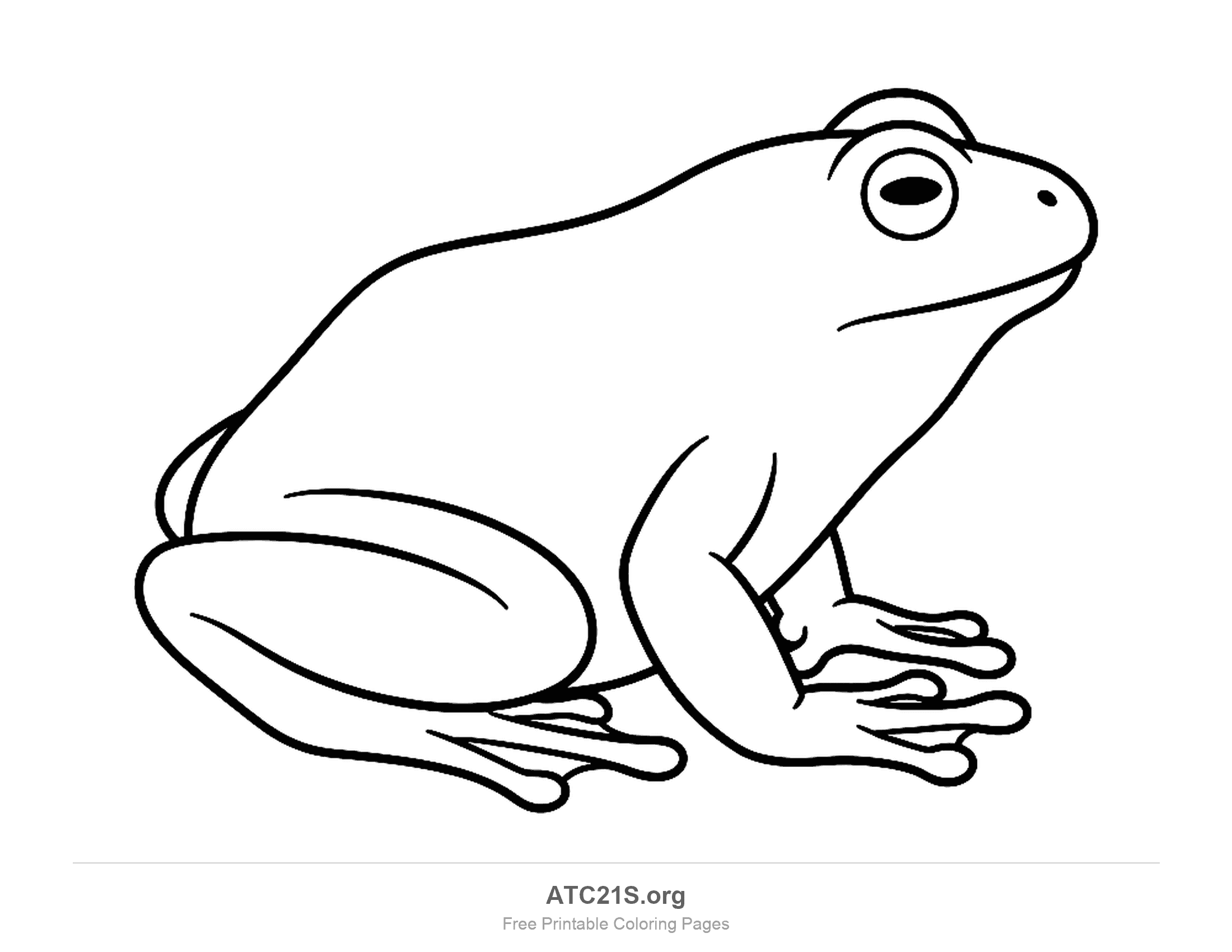
The eight designs get steadily harder. First is a simple frog in side profile — a few clean lines and a big empty body, right for toddlers still learning to stay inside the lines. Next is a frog seen from above with splayed webbed feet, then a cute sitting frog with its head tilted, both still simple. The waving frog with a big grin is the friendly cartoon sheet. Then come two that teach a little biology as you colour: a frog with its throat puffed out to croak, and a tree frog whose round, sticky toe pads are the whole point of the drawing. The last two are the longer projects: a leaping frog stretched out mid-air, and a chubby sitting frog whose skin is drawn with bumps and folds for children who like a careful, detailed piece of work.
Every sheet prints on landscape US Letter paper at 200 DPI, so the frog fills the page without being cut off. Plain copier paper is fine for crayons and colored pencils. If you are using markers or paint, slightly thicker card stock stops the color bleeding through — worth doing on the last sheet, where the skin folds sit close together and can run into each other on flimsy paper.
In the classroom these pages pair well with a lesson on amphibians, on pond life, on life cycles, or on the letter F. Laying the croaking frog next to the tree frog is a simple way to show that "frog" is a whole family of animals, not one shape. Print two or three different designs and let each child pick: the side-profile frog is finished in a few minutes, while the bumpy sitting frog can fill a whole quiet afternoon, which keeps a mixed-age table busy at the same time. Many frogs come out to call after a heavy downpour, so the rain sheets make a good wet-weather partner. The turtle shares the same pond and the snake the same riverbank; the wider animal collection lists the rest.
The croaking sheet is a real behaviour — male frogs puff out a vocal sac in their throat to call — which makes a nice talking point while colouring. The top-down sheet is another: those big webbed hind feet are what frogs use to swim, so children can colour the webbing a slightly different shade from the rest of the foot.