AnimalsJungle8 designsFree to print
print, color, learn
Free Leopard Coloring Pages
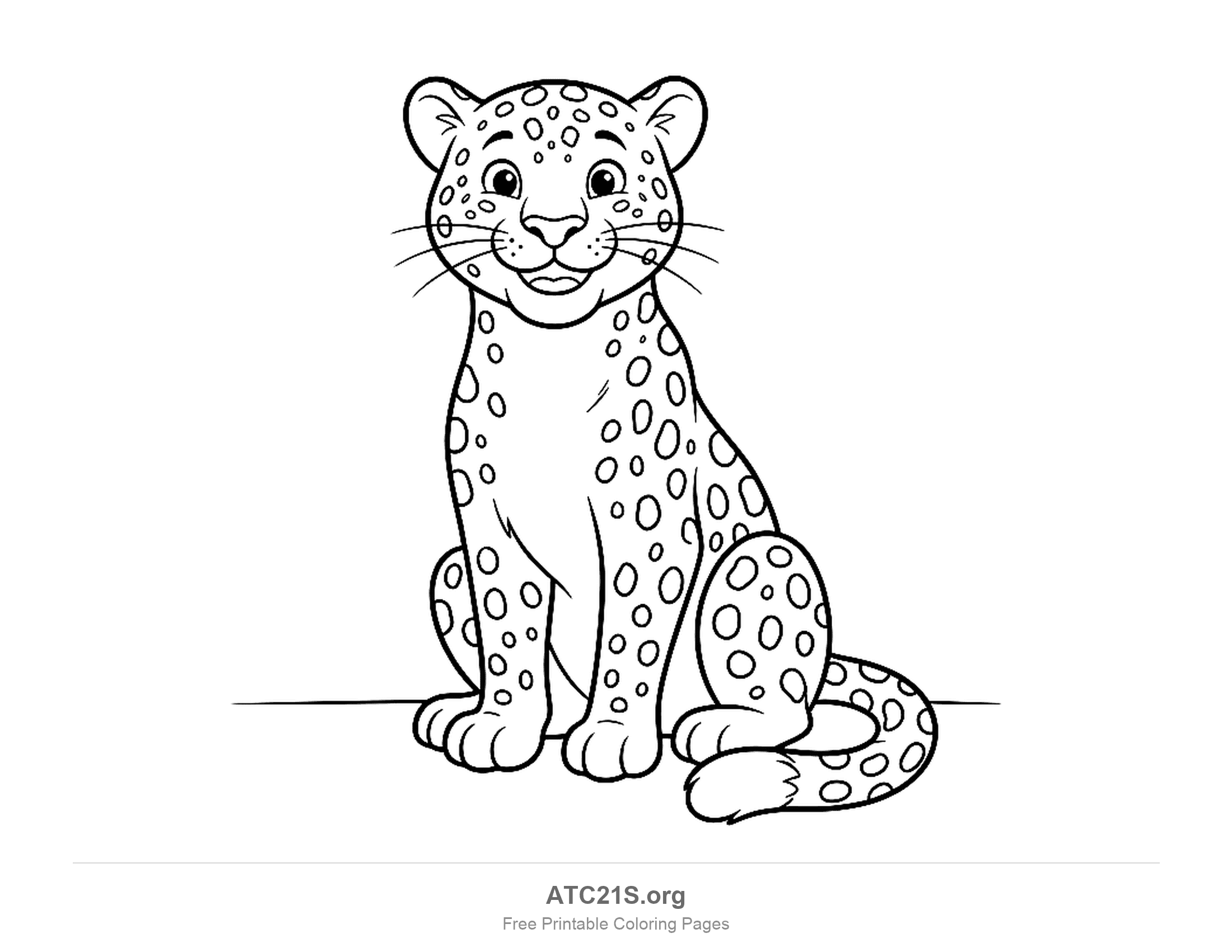
Eight free printable leopard coloring pages, from a chunky sitting cub for little hands to a detailed face portrait for older kids. Download the PNG or print straight from this page.
share:
pick a favourite
8 Leopard designs to color
Tap any sheet for a closer look, then download or print it.
Leopard Coloring Page - Playful Stretching
Leopard Coloring Page - Cute Rolling
Leopard Coloring Page - Yawning Sitting
Leopard Coloring Page - Leaping
Leopard Coloring Page - Sleeping Curled
Leopard Coloring Page - Walking Profile
Leopard Coloring Page - Detailed Face Portrait
quick instructions
How to download and print
1. Pick your sheet
Preview any design below and choose the one you like best.
2. Print or download
Print straight from the page, or save the PNG to print later.
3. Color it in
Crayons, colored pencils or markers — plain paper works fine.
Every sheet is sized for landscape US Letter (11" x 8.5") at 200 DPI, so it fills the page without cropping. A4 works too — choose "fit to page" when printing.
while you color…
6 fun facts about the leopard
A leopard's spots are rose-shaped rings called rosettes. No two leopards have the same pattern.
Leopards can drag prey twice their own weight up a tree so lions and hyenas cannot steal it.
A leopard's roar sounds a bit like someone sawing wood, so people call it a sawing call.
Leopards live in more places than any other big cat — Africa, India, China, the Middle East and snowy mountains.
A black panther is usually a leopard with extra-dark fur. If you look closely you can still see the spots.
A baby leopard is called a cub, and it stays with its mother for about two years.
About the leopard coloring page
Leopards are big cats that live in more kinds of country than any other big cat — African savanna, Indian forest, rocky mountains, even the snow of the Russian Far East. Unlike lions they live and hunt alone, and they are famous for hauling their food up into a tree so lions and hyenas cannot steal it. Children usually meet them as the spotted cat in a jungle story, which is why they are such a satisfying animal to sit down and color.
The real coat is gold or tawny, covered in black rose-shaped rings called rosettes — not the solid round dots a cheetah has — with a paler cream belly and chin. That is a perfectly good way to color these sheets. It is also fine to ignore it. A pink leopard, a rainbow one, or an all-black "black panther" (which is a leopard with extra-dark fur) is just as welcome. The rosettes are the shape that makes it look like a leopard rather than a cheetah, so those are worth pointing out.
The eight designs get steadily harder. First is a cute leopard sitting facing you with a smile and simple oval spots, thick outlines and wide open shapes that suit toddlers still learning to stay inside the lines. Then a playful stretch with its tongue out, a cub rolling on its back with paws in the air, and a sitting leopard yawning with its mouth wide open, all still bold and friendly. After that the drawings become more detailed: a leopard leaping at full stretch, one sleeping curled into a circle whose coat is packed with rosettes, a realistic walking profile, and a close-up face portrait with whiskers and small fangs for children who like a longer, careful page.
Rosettes are the part worth pausing on. Each ring has a gold center, and no two leopards have the same pattern, a bit like a fingerprint. Count a few on the walking sheet together, then compare them with the sitting cartoon, whose spots are just simple ovals. The same animal drawn two ways, which children find genuinely surprising. The leaping sheet is the natural one to color while talking about how far a leopard can jump, and the face portrait shows the whiskers and the small white marks on the muzzle.
Every sheet prints on landscape US Letter paper at 200 DPI, so the leopard fills the page without being cut off. Plain copier paper is fine for crayons and colored pencils. If you are using markers or paint, slightly thicker card stock stops the color bleeding through — worth doing on the last three sheets, where the rosettes sit close together.
In the classroom these pages pair well with a lesson on African and Asian wildlife, on how cats hunt, on the letter L, or on the difference between a leopard and a cheetah. Print the walking leopard next to a cheetah coloring page and let children spot which cat has rings and which has solid dots. The sitting sheet is finished in a few minutes; the face portrait can fill a quiet stretch of the afternoon. The lion coloring pages and lioness sheets show the cats a leopard might lose a meal to, a tiger page adds stripes to the set, and the other printable animals has the rest.
Printing two or three different designs and letting each child pick keeps a mixed-age group busy at the same table, since the easy sheets finish quickly and the detailed ones can stretch across a whole quiet afternoon.