AnimalsJungle8 designsFree to print
print, color, learn
Free Cheetah Coloring Pages
Eight free printable cheetah coloring pages, from a chunky waving cub for little hands to a detailed face portrait for older kids. Download the PNG or print straight from this page.
share:
pick a favourite
8 Cheetah designs to color
Tap any sheet for a closer look, then download or print it.
Cheetah Coloring Page - Cute Sitting
Cheetah Coloring Page - Cute Cub Running
Cheetah Coloring Page - Playful Stretching
Cheetah Coloring Page - Sleeping Lying Down
Cheetah Coloring Page - Sprinting
Cheetah Coloring Page - Walking Profile
Cheetah Coloring Page - Detailed Face Portrait
quick instructions
How to download and print
1. Pick your sheet
Preview any design below and choose the one you like best.
2. Print or download
Print straight from the page, or save the PNG to print later.
3. Color it in
Crayons, colored pencils or markers — plain paper works fine.
Every sheet is sized for landscape US Letter (11" x 8.5") at 200 DPI, so it fills the page without cropping. A4 works too — choose "fit to page" when printing.
while you color…
6 fun facts about the cheetah
A cheetah is the fastest land animal on Earth. It can run about 70 miles per hour (112 km/h) — but only for about 20 to 30 seconds.
Cheetahs cannot roar. They purr, hiss, and make a high chirp that sounds a bit like a bird.
The two black lines from a cheetah's eyes to its mouth are called tear marks. They work like sunglasses and cut the glare of the sun.
A cheetah's spots are solid black dots. A leopard's spots are rings, called rosettes — that is the easiest way to tell them apart.
A cheetah uses its long tail as a rudder, flicking it to one side to help it turn when it is running at full speed.
Unlike most cats, a cheetah's claws do not pull all the way in. They work like running spikes and help it grip the ground.
About the cheetah coloring page
Cheetahs are the fastest land animals on Earth. They live on the grasslands and open savannas of Africa, with a tiny leftover population in Iran, and they hunt by sprinting after gazelles and hares in short, explosive bursts. Children usually meet them as the spotted cat that always wins the race in a storybook, which is why they are such a popular animal to colour.
The real coat is tawny gold or sandy yellow, covered in solid black spots — not the rose-shaped rings a leopard has — with a paler cream belly and two black "tear marks" running from the inner corner of each eye down to the mouth. That is a perfectly good way to colour these sheets. It is also fine to ignore it. A pink cheetah, a rainbow one, or one whose spots are every colour in the crayon box is just as welcome. The tear marks and the solid round spots are the two shapes that make it look like a cheetah rather than a leopard, so those are worth pointing out.
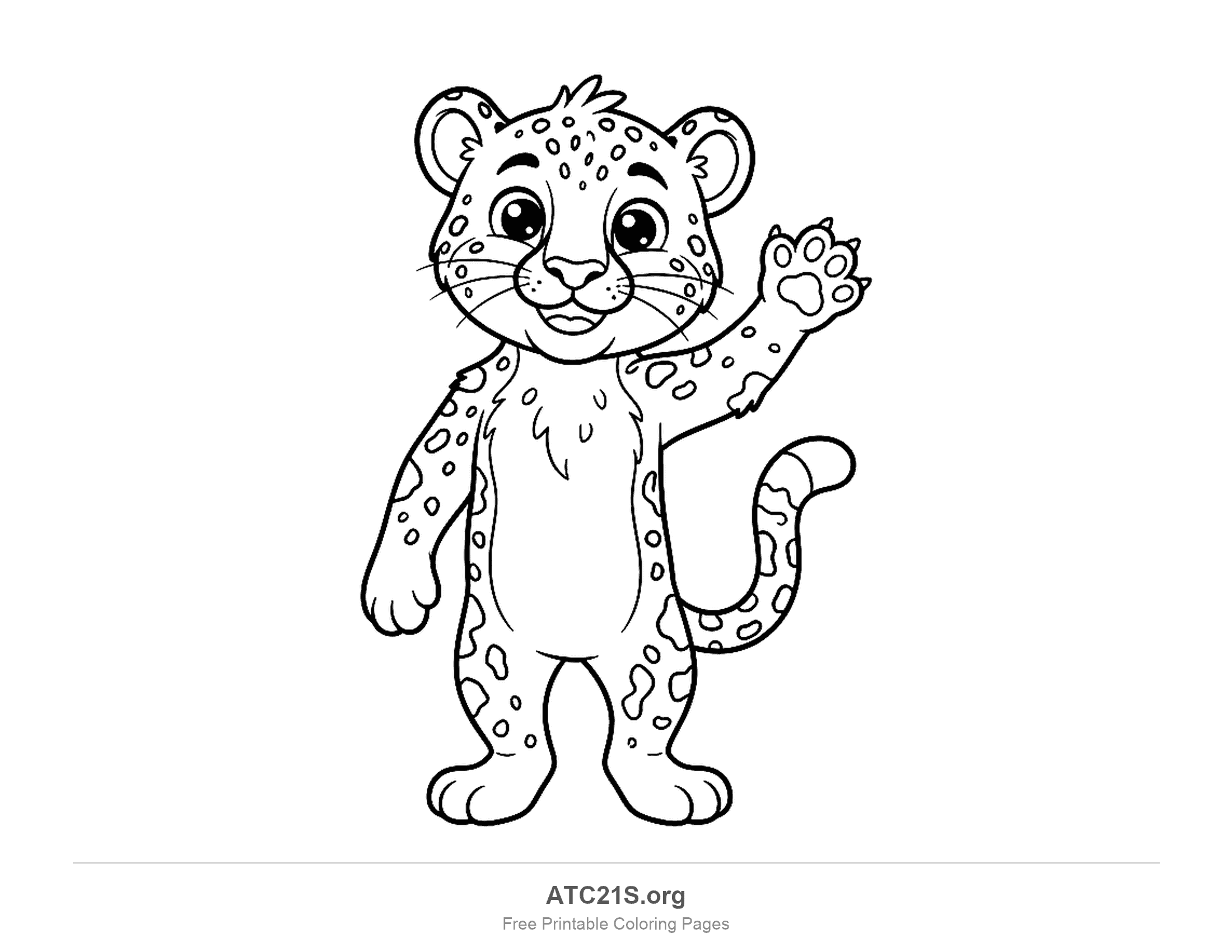
The eight designs get steadily harder. First is a chubby cartoon cheetah standing on its hind legs and waving — thick outlines and a huge open belly that suit toddlers still learning to stay inside the lines. Then a sitting cheetah with its tail wrapped around its paws, a running cub with big round eyes, and a stretching, yawning cheetah, all still bold and friendly. After that the drawings become more realistic: one lying down asleep with its spots already filled in, a cheetah sprinting at full stretch, a walking profile covered in spots, and a detailed face portrait with tear marks and whiskers for children who like a longer, careful page.
Speed is the thing most children want to talk about. A cheetah can reach about 70 miles per hour (112 km/h) in a few seconds, but only for a short sprint — after that it has to stop and catch its breath. The sprinting sheet is the natural one to colour while talking about that, and it pairs well with the face portrait, which shows the black tear marks that work like sunglasses, cutting the glare so the cheetah can see on the bright grassland. On the sleeping sheet the spots are already filled in, so children colour the coat around them — a useful exercise in staying outside a shape instead of inside one.
Every sheet prints on landscape US Letter paper at 200 DPI, so the cheetah fills the page without being cut off. Plain copier paper is fine for crayons and colored pencils. If you are using markers or paint, slightly thicker card stock stops the colour bleeding through — worth doing on the walking and portrait sheets, where the spots sit close together.
In the classroom these pages pair well with a lesson on African wildlife, on how animals move, on the letter C, or on the difference between a cheetah and a leopard. Print the walking cheetah next to a lion or tiger page and let children spot which cat has spots, which has stripes, and which has a mane. The waving sheet is finished in a few minutes; the face portrait can fill a quiet stretch of the afternoon. Print a few different designs and let each child pick the one that matches their patience that day. The lion and lioness pages show the cats the cheetah shares its grassland with, and the wider animal set has the rest.