AnimalsPets8 designsFree to print
print, color, learn
Free Cat Coloring Pages
Eight free printable cat coloring pages, from a simple curled-up sleeping cat for little hands to a fluffy long-haired cat with detailed fur for older kids. Download the PNG or print straight from this page.
share:
pick a favourite
8 Cat designs to color
Tap any sheet for a closer look, then download or print it.
Cat Coloring Page - Chubby Loaf Pose
Cat Coloring Page - Simple Sitting Outline
Cat Coloring Page - Cute Standing Kitten
Cat Coloring Page - Playful Stretching Tabby
Cat Coloring Page - Rolling Belly Up
Cat Coloring Page - Washing A Paw
Cat Coloring Page - Fluffy Long-Haired Cat
quick instructions
How to download and print
1. Pick your sheet
Preview any design below and choose the one you like best.
2. Print or download
Print straight from the page, or save the PNG to print later.
3. Color it in
Crayons, colored pencils or markers — plain paper works fine.
Every sheet is sized for landscape US Letter (11" x 8.5") at 200 DPI, so it fills the page without cropping. A4 works too — choose "fit to page" when printing.
while you color…
6 fun facts about the cat
Cats sleep between 12 and 16 hours a day — that is about two thirds of their whole life.
A cat has 32 muscles in each ear and can swivel them around to point at a sound.
Every cat's nose print is unique, a bit like a human fingerprint.
Cats walk by moving both legs on one side at a time, the same way camels and giraffes do.
A cat's whiskers are roughly as wide as its body, which helps it check whether a gap is big enough to squeeze through.
Purring is not only for happiness — cats also purr when they are hurt or nervous to help calm themselves down.
About the cat coloring page
Cats are one of the few wild animals that chose to live with people. House cats are descended from the African wildcat and moved in alongside farmers thousands of years ago, mostly to hunt the mice in their grain stores. Today they are the animal children are most likely to have actually met, which makes these pages easy to talk about: most kids already know how a cat stretches, how it curls up to sleep, and how it washes its own face with a wet paw.
Cats come in almost every color, so nobody can color one of these pages "wrong". Ginger, grey, cream, black, white, or the patchwork orange-black-and-white of a calico are all real. Point out the parts that stay pale on most cats — the chin, chest, belly and paws — and the pink triangle of the nose and the pads under the toes. The stretching cat on sheet five has tabby stripes on its back and forehead, so it is the natural one for a striped ginger or grey tabby.
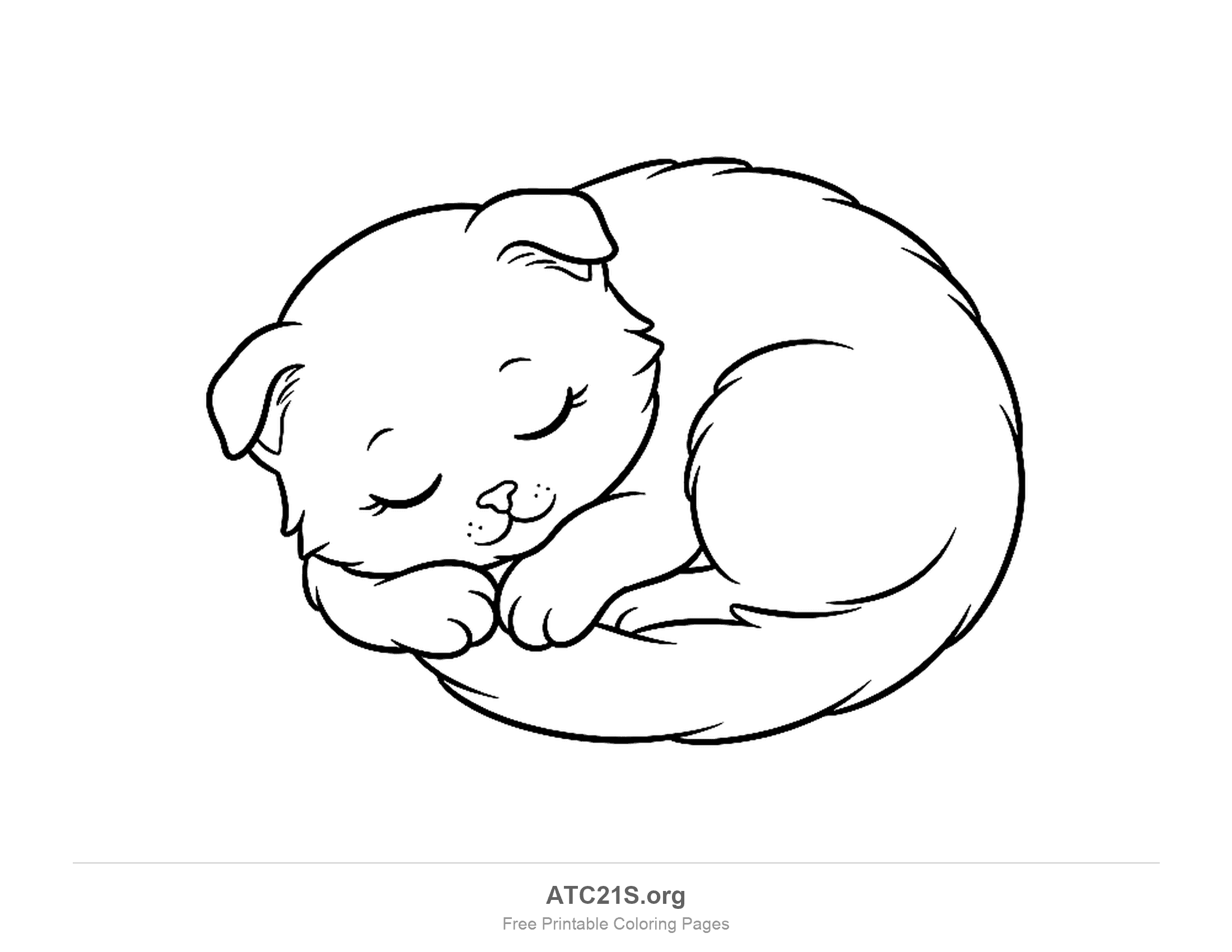
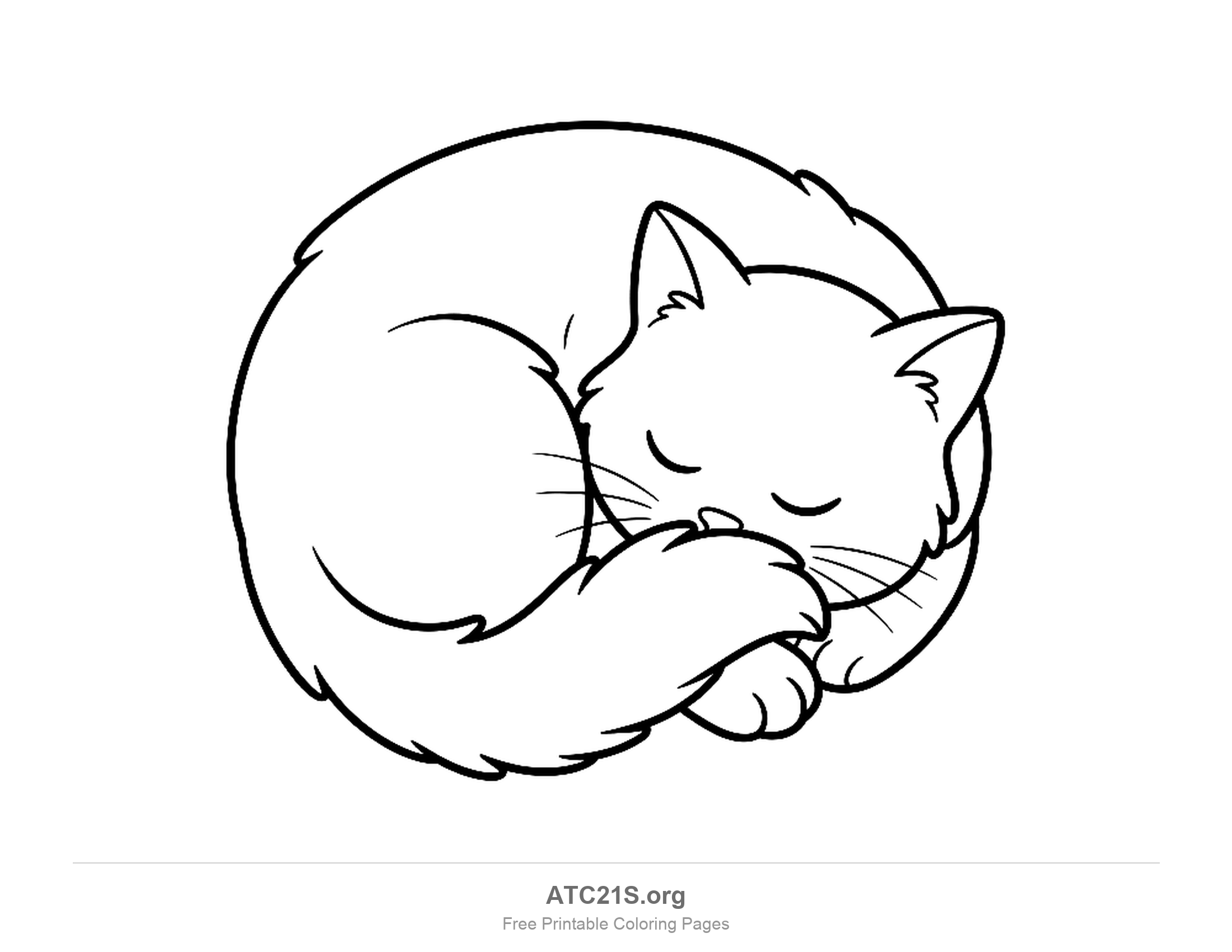
The eight designs are deliberately different from one another. The first three are the easy ones: a cat curled into a sleeping circle, a chubby fold-eared cat resting in the classic "loaf" pose, and a slim cat sitting upright in a clean single-line outline. They use wide open shapes with almost nothing small inside them, which suits toddlers and preschoolers still learning to stay inside the lines. Sheets four to six sit in the middle — a fluffy kitten standing with its tail up, a tabby stretching with its front paws forward and rump in the air, and a kitten rolling on its back with its paw pads showing. The last two are the longer projects: a kitten sitting and washing a raised paw with its eyes squeezed shut, and a big long-haired cat sitting front-on whose chest fur and enormous plumed tail are drawn as dozens of separate strands.
Every sheet prints on landscape US Letter paper at 200 DPI, so the cat fills the page without being cut off. Plain copier paper is fine for crayons and colored pencils. If you are using markers or paint, slightly thicker card stock stops the color bleeding through — worth doing on the last two sheets, where the fur strands sit close together and can run into each other on flimsy paper.
In the classroom these pages pair well with a lesson on pets and how to care for them, on the letter C, or on animal body language — the stretching, sleeping and grooming poses are three real cat behaviours children can act out before they color them. Print two or three different designs and let each child pick: the sleeping cat is finished in a few minutes, while the long-haired cat can fill a whole quiet afternoon, which keeps a mixed-age table busy at the same time. When the grown-up cat is done, the kitten pages start the whole thing again at baby size; see the free animal printables for more pets.
The sleeping and loaf poses also make good calm-down activities at the end of a busy day, and the simple sitting outline is thin-lined enough to trace over, which is useful for children who are still building pencil control.
keep coloring