BirdsGarden8 designsFree to print
print, color, learn
Free Hummingbird Coloring Pages
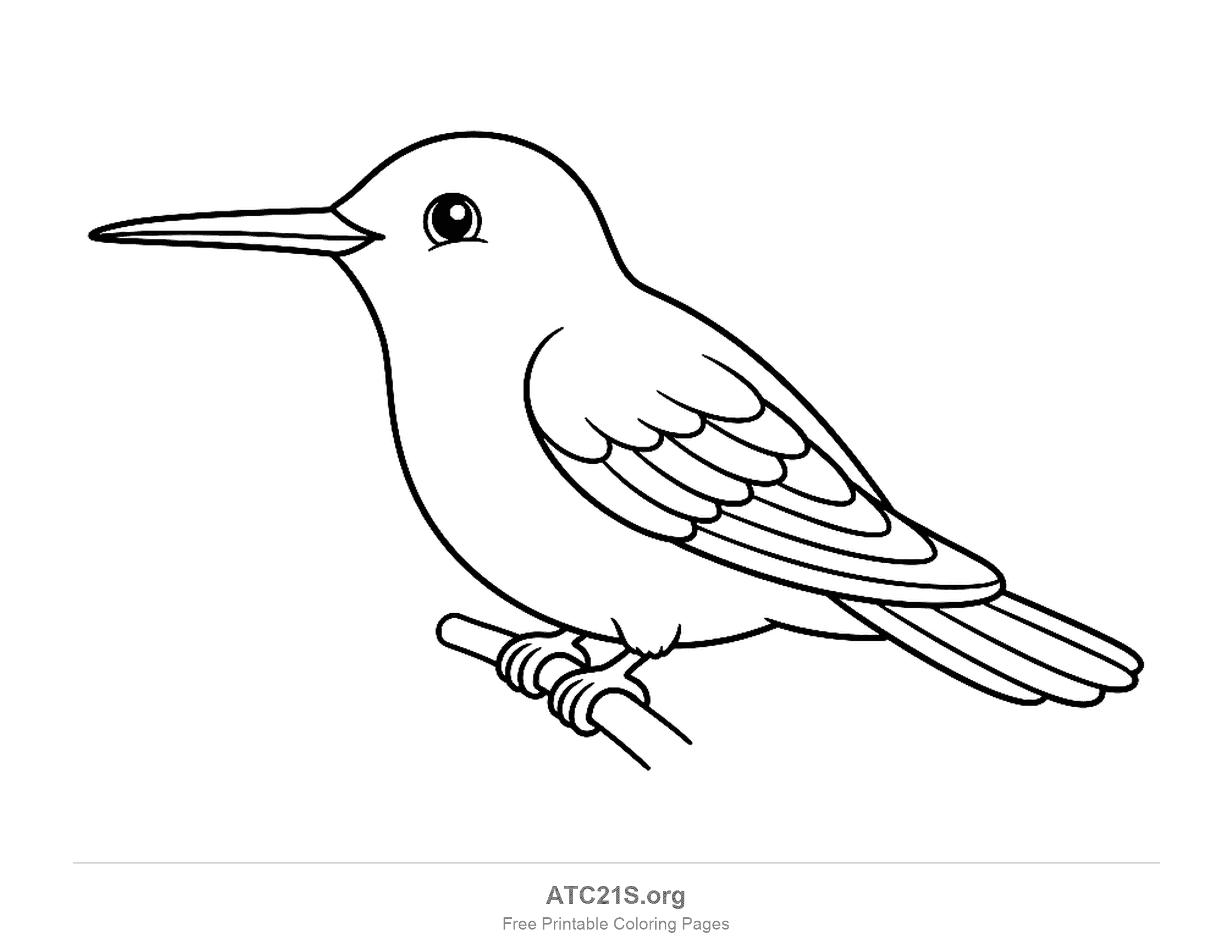
Eight free printable hummingbird coloring pages, from a cute bird perched on a twig for little hands to a detailed hovering bird with a fully fanned tail. Download the PNG or print straight from this page.
share:
pick a favourite
8 Hummingbird designs to color
Tap any sheet for a closer look, then download or print it.
Hummingbird Coloring Page - Cute Smiling Wings Spread
Hummingbird Coloring Page - Simple Hovering
Hummingbird Coloring Page - Diving Swoop
Hummingbird Coloring Page - Upward Hovering
Hummingbird Coloring Page - Crested Hovering
Hummingbird Coloring Page - Racket Tail Streamers
Hummingbird Coloring Page - Detailed Fanned Tail
quick instructions
How to download and print
1. Pick your sheet
Preview any design below and choose the one you like best.
2. Print or download
Print straight from the page, or save the PNG to print later.
3. Color it in
Crayons, colored pencils or markers — plain paper works fine.
Every sheet is sized for landscape US Letter (11" x 8.5") at 200 DPI, so it fills the page without cropping. A4 works too — choose "fit to page" when printing.
while you color…
6 fun facts about the hummingbird
Hummingbirds are the only birds that can fly backwards, and they can hover in one spot like a helicopter.
A hummingbird's wings beat about 50 times a second — so fast they look like a blur and make a humming sound.
The bee hummingbird of Cuba is the smallest bird in the world. It is about the size of a bumblebee and weighs less than a penny.
Hummingbirds drink nectar from flowers with a long thin beak, and they also eat tiny insects for protein.
A hummingbird's heart can beat more than 1,000 times a minute when it is flying.
Some hummingbirds fly more than 500 miles without stopping, including a trip across the Gulf of Mexico.
About the hummingbird coloring page
Hummingbirds are tiny nectar-feeding birds found only in the Americas, from Alaska down to the tip of South America. Children notice two things first: the needle-like beak, and the way the bird hangs in mid-air with its wings a blur. They sip from flowers, visit garden feeders, and are the only birds that can hover in one spot and fly backwards.
Colour is the whole point of a hummingbird page. Real hummingbirds flash emerald, ruby, violet and bronze because their throat feathers are iridescent — the same patch looks red from one angle and black from another. A ruby-throated hummingbird has a green back and a red throat; an Anna's is rose-pink on the crown; many tropical species are a mix of green, blue and gold. There is no single "right" colour, so children can copy a real bird or invent a rainbow one. The throat patch, called a gorget, is worth pointing out: colouring it a brighter shade than the rest of the body makes even a simple page look finished.
The eight designs run from easiest to hardest. The perched hummingbird comes first — wings folded, a big empty body and thick outlines, right for toddlers. Then a cute front-facing bird with a smile and both wings spread. A simple side-view hover sits next, still easy but now in the classic pose. After that the pages get more active: a diving swoop with the beak pointed down, and a hovering bird reaching its beak straight up, with motion lines on the wings. The last three are the longer projects: a crested hummingbird with a scalloped throat, a racket-tailed bird whose two long tail streamers end in oval paddles, and a detailed hovering bird with a fully fanned tail and tiny head feathers for children who like a careful, sit-down page.
Every sheet prints on landscape US Letter paper at 200 DPI, so the hummingbird fills the page without being cut off. Plain copier paper is fine for crayons and colored pencils. Use slightly thicker card stock for markers or paint on the last two designs, where the streamer tails and the narrow gaps between tail feathers can bleed shut on thin paper.
In the classroom these pages pair well with a lesson on birds, on pollination and flowers, on how wings work, on migration, or on the letter H. The peacock coloring pages are the other garden bird in the set and just as colourful, and the parrot sheets suit the same rainbow palette. There are more birds to color if the crayons are still out. Laying the perched sheet next to the hovering one is a simple way to show that hummingbirds rest as well as fly. The racket-tailed and fanned-tail pages are a natural colour-mixing lesson. Print a few different designs and let each child pick: the perched bird is finished in a few minutes, while the detailed fanned tail can fill a whole quiet afternoon.