BirdsWetland8 designsFree to print
print, color, learn
Free Flamingo Coloring Pages
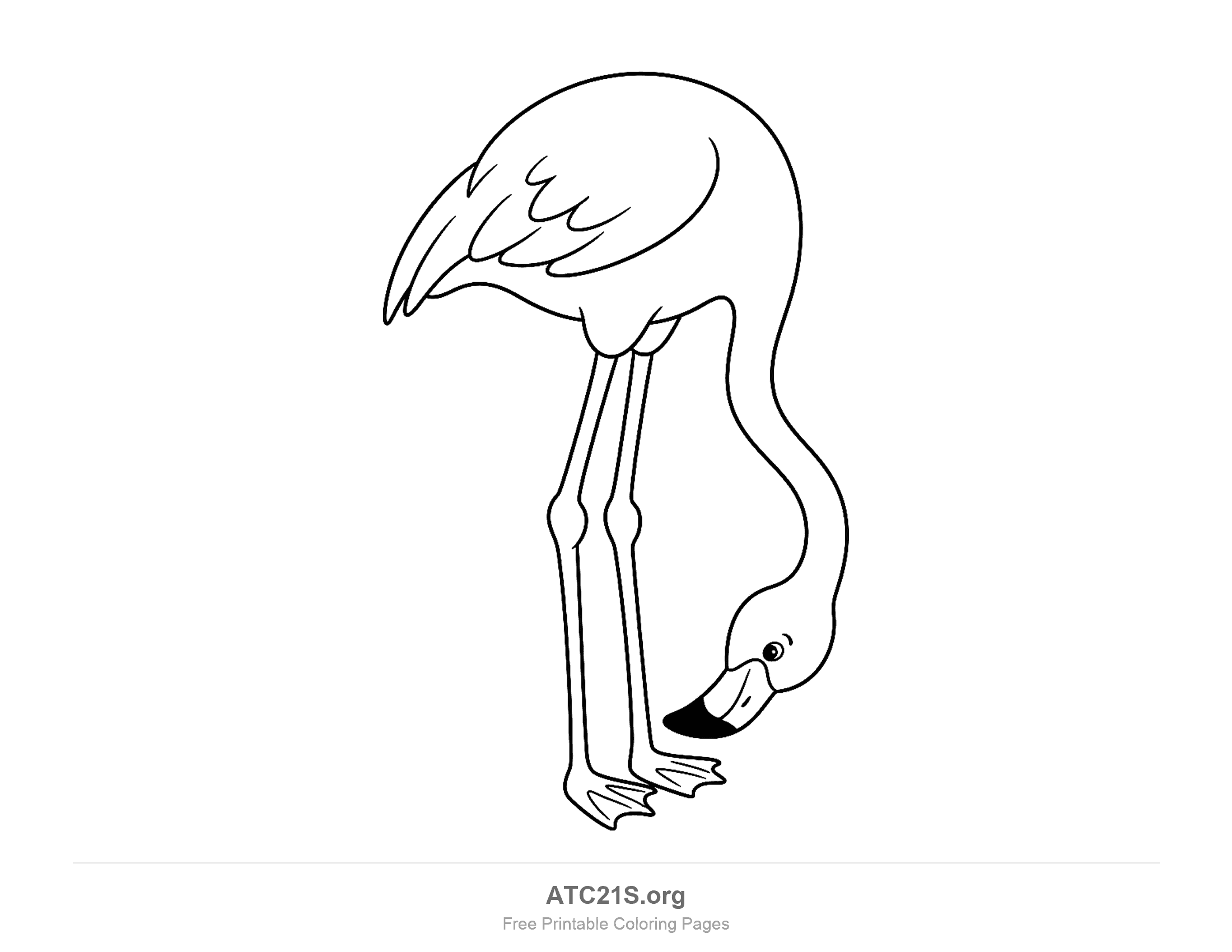
Eight free printable flamingo coloring pages, from a simple bird bending down to feed to a detailed flamingo with every wing feather drawn in. Download the PNG or print straight from this page.
share:
pick a favourite
8 Flamingo designs to color
Tap any sheet for a closer look, then download or print it.
Flamingo Coloring Page - Cute Dancing One Leg
Flamingo Coloring Page - Standing One Leg
Flamingo Coloring Page - Walking Stride
Flamingo Coloring Page - Sleeping Tucked One Leg
Flamingo Coloring Page - Preening
Flamingo Coloring Page - Head Neck Portrait
Flamingo Coloring Page - Detailed Wings Spread
quick instructions
How to download and print
1. Pick your sheet
Preview any design below and choose the one you like best.
2. Print or download
Print straight from the page, or save the PNG to print later.
3. Color it in
Crayons, colored pencils or markers — plain paper works fine.
Every sheet is sized for landscape US Letter (11" x 8.5") at 200 DPI, so it fills the page without cropping. A4 works too — choose "fit to page" when printing.
while you color…
6 fun facts about the flamingo
Flamingos are not born pink. They hatch grey-white and turn pink from the shrimp and algae they eat.
A flamingo often stands on one leg. Tucking the other leg up helps it keep warm and stay balanced while it rests.
Flamingos eat with their heads upside down. Their bent beak works like a sieve, filtering tiny food out of the water.
A group of flamingos is called a flamboyance, and some flocks number in the thousands.
Baby flamingos are called chicks. Both parents feed them a special red milk they make in their throats.
The greater flamingo can stand more than 4 feet (1.2 m) tall — about as high as a 7-year-old — on legs that look like stilts.
About the flamingo coloring page
Flamingos are tall wading birds that live in shallow lakes, lagoons and salt flats in Africa, the Americas, the Caribbean and parts of Asia and Europe. Children notice two things first: the long S-shaped neck, and the habit of standing on one leg. They feed with their heads upside down, sweeping a bent beak through the water to filter shrimp, algae and tiny crustaceans.
Colour is the whole point of a flamingo page. Real flamingos are pink because of the food they eat — carotenoids in shrimp and algae dye the feathers. A greater flamingo is pale salmon; a Caribbean flamingo is a deep coral; chicks hatch grey-white and only turn pink over months. The beak is usually pale with a black tip, and the long legs are pink or orange. There is no single "right" flamingo colour, so children can copy a real bird or invent a rainbow one. Leaving the face a shade paler than the body, and colouring the beak tip darker, makes even a simple page look finished.
The eight designs run from easiest to hardest. The bending-down flamingo comes first — a long open neck, a few wing lines and thick outlines, right for toddlers. Then a cute cartoon flamingo dancing on one leg with both wings raised and a tuft of feathers on its head. A classic one-legged stand sits next, still easy but now in the pose everyone recognises. After that the pages get more active: a flamingo walking with one long leg lifted in a stride. The last four are the longer projects: a sleeping flamingo with its head tucked into its back, a preening bird with its neck looped around to its wing, a close-up head-and-neck portrait, and a detailed flamingo with both wings fully spread and every flight feather drawn as its own shape.
Every sheet prints on landscape US Letter paper at 200 DPI, so the flamingo fills the page without being cut off. Plain copier paper is fine for crayons and colored pencils. Use slightly thicker card stock for markers or paint on the last two designs, where the portrait linework and the narrow gaps between flight feathers can bleed shut on thin paper.
In the classroom these pages pair well with a lesson on wetland birds, on why flamingos are pink, on the letter F, or on how filter-feeding works. Laying the bending-down sheet next to the one-legged stand is a simple way to show how flamingos eat and rest. Pink, coral, peach and a dash of black on the beak make a natural colour-mixing lesson; the peacock and parrot pages continue it in greens and reds. A flamingo also appears on the mixed bird coloring page, and every species has its own page in the birds category. Print a few different designs and let each child pick: the feeding flamingo is finished in a few minutes, while the spread wings can fill a whole quiet afternoon.