AnimalsOcean8 designsFree to print
print, color, learn
Free Octopus Coloring Pages
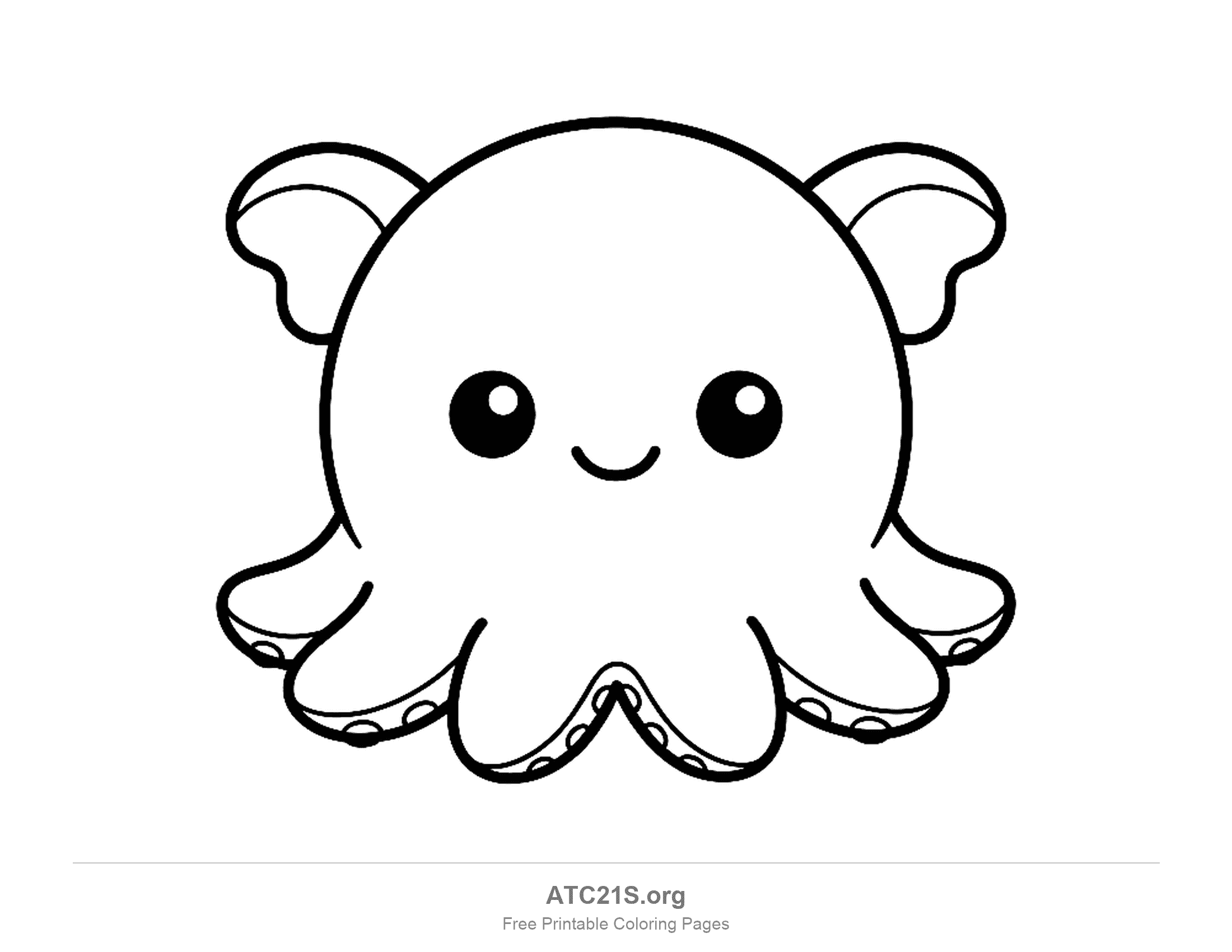
Eight free printable octopus coloring pages, from a chunky dumbo octopus for little hands to a detailed corkscrew-tentacle design for older kids. Download the PNG or print straight from this page.
share:
pick a favourite
8 Octopus designs to color
Tap any sheet for a closer look, then download or print it.
Octopus Coloring Page - Cute Curled Tentacles
Octopus Coloring Page - Cute Baby
Octopus Coloring Page - Cute Waving
Octopus Coloring Page - Sailor Hat Splayed
Octopus Coloring Page - Side View Swimming
Octopus Coloring Page - Swimming Upward
Octopus Coloring Page - Detailed Corkscrew Tentacles
quick instructions
How to download and print
1. Pick your sheet
Preview any design below and choose the one you like best.
2. Print or download
Print straight from the page, or save the PNG to print later.
3. Color it in
Crayons, colored pencils or markers — plain paper works fine.
Every sheet is sized for landscape US Letter (11" x 8.5") at 200 DPI, so it fills the page without cropping. A4 works too — choose "fit to page" when printing.
while you color…
6 fun facts about the octopus
An octopus has three hearts and blue blood — two hearts pump blood to the gills, and one pumps it around the body.
Each of an octopus's eight arms has its own mini-brain, so an arm can feel and grab without the main brain telling it to.
An octopus can squeeze through any hole bigger than its beak, the hard mouth in the middle of its arms.
Octopuses can change colour and skin texture in less than a second to hide on rocks, sand or coral.
A giant Pacific octopus can stretch about 14 feet (4 m) from arm tip to arm tip — as wide as a car is long.
Most octopuses live only one or two years, even the giant ones.
About the octopus coloring page
Octopuses live in oceans all over the world, from warm coral reefs to the cold deep sea. They are not fish: they have no bones, three hearts and blue blood, and they squeeze through gaps no bigger than their beak. Children usually notice the eight arms first, then the suckers, which is why an octopus page is such a satisfying thing to color — there is always another arm to fill in.
Real octopuses can be almost any colour. They change skin colour and texture in a second to hide on rocks, sand or coral, so red, orange, brown, purple, pink, spotted or a rainbow mix are all fair. A good prompt is to pick a hide-and-seek colour that would vanish on a reef, or a bright one for showing off. Point out the suckers on the later sheets: leaving them a paler pink or cream than the arms makes even a quick job look finished.
The eight designs get steadily harder. First is a round dumbo octopus with ear-like fins and short stubby arms — thick outlines and a huge open body, right for toddlers still learning to stay inside the lines. Then a resting octopus with closed happy eyes and arms curled into simple spirals, and a chubby baby with a spotted head and short suckered arms. A waving octopus with one arm raised sits in the middle, still bold and cartoonish. After that the detail climbs: a sailor-hatted octopus with eight arms splayed like a star, a side-view swimmer with arms streaming behind, an octopus gliding upward with long trailing arms, and finally a corkscrew-tentacle sheet covered in suckers and head spots for children who like a long, careful project.
Every sheet prints on landscape US Letter paper at 200 DPI, so the octopus fills the page without being cut off. Plain copier paper is fine for crayons and colored pencils. If you are using markers or paint, slightly thicker card stock stops the colour bleeding through — worth doing on the last two sheets, where the suckers sit close together and can run into each other on flimsy paper.
In the classroom these pages pair well with a lesson on ocean habitats, on invertebrates (animals with no backbone), or on the letter O. Counting the eight arms is an easy math warm-up, and the dumbo octopus is a calm way to talk about animals that live in the deep sea. Octopuses also have a cousin that never gave up its shell: the nautilus still lives inside a coiled, chambered one, and there is a nautilus shell to color among the seashells. Print two or three different designs and let each child pick: the dumbo sheet is finished in a few minutes, while the corkscrew tentacles can fill a whole quiet afternoon, which keeps a mixed-age table busy at the same time. The crab pages come from the same tide pools and the shark from deeper water; see the complete animal set for more.