AnimalsOcean8 designsFree to print
print, color, learn
Free Crab Coloring Pages
Eight free printable crab coloring pages, from a chunky-outline smiling crab for little hands to a detailed swimming crab for older kids. Download the PNG or print straight from this page.
share:
pick a favourite
8 Crab designs to color
Tap any sheet for a closer look, then download or print it.
Crab Coloring Page - Cute Shy Claws Tucked
Crab Coloring Page - Cute Waving Big Claw
Crab Coloring Page - Tall Eyestalks Walking
Crab Coloring Page - Cute Hermit Crabs In Shell
Crab Coloring Page - Patterned Spiky Shell
Crab Coloring Page - Top Down Claws Raised
Crab Coloring Page - Detailed Swimming Side View
quick instructions
How to download and print
1. Pick your sheet
Preview any design below and choose the one you like best.
2. Print or download
Print straight from the page, or save the PNG to print later.
3. Color it in
Crayons, colored pencils or markers — plain paper works fine.
Every sheet is sized for landscape US Letter (11" x 8.5") at 200 DPI, so it fills the page without cropping. A4 works too — choose "fit to page" when printing.
while you color…
6 fun facts about the crab
Crabs walk sideways because their legs bend out to the sides, not forwards like ours.
A crab's hard shell is its skeleton on the outside. To grow bigger, it has to wriggle out of the old shell and wait for a new one to harden.
There are about 7,000 kinds of crab in the world, from ones smaller than a pea to giant spider crabs.
The Japanese spider crab can stretch more than 12 feet (3.7 m) from claw to claw — wider than a car.
Hermit crabs do not grow their own spiral shells. They move into empty snail shells, and they swap for a bigger one as they grow.
A male fiddler crab has one claw that is huge and one that is tiny. He waves the big one to attract a mate and to scare off other crabs.
About the crab coloring page
Crabs are crustaceans that live on beaches, in tide pools, on coral reefs and on the deep sea floor, with a few kinds that walk about on land. They are not insects: they have ten legs (eight for walking and two that end in claws), a hard shell instead of bones, and they breathe with gills. Children usually meet them as the scuttling shape at the seaside or the red one on a seafood plate, which is why they are such a popular animal to colour.
Real crabs come in more colours than the cooked red most people picture. Shore crabs are often green or brown; blue crabs are a mottled blue-green; ghost crabs are sandy pale; some tropical crabs are bright orange, spotted or almost rainbow. That is a perfectly good palette, but these pages do not have one "right" colour. The round smiling crab and the shy one with tucked claws look just as good in red, orange, teal or a mix. Point out the underside plates on the later sheets: a slightly paler cream or yellow there, with a darker back, is how a lot of real crabs look.
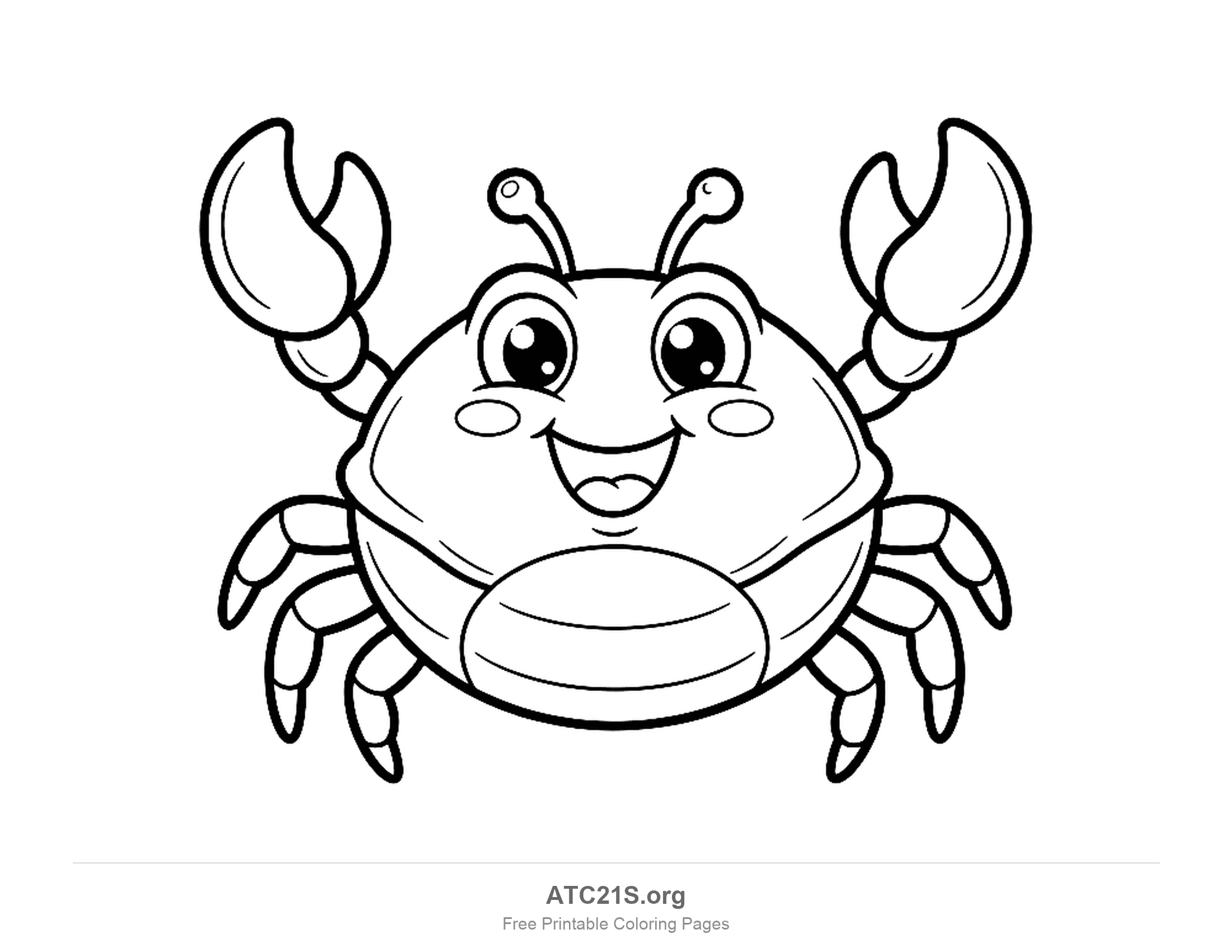
The eight designs get steadily harder and also show different kinds of crab. First is a round cartoon crab with big eyes, blushing cheeks and two claws in the air — thick outlines and a huge empty body, right for toddlers still learning to stay inside the lines. Then a shy crab with a scalloped shell and its claws tucked under its chin, a smiling one waving one oversized claw, and a walking crab with tall eyestalks, all still bold and friendly. After that the detail climbs: two hermit crabs sharing a spiral shell, a king-crab shape whose shell is covered in stars, diamonds and hexagons, a top-down crab with both claws raised, and a detailed swimming crab in side view with paddle-shaped rear legs for children who like a longer, careful page.
Walking sideways is the part worth pausing on. A crab's legs bend out to the sides, so the easiest way for it to move is a scuttle, not a walk forwards. The waving-claw sheet and the tall-eyestalks walker are natural ones to talk about while colouring — ask which way the crab is heading, and whether that giant claw is a hello or a warning. The hermit crabs are worth a second look too: they have no hard shell over their soft tail, so they move into empty sea snail shells and swap up to a bigger one as they grow, and the spiral shells on the seashell pages are just the kind they go house-hunting for.
Every sheet prints on landscape US Letter paper at 200 DPI, so the crab fills the page without being cut off. Plain copier paper is fine for crayons and colored pencils. If you are using markers or paint, slightly thicker card stock stops the colour bleeding through — worth doing on the patterned shell and the swimming crab, where the small shapes sit close together.
In the classroom these pages pair well with a lesson on ocean habitats, on tide pools, on invertebrates (animals with no backbone), or on the letter C. Counting the ten legs is an easy math warm-up, and laying the hermit crabs, the waving-claw crab and the swimming crab side by side is a simple way to show that "crab" is a whole family of animals, not one shape. Print two or three different designs and let each child pick: the round smiling crab is finished in a few minutes, while the swimming sheet can fill a whole quiet afternoon, which keeps a mixed-age table busy at the same time. The octopus and turtle pages come from the same shoreline, and the main animal collection has the rest.