AnimalsJungle8 designsFree to print
print, color, learn
Free Gorilla Coloring Pages
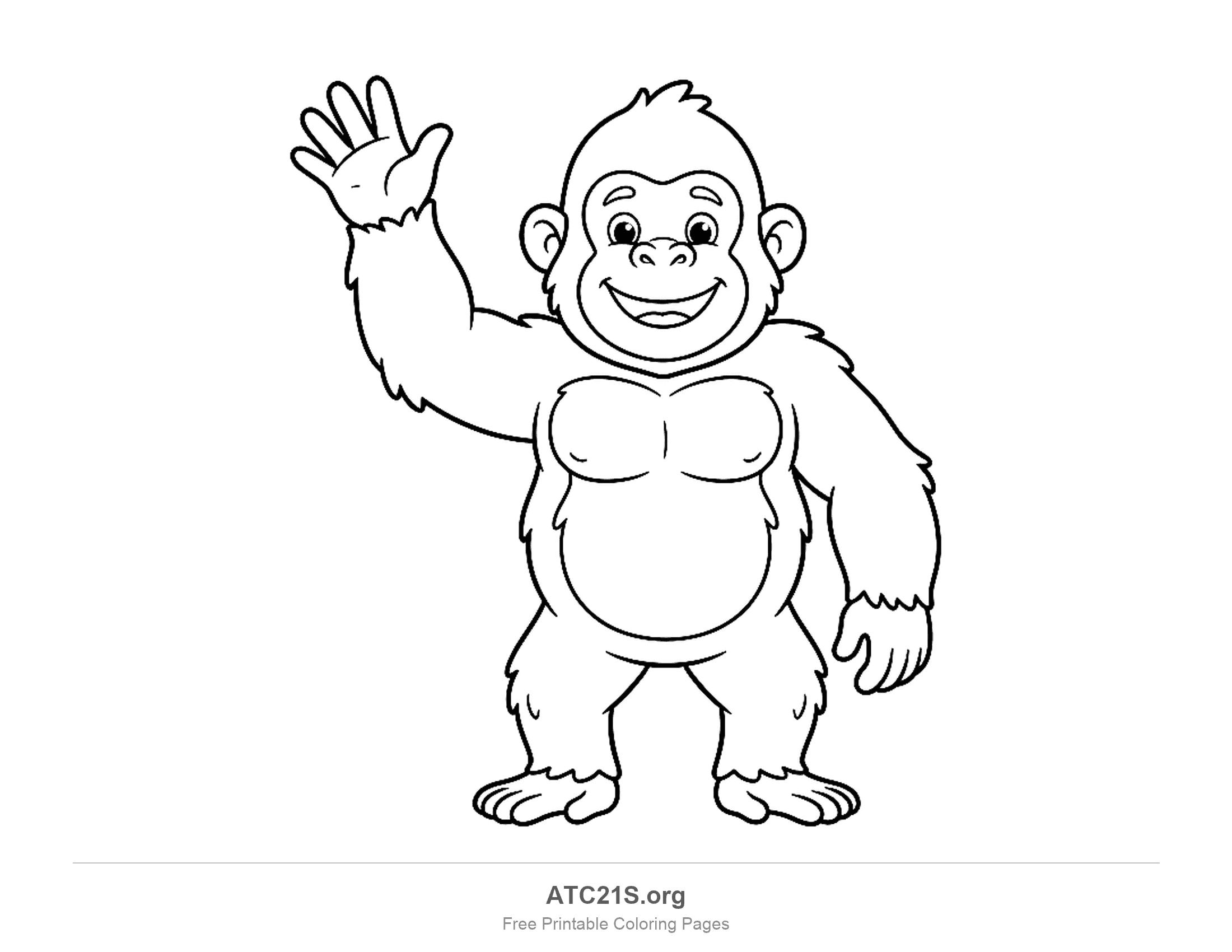
Eight free printable gorilla coloring pages, from a chunky waving gorilla for little hands to a detailed portrait for older kids. Download the PNG or print straight from this page.
share:
pick a favourite
8 Gorilla designs to color
Tap any sheet for a closer look, then download or print it.
Gorilla Coloring Page - Cute Lying Down
Gorilla Coloring Page - Cute Baby Sitting
Gorilla Coloring Page - Cute Scratching Head
Gorilla Coloring Page - Sitting Cross Legged
Gorilla Coloring Page - Playful Chest Beating
Gorilla Coloring Page - Knuckle Walking
Gorilla Coloring Page - Detailed Portrait
quick instructions
How to download and print
1. Pick your sheet
Preview any design below and choose the one you like best.
2. Print or download
Print straight from the page, or save the PNG to print later.
3. Color it in
Crayons, colored pencils or markers — plain paper works fine.
Every sheet is sized for landscape US Letter (11" x 8.5") at 200 DPI, so it fills the page without cropping. A4 works too — choose "fit to page" when printing.
while you color…
6 fun facts about the gorilla
Gorillas are the largest primates in the world. A silverback can weigh as much as four grown-ups put together.
A family of gorillas is led by an adult male called a silverback, named for the silver hair that grows on his back.
Gorillas eat mostly plants — leaves, stems, shoots and fruit — and a grown gorilla can eat about 40 pounds (18 kg) of food in a day.
A gorilla beats its chest to talk to the rest of the group, not just when it is angry.
Gorillas do not have tails. Monkeys do; apes such as gorillas, chimpanzees and orangutans do not.
A baby gorilla rides on its mother's back until it is about three years old.
About the gorilla coloring page
Gorillas are the largest living primates. They live in the rainforests and mountain forests of central Africa, in family groups led by an adult male called a silverback. Children usually meet them as the chest-beating giant in a storybook or the quiet, watchful face at the zoo, which is why they are such a popular animal to colour.
The real coat is black, dark grey or brown-black, with bare dark skin on the face, chest, palms and the soles of the feet. Older males grow a saddle of silver-grey hair down the back — that is how a silverback gets its name. That is a perfectly good way to colour these sheets. It is also fine to ignore it. A brown gorilla, a grey one, or a rainbow one is just as welcome. Point out that there is no tail: gorillas are apes, and apes do not have one. The monkey pages on this site do, so a mixed table can colour both and talk about which is which.
The eight designs get steadily harder. First is a chubby cartoon gorilla standing and waving, thick outlines and a huge empty belly that suit toddlers still learning to stay inside the lines. Then a gorilla lying on its belly with its chin in its hands, a baby sitting front-on with big round eyes, and one sitting and scratching its head, all still bold and friendly. After that the drawings become more realistic: a gorilla sitting cross-legged with its eyes closed, one standing and beating its chest, a knuckle-walking gorilla in side profile, and a detailed head-and-shoulders portrait with wrinkled skin and thick fur for children who like a longer, careful page.
Chest-beating is the pose most children want to act out. A gorilla does it to talk to the rest of the group — to say "I am here" or "this is my family" — not only when it is angry. The beating-chest sheet is the natural one to talk about while colouring, and it pairs well with the knuckle-walking sheet, which shows how a gorilla actually moves: on the soles of its feet and the knuckles of its hands.
Every sheet prints on landscape US Letter paper at 200 DPI, so the gorilla fills the page without being cut off. Plain copier paper is fine for crayons and colored pencils. If you are using markers or paint, slightly thicker card stock stops the colour bleeding through — worth doing on the portrait, where the fur lines sit close together.
In the classroom these pages pair well with a lesson on African wildlife, on rainforests, on primates, on the letter G, or on the difference between monkeys and apes. Print the waving gorilla next to a monkey page and let children spot the missing tail. The waving sheet is finished in a few minutes; the portrait can fill a quiet stretch of the afternoon. Print a few different designs and let each child pick the one that matches their patience that day. The monkey pages show the smaller primate with a tail, and the rest of the animals fill out the jungle.