BirdsBirds of Prey8 designsFree to print
print, color, learn
Free Hawk Coloring Pages
Eight free printable hawk coloring pages, from a round chubby hawk with thick outlines to a perched hawk whose every back feather is drawn in. Download the PNG or print straight from this page.
share:
pick a favourite
8 Hawk designs to color
Tap any sheet for a closer look, then download or print it.
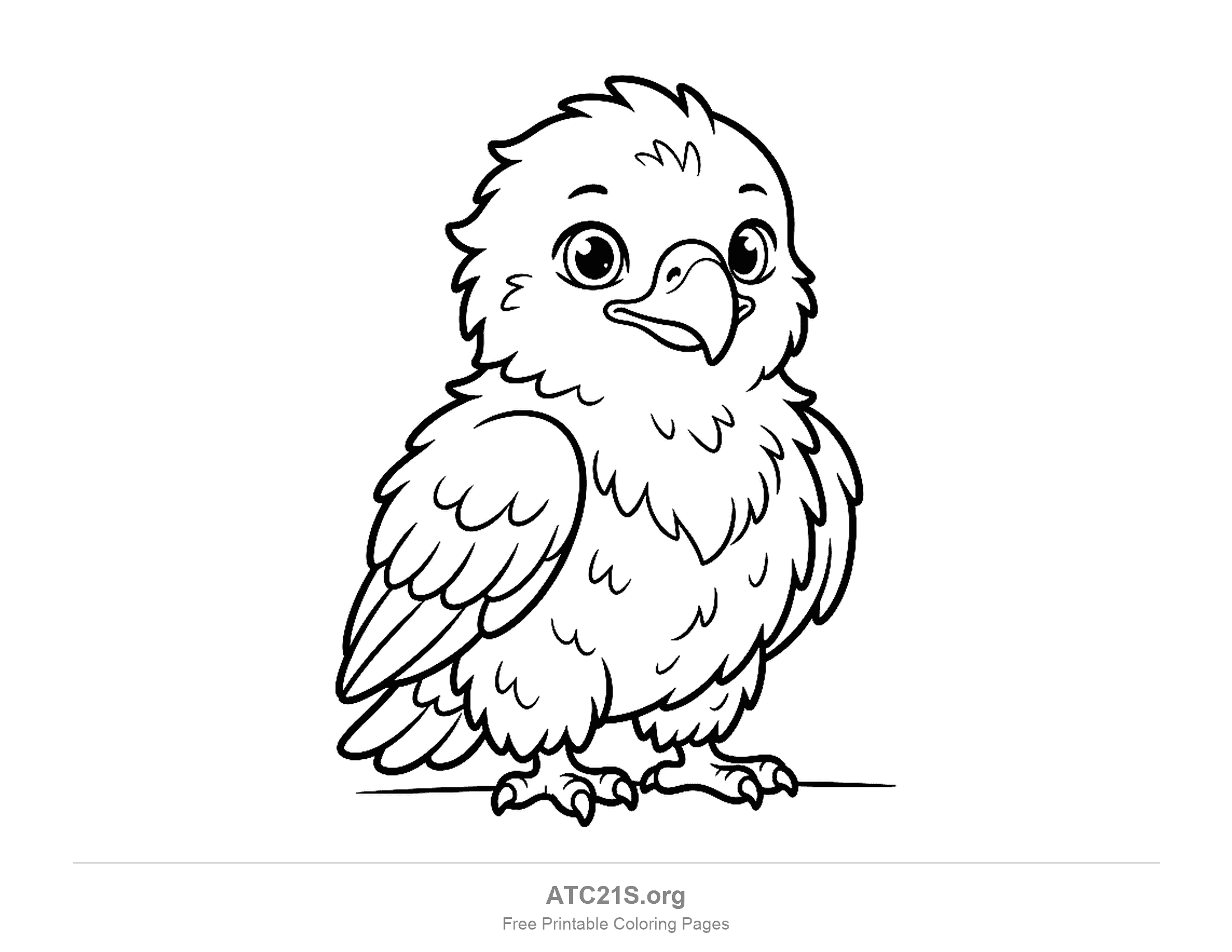
Hawk Coloring Page - Cute Head Tilt Perched
Hawk Coloring Page - Cute Flying Wings Up
Hawk Coloring Page - Simple Standing Profile
Hawk Coloring Page - Landing Open Talons
Hawk Coloring Page - Soaring Wings Spread
Hawk Coloring Page - Detailed Head Portrait
Hawk Coloring Page - Detailed Looking Over Shoulder
quick instructions
How to download and print
1. Pick your sheet
Preview any design below and choose the one you like best.
2. Print or download
Print straight from the page, or save the PNG to print later.
3. Color it in
Crayons, colored pencils or markers — plain paper works fine.
Every sheet is sized for landscape US Letter (11" x 8.5") at 200 DPI, so it fills the page without cropping. A4 works too — choose "fit to page" when printing.
while you color…
6 fun facts about the hawk
A hawk can see about eight times better than you — sharp enough to spot a mouse from the top of a tall tree.
Baby hawks are called eyasses, and they are covered in white fluffy down before their brown feathers grow in.
When lots of hawks soar together in a circle on warm air, the group is called a kettle.
A red-tailed hawk's scream is so famous that movies often use it as the sound of an eagle.
Hawks catch food with their strong feet, called talons, and tear it with a hooked beak.
The rusty-red tail that gives the red-tailed hawk its name only grows in when the bird is a few years old.
About the hawk coloring page
Hawks are medium-sized birds of prey that hunt from the air or from a high perch, using eyesight sharp enough to pick out a mouse in the grass far below. They live on every continent except Antarctica. The one children in North America recognise fastest is the red-tailed hawk, with its brown back, pale streaked chest and rusty-red tail. The designs here work for that bird or for any hawk a child has seen.
Colouring a hawk is mostly browns, cream and a flash of colour. The back and wings go warm brown, the chest stays pale with optional streaks, and the tail on a red-tailed hawk is rust or brick red. The hooked beak, the eye ring and the feet are yellow. Leaving the chest light while filling the back in heavily gives a striking result even when a young child races through the page. Children who want a Cooper's hawk or a sharp-shinned hawk can go greyer and add fine bars on the tail instead.
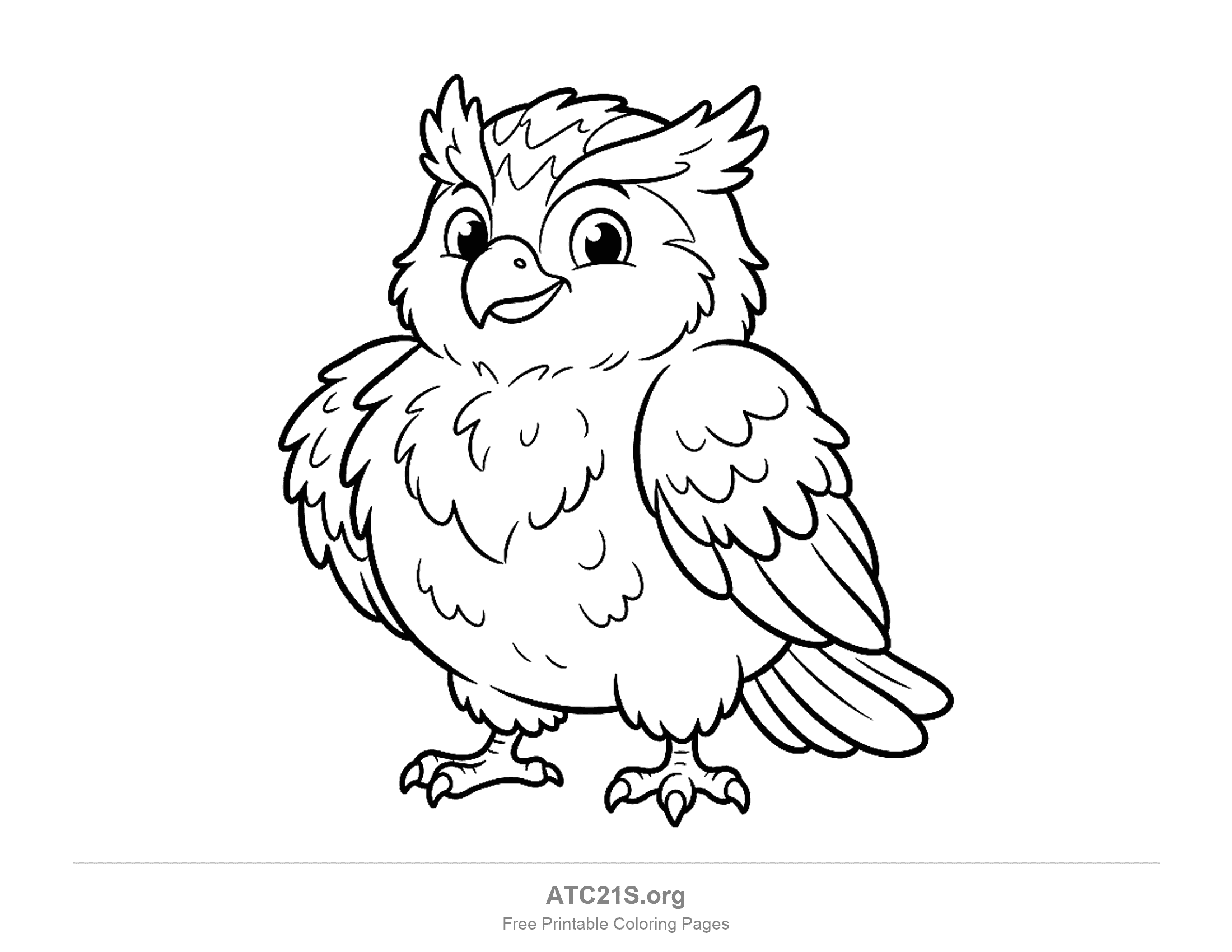
The eight designs run from easiest to hardest. The chubby standing hawk comes first — a round, fluffy bird with tufted head feathers, big eyes and very thick outlines, right for toddlers. Then a cute hawk perched on a branch with its head tilted, and a happy cartoon hawk flying with both wings raised. A simple standing hawk in side profile sits in the middle, with large open shapes and a few wing layers. After that the detail climbs: a hawk swooping in to land with talons open, a soaring hawk whose every flight feather is a separate shape, a close-up head portrait packed with overlapping neck feathers, and finally a hawk looking over its shoulder from a leafy branch, the densest page, for children who like a careful sit-down project.
Wings and the barred tail are where the later pages get demanding, and they are also where the best work happens. Suggest that children colour the long outer flight feathers a shade darker than the short ones near the shoulder; the wing immediately looks three-dimensional. On the head portrait, colouring each small feather slightly differently gives the same effect on the nape.
Every sheet prints on landscape US Letter paper at 200 DPI, so the hawk fills the page without being cut off. Plain copier paper is fine for crayons and colored pencils. Use slightly heavier card stock for markers or paint on the last three designs, where the narrow gaps between flight feathers can bleed shut on thin paper.
In the classroom these pages fit a unit on birds of prey, on flight and how wings work, on food chains, or simply on the letter H. Pair them with the eagle coloring pages to talk about how hawks and eagles are cousins but hawks are smaller and hunt different prey. Print a few different designs, let each child pick one that suits their patience, and the finished sheets pin up together as a kettle of hawks. The warm air a kettle circles on rises in columns called thermals, and a puffy cumulus cloud often forms at the top of one, so a fluffy cloud page pinned above the kettle finishes the picture. The owl pages cover the hunter that takes the night shift, the pigeon coloring pages show the bird a city hawk hunts, and the fourteen-bird lineup has the rest.