AnimalsWoodland8 designsFree to print
print, color, learn
Free Moose Coloring Pages
Eight free printable moose coloring pages, from a chunky sitting calf for little hands to a detailed standing bull with palmate antlers for older kids. Download the PNG or print straight from this page.
share:
pick a favourite
8 Moose designs to color
Tap any sheet for a closer look, then download or print it.
Moose Coloring Page - Cute Smiling Face
Moose Coloring Page - Cute Standing Front
Moose Coloring Page - Resting Lying Down
Moose Coloring Page - Grazing Head Down
Moose Coloring Page - Looking Over Shoulder
Moose Coloring Page - Walking Trotting
Moose Coloring Page - Detailed Standing Profile
quick instructions
How to download and print
1. Pick your sheet
Preview any design below and choose the one you like best.
2. Print or download
Print straight from the page, or save the PNG to print later.
3. Color it in
Crayons, colored pencils or markers — plain paper works fine.
Every sheet is sized for landscape US Letter (11" x 8.5") at 200 DPI, so it fills the page without cropping. A4 works too — choose "fit to page" when printing.
while you color…
6 fun facts about the moose
Moose are the largest members of the deer family — a big bull can weigh as much as a small car.
Only male moose grow antlers, and they fall off and grow back bigger every year.
Moose antlers are shaped like open hands, not like the branching twigs on a deer. A big pair can be 6 feet (1.8 m) across.
Moose are strong swimmers. They can paddle for several miles and even dive underwater to nibble plants.
The flap of skin hanging under a moose's chin is called a bell.
A baby moose is called a calf, and it can outrun a person when it is only five days old.
About the moose coloring page
Moose are the largest members of the deer family. They live in the northern forests of North America, Scandinavia and Russia — around lakes, bogs and willow thickets — and they are one of the few huge wild animals a family in Canada or Alaska might actually see from the road. Children usually notice the antlers first, those wide paddle-shaped racks that look nothing like a deer's branching ones, which is why a moose page is such a satisfying one to colour.
A real moose is dark brown, almost black-brown, with paler grey-brown legs that look as if it is wearing stockings, a humped shoulder and a long drooping muzzle. That is a perfectly good way to colour these sheets. It is also fine to ignore it. A ginger moose, a snowy one, or a rainbow one is just as welcome. Point out the palmate antlers — the wide palm with finger-like tines around the edge — and the bell, the flap of skin that hangs under the chin. Those two shapes are what make it a moose rather than a deer.
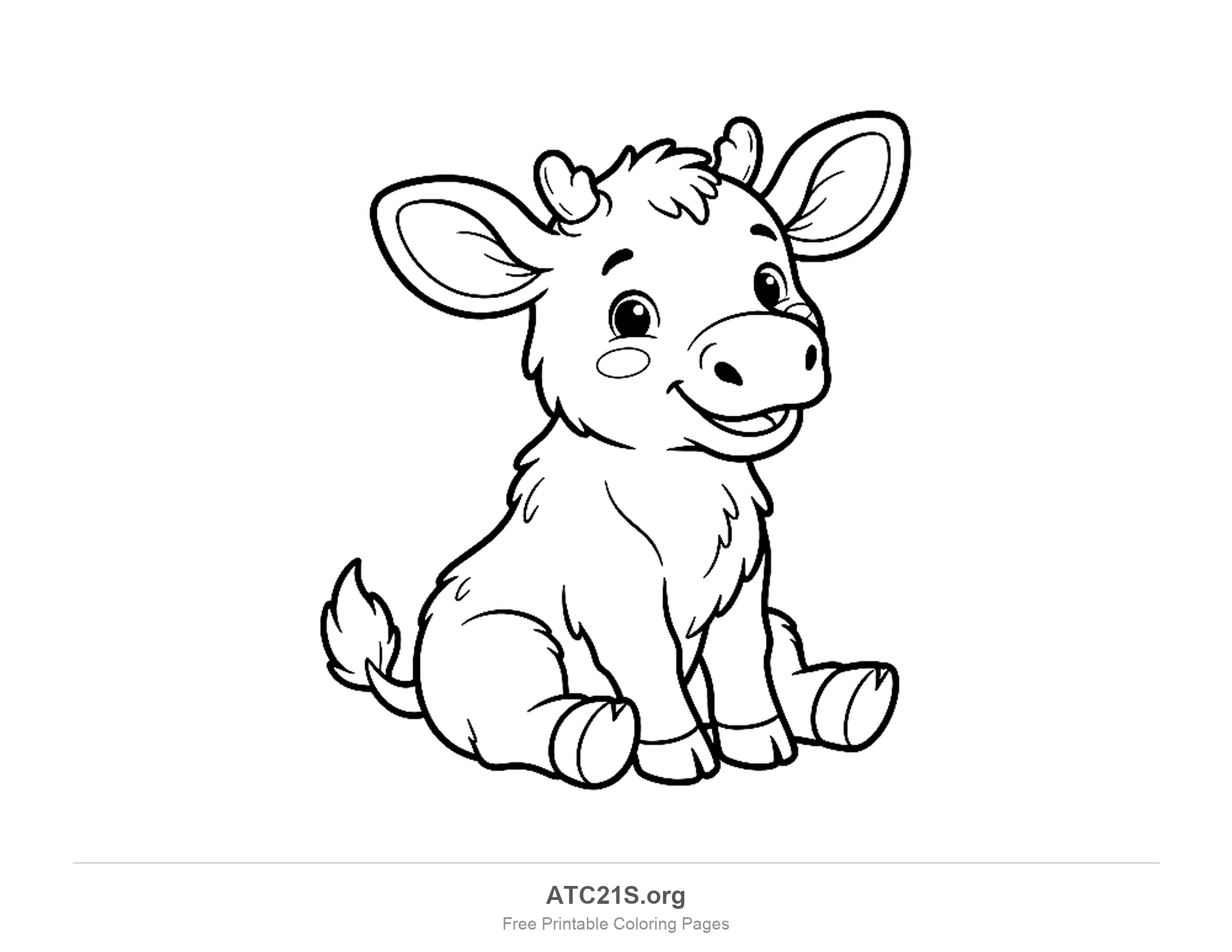
The eight designs get steadily harder. First is a chubby moose calf sitting on its haunches with big ears and no antlers, thick outlines and wide open shapes that suit toddlers still learning to stay inside the lines. Then a smiling moose face with simple paddle antlers, a moose standing front-on looking at you, and one lying down with its legs tucked under, all still bold and friendly. After that the drawings become more realistic: a cow moose grazing with her head down and no antlers, a bull glancing back over his shoulder, one walking with a front hoof raised, and a side-on standing bull whose big palmate antlers take a little more patience.
Antlers are the part worth pausing on. Only male moose grow them, they are made of bone, and they fall off and grow back bigger every year. Unlike a deer's, they are palmate — shaped like an open hand with a broad palm and points around the rim. Count the points on the standing-profile sheet together, then compare them with the calf, who has none at all, and the grazing cow, who will never grow any. The same family at different ages, which children find genuinely surprising.
Every sheet prints on landscape US Letter paper at 200 DPI, so the moose fills the page without being cut off. Plain copier paper is fine for crayons and colored pencils. If you are using markers or paint, slightly thicker card stock stops the colour bleeding through — worth doing on the face portrait, where the fur lines sit close together.
In the classroom these pages pair well with a lesson on woodland and northern forests, on the deer family (moose, deer, elk), on the letter M, or on how antlers differ from horns. The tall, close-packed trees on the pine forest sheet are just the kind of northern woods moose wander through. Print a moose next to a deer page and let children spot which animal has paddle antlers and which has branching ones. The sitting calf is finished in a few minutes; the standing profile can fill a quiet stretch of the afternoon. Print a few different designs and let each child pick the one that matches their patience that day. The deer pages show the smaller members of the same family, and the more animal printables has the rest.