FoodsFruit8 designsFree to print
print, color, learn
Free Mango Coloring Pages
Eight free printable mango coloring pages, from a smiling cartoon mango and three plain chunks for little hands to a halved mango with its seed, a pair hanging on a leafy branch and a hedgehog-cut mango scored into dozens of cubes. Download the PNG or print straight from this page.
share:
pick a favourite
8 Mango designs to color
Tap any sheet for a closer look, then download or print it.
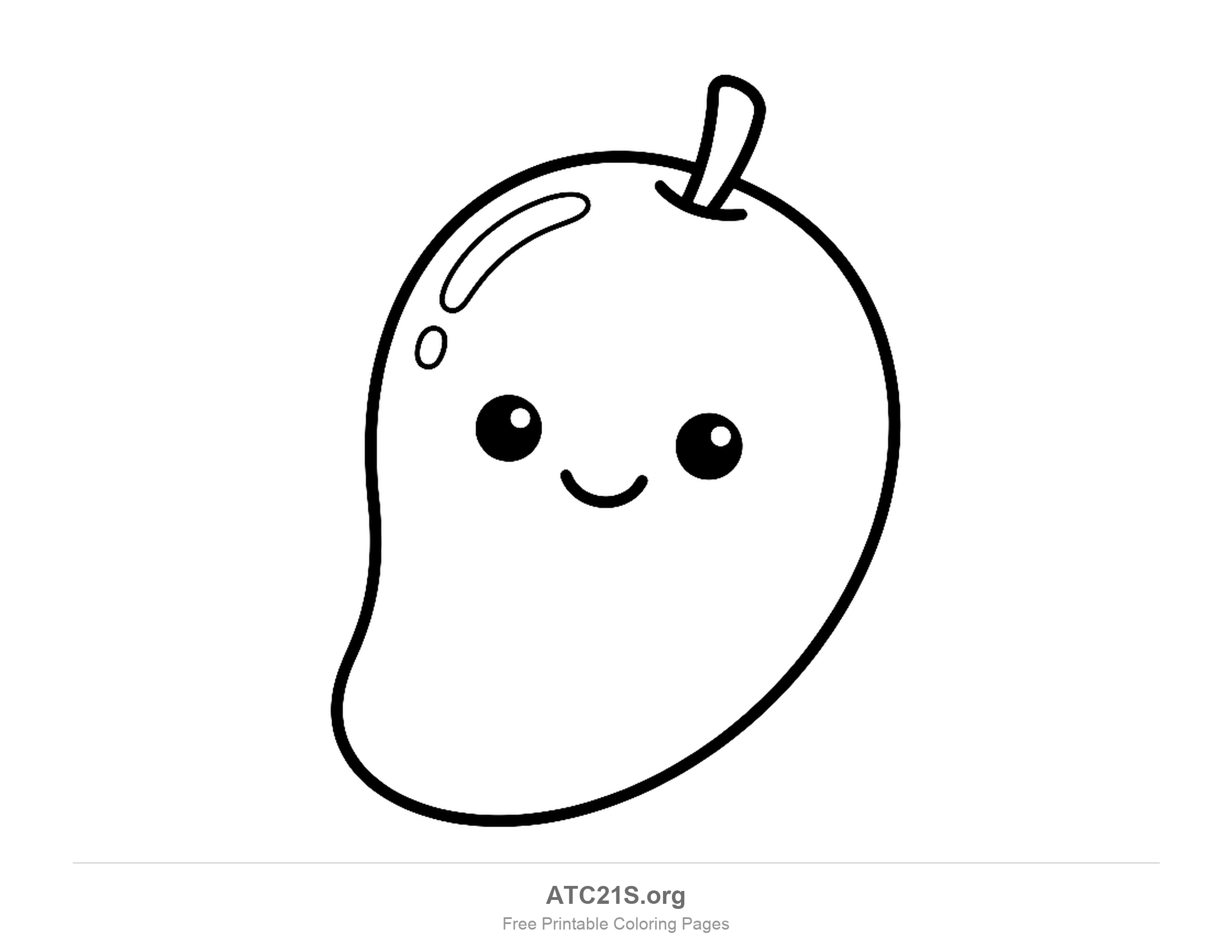
Mango Coloring Page - Simple Whole Mango
Mango Coloring Page - Three Mango Chunks
Mango Coloring Page - Mango With a Veined Leaf
Mango Coloring Page - Halved Mango With Seed
Mango Coloring Page - Whole Mango and Slice
Mango Coloring Page - Two Mangoes on a Branch
Mango Coloring Page - Hedgehog Cut Mango
quick instructions
How to download and print
1. Pick your sheet
Preview any design below and choose the one you like best.
2. Print or download
Print straight from the page, or save the PNG to print later.
3. Color it in
Crayons, colored pencils or markers — plain paper works fine.
Every sheet is sized for landscape US Letter (11" x 8.5") at 200 DPI, so it fills the page without cropping. A4 works too — choose "fit to page" when printing.
while you color…
6 fun facts about the mango
Mangoes belong to the same plant family as cashews and pistachios.
A mango has one big flat seed in the middle called a stone, which makes it a cousin of peaches and plums.
India grows more mangoes than any other country, and the mango is its national fruit.
There are over a thousand kinds of mango, and a ripe one can be green, yellow, orange, red or a mix of all four.
The 'hedgehog' way of cutting a mango means scoring the flesh into squares and pushing the skin inside out so the cubes pop up.
Mango trees can live for hundreds of years and still keep growing fruit.
About the mango coloring page
A mango is a sweet tropical stone fruit that grows on tall evergreen trees in warm places like India, Mexico, Thailand and the Philippines. It is one of the most eaten fruits in the world, and it comes in more shapes than most children expect: some varieties are fat and round like a peach, others long and curved like a flattened kidney. This page shows a mango several ways — whole on its stem, cut in half around the big flat seed, sliced into a wedge, and scored into cubes the way it is served at a market stall.
Mangoes are one of the best fruits for teaching color blending, because a ripe one is never a single color. The skin usually runs from green at the stem, through yellow, into a red or orange blush on the sunny side, and children can lay one color down lightly and overlap the next rather than filling each area flat. The flesh inside is a deep golden orange, the seed a pale fibrous cream, and the leaves a dark glossy green. Colored pencils suit these sheets best because they layer, but crayons and markers work fine if children pick two or three shades and blend where they meet.
The eight designs move steadily from easy to detailed. The first three are for toddlers and preschoolers: a smiling kawaii mango with two dot eyes and a shine mark, a plain curved mango with a small leaf, and three chunky mango cubes with nothing but their edges drawn — big open shapes, thick lines, quick wins. The middle sheets ask a little more. A bold whole mango carries a large leaf with veins running out to the tip; a halved mango shows the rim of skin and the big oval seed sitting in the middle; and a whole-plus-slice sheet pairs an upright fruit with a curved cut wedge beside it. The last two are for older children with patience — two mangoes hanging from a woody branch with four veined leaves and fine shading lines on the skin, and a hedgehog-cut mango half in a dish, its flesh scored into more than twenty cubes that all push outward at different angles.
Every sheet prints on landscape US Letter paper at 200 DPI, so the fruit fills the page without being cropped. Plain copier paper is fine for crayons and colored pencils. If children are working in markers or paint, thicker card stock is worth the swap, and it matters most on the branch and hedgehog-cut sheets, where the lines sit close together and wet color can bleed one cube into the next.
In the classroom, mangoes fit naturally into a unit on tropical fruit, on where food comes from, or on the countries of South and Southeast Asia — a world map with pins in the top mango-growing countries pairs well with the branch sheet. The halved mango is a good prompt for talking about stone fruit: cut a real mango open in front of the class and let children match the flat seed in their hand to the one on the page. The cube sheets work for counting and grouping, and the hedgehog-cut design is a nice follow-up to actually scoring a mango half and turning it inside out, which children always find funny.
If you are printing for a mixed-age group, spread the sheets around rather than handing everyone the same one. A three-year-old will finish the smiling mango happily in a few minutes; a nine-year-old can spend half an hour on the hedgehog cut and still find cubes left to color.