AnimalsWoodland8 designsFree to print
print, color, learn
Free Kangaroo Coloring Pages
Eight free printable kangaroo coloring pages, from a chunky cartoon scratching its ear for little hands to a mother with a joey in her pouch for older kids. Download the PNG or print straight from this page.
share:
pick a favourite
8 Kangaroo designs to color
Tap any sheet for a closer look, then download or print it.
Kangaroo Coloring Page - Cute Sitting
Kangaroo Coloring Page - Playful Boxing
Kangaroo Coloring Page - Cute Hopping
Kangaroo Coloring Page - Standing Side Profile
Kangaroo Coloring Page - Looking Over Shoulder
Kangaroo Coloring Page - Grazing
Kangaroo Coloring Page - Mother With Joey
quick instructions
How to download and print
1. Pick your sheet
Preview any design below and choose the one you like best.
2. Print or download
Print straight from the page, or save the PNG to print later.
3. Color it in
Crayons, colored pencils or markers — plain paper works fine.
Every sheet is sized for landscape US Letter (11" x 8.5") at 200 DPI, so it fills the page without cropping. A4 works too — choose "fit to page" when printing.
while you color…
6 fun facts about the kangaroo
A baby kangaroo is called a joey. It is about the size of a grape when it is born and crawls into its mother's pouch.
Kangaroos hop instead of running — a red kangaroo can jump about 9 feet (3 metres) high in a single bound.
A group of kangaroos is called a mob.
A kangaroo uses its strong tail like a fifth leg when it walks slowly, and for balance when it hops.
Male kangaroos box by leaning back on their tails and kicking with both back feet.
Kangaroos live only in Australia. The red kangaroo is the largest marsupial in the world and can stand as tall as a grown-up.
About the kangaroo coloring page
Kangaroos are marsupials that live on the grasslands, open woodlands and dry plains of Australia. They hop on two huge back legs, balance with a long thick tail, and carry their babies in a pouch — which is usually the first thing children want to talk about. A grown red kangaroo can stand as tall as an adult person, which makes them one of the animals kids ask to colour as soon as they meet Australia in a book or a lesson.
The real coat is reddish-brown, grey-brown or sandy tan, with a paler cream chest and belly and slightly darker paws, ears and tail. That is a perfectly good way to colour these sheets. It is also fine to ignore it. A pink kangaroo, a rainbow one, or one whose pouch is a bright surprise colour is just as welcome. The long tail, the big back feet and the small front paws are the three shapes that make it look like a kangaroo rather than a giant rabbit, so those are worth pointing out.
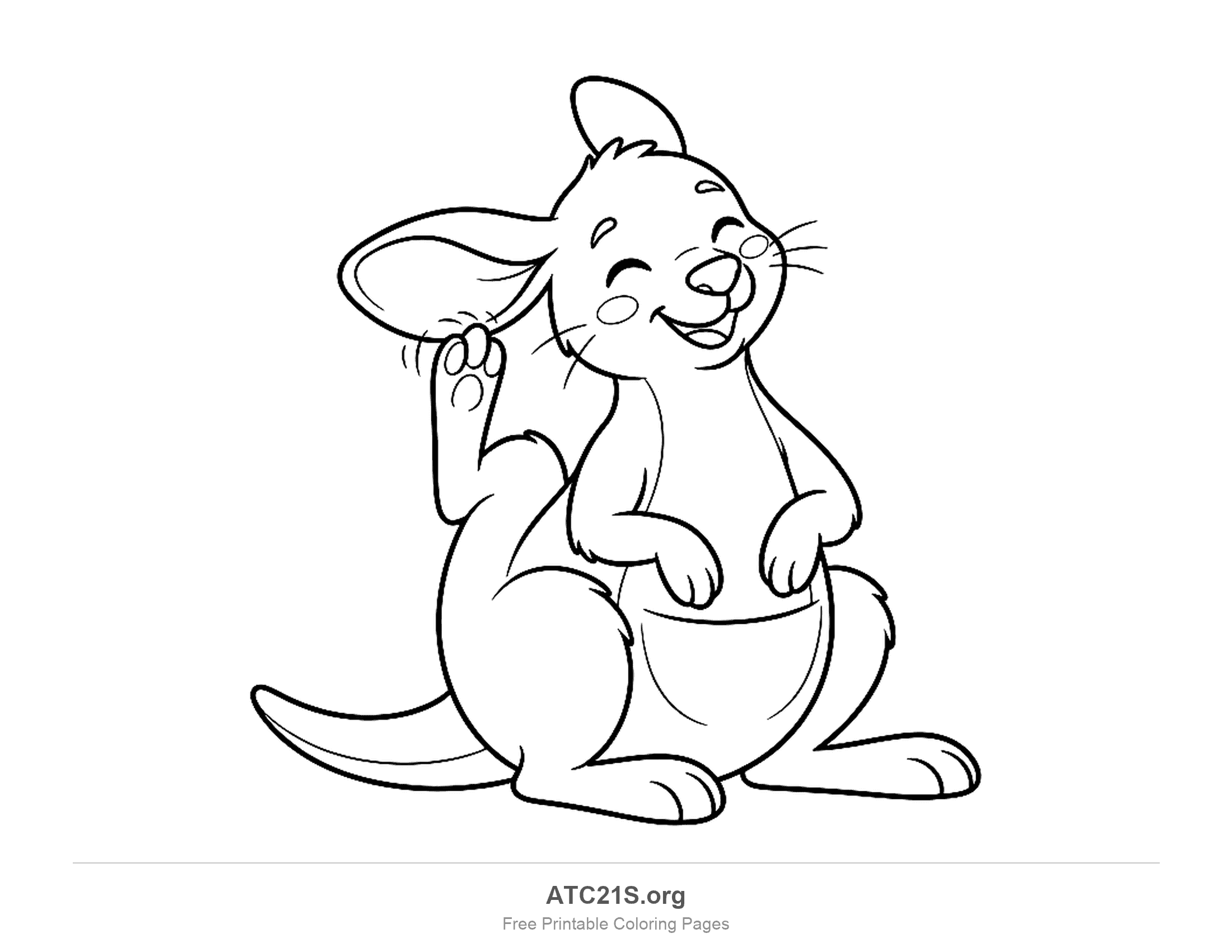
The eight designs get steadily harder. First is a chubby cartoon kangaroo sitting and scratching its ear with a hind foot, eyes squeezed shut and a huge smile — thick outlines and wide open shapes, right for toddlers still learning to stay inside the lines. Then a kangaroo sitting on its haunches with its paws together, one in a playful boxing stance with both fists up, and one hopping mid-air, all still bold and friendly. After that the drawings become more realistic: a kangaroo standing in side profile, one glancing back over its shoulder, one bending down to graze, and a mother with a joey peeking out of her pouch for children who like a longer, careful page.
The pouch is the part worth pausing on. A newborn joey is about the size of a grape. It crawls into the pouch on its own and stays there for months, drinking milk and growing until it is ready to hop out. The mother-and-joey sheet is the natural one to talk about while colouring — two animals on one page, and a chance to colour the baby a slightly paler shade than mum.
Every sheet prints on landscape US Letter paper at 200 DPI, so the kangaroo fills the page without being cut off. Plain copier paper is fine for crayons and colored pencils. If you are using markers or paint, slightly thicker card stock stops the colour bleeding through — worth doing on the mother-and-joey sheet, where the two faces sit close together.
In the classroom these pages pair well with a lesson on Australian wildlife, on marsupials (a kangaroo next to a koala is a memorable pair), on how animals move, or on the letter K. The boxing kangaroo is a fun one to act out before colouring; the hopping sheet fits a short talk about why a kangaroo's back legs are so much bigger than its front ones. Print a few different designs and let each child pick: the scratching-ear kangaroo is finished in a few minutes, while the mother and joey can fill a quiet stretch of the afternoon, which keeps a mixed-age table busy at the same time. The rabbit pages show a very different way of hopping, and the complete animal collection has the rest.